Can a Transmission Go Out Without Warning in an SUV?
Yes—an SUV transmission can fail with little warning, especially if a hard part breaks, a valve body sticks, or fluid is lost suddenly; if drive is gone, treat it as urgent. Ignoring slip, slow engagement, or a burnt-fluid smell can turn a fixable fault into a full rebuild or a stranded SUV. This guide explains which failures may happen quickly, which usually give warning first, and what to do in about the first 10 minutes.
When transmission failure happens suddenly
Yes. A transmission can quit with little or no warning if a major hydraulic leak develops, a clutch pack fails suddenly, a torque converter breaks down, or the transmission control module forces a severe failsafe. That said, progressive failure is more common, so many SUVs leave clues first.
What sudden failure looks like
Sudden failure usually means the SUV loses drive, only creeps in one gear, or drops into limp mode after a fault is detected. In an automatic transmission, hydraulic pressure, clutches, and valves have to work together; if pressure falls too far, movement can stop quickly.
Say your SUV starts normally, then after a hard uphill merge it will not move in drive or reverse at the next light. That pattern points to a serious hydraulic or internal failure, not a small issue you can put off.
Why most failures still leave clues
Most bad transmissions warn you with slip, delayed engagement, jerky shifting, new drivetrain noises, a check-engine or transmission warning light, or a burnt-fluid smell before total failure. Those clues matter because they often show wear, heat damage, or low fluid before clutches and seals fail completely.
How to tell a transmission problem from a different drivetrain fault
Do not assume every no-drive or jerking problem is the transmission. Engine misfires, transfer case problems, differential damage, broken axles, and even low engine power can mimic transmission trouble. A scan tool and basic checks help sort the likely cause before any teardown.
Transmission vs engine misfire
An engine misfire usually shows rough running, shaking, a flashing check-engine light, and loss of power under load. A transmission problem more often shows flare, slip, delayed gear changes, no reverse, or a vehicle that revs without matching movement.
Transmission vs transfer case or differential
On many SUVs, the transfer case or differential can cause a no-move condition, especially if all gears feel normal but the vehicle does not move. Grinding from underneath, binding in turns, or drivetrain noises can point away from the transmission and toward those parts instead.
Why scan codes matter first
Scan tools and OBD-II codes can separate electronic faults from mechanical damage. A transmission control module fault may create limp mode or harsh shifts, while pressure, ratio, or solenoid codes can point to the circuit or hydraulic side. Codes do not prove the exact failed part, but they help avoid guessing.
What usually fails first inside an SUV transmission
Inside an automatic transmission, the first trouble often comes from fluid loss, overheating, a failing torque converter, worn clutch packs, sticky valves, or TCM faults. These failures do not all behave the same. Some build slowly. Others can stop the SUV fast.
Fluid loss and overheating
Transmission fluid lubricates and cools internal parts. Low fluid level, burnt fluid, or overheating from towing, stop-and-go traffic, or cooling problems can trigger sudden symptoms. Heat can damage seals and clutch material quickly, and once pressure drops, the transmission may slip or stop moving.
Torque converter problems
The torque converter connects engine power to the transmission. When it fails, you can see shudder, slip, poor acceleration, or loss of drive that gets mistaken for a full transmission failure. It can be expensive, but it is not always the same as a destroyed internal gearset.
Clutch pack and valve body wear
Worn clutch packs and a faulty valve body can cause slipping, delayed engagement, harsh shifting, or no movement in one or more ranges. These are internal transmission problems, and they often need repair or rebuild work rather than a fluid top-off alone.
TCM faults and limp mode
The transmission control module manages shift strategy. When it sees a fault, it may command limp mode, hold one gear, or limit power. That can feel like the SUV is failing completely, but the real issue may be electronic, hydraulic, or both.
Sudden transmission failure triage for SUV owners
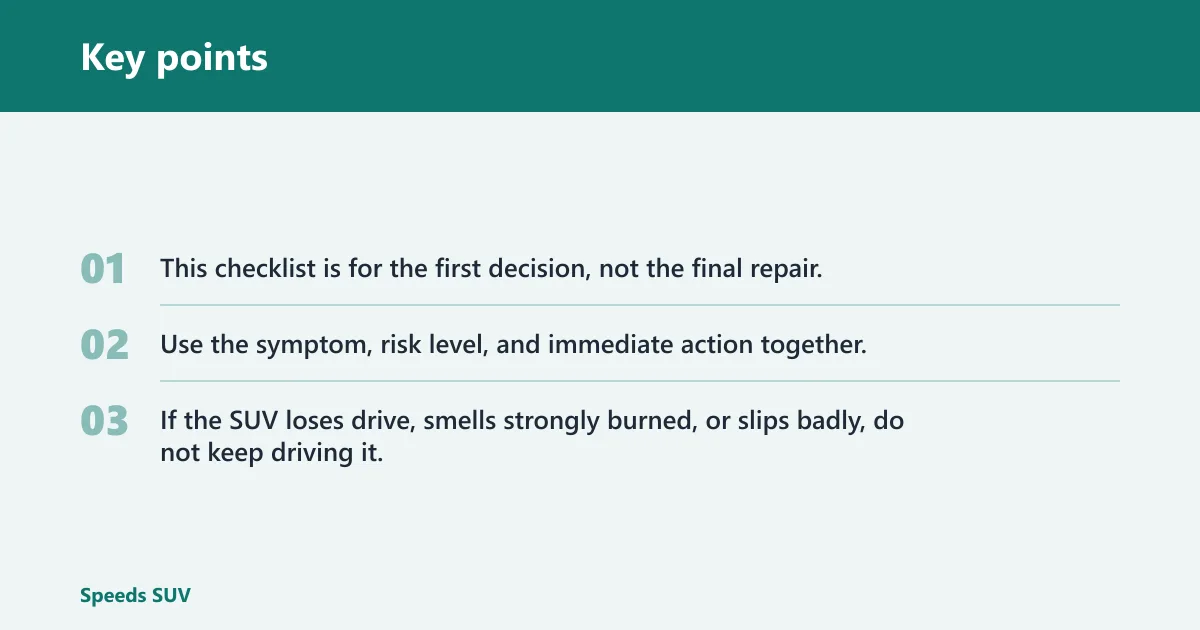
This checklist is for the first decision, not the final repair. Use the symptom, risk level, and immediate action together. If the SUV loses drive, smells strongly burned, or slips badly, do not keep driving it.
| Symptom | Likely risk level | Immediate action |
|---|---|---|
| Slipping in one gear | High | Reduce throttle, pull over soon, check fluid and codes, arrange diagnosis |
| No reverse | High | Stop using reverse, scan for codes, avoid further driving if symptoms grow |
| Burning smell | Very high | Pull over, shut off if fluid is hot or slipping is severe, tow if needed |
| Limp mode | High | Drive only far enough to get safe, scan codes, do not ignore the fault |
| Delayed engagement into drive | Medium to high | Check fluid level and condition, avoid hard throttle, schedule prompt inspection |
| Total no-move in drive and reverse | Very high | Stop driving, check for leak and dash warning, call for a tow |
| Harsh shifting with warning light | Medium to high | Scan codes, avoid towing or heavy load, get a transmission diagnosis |
| Shudder at cruise | Medium | Check codes and fluid, limit load, inspect torque converter and fluid condition |
| Fluid dark brown or black with burnt odor | Very high | Do not assume a fluid change will fix it, get a professional diagnosis |
| Check-engine light with gear flare | Medium to high | Read OBD-II codes before any teardown, then decide on repair path |
| Transmission warning message after towing | High | Let the unit cool, check fluid and codes, avoid further heat load |
What to do in the first 10 minutes
Your first job is to keep the SUV, passengers, and transmission out of more damage. If the SUV still moves normally, you may be able to reach a safe place. If it slips hard, loses drive, or smells burned, stop quickly and get it off the road.
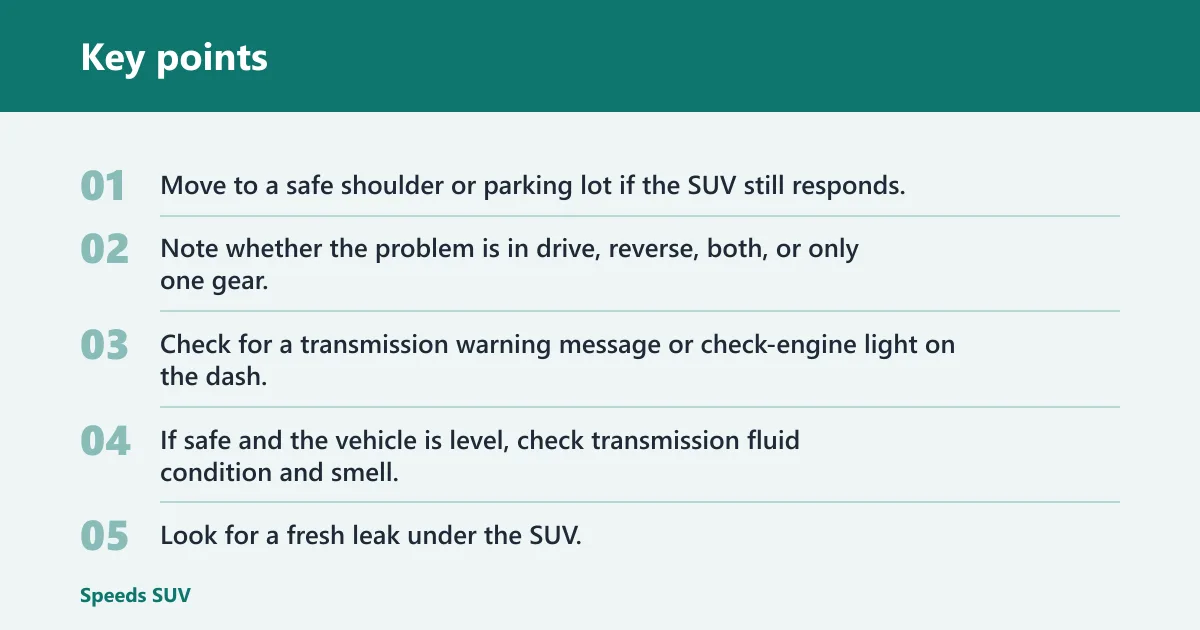
- Move to a safe shoulder or parking lot if the SUV still responds.
- Note whether the problem is in drive, reverse, both, or only one gear.
- Check for a transmission warning message or check-engine light on the dash.
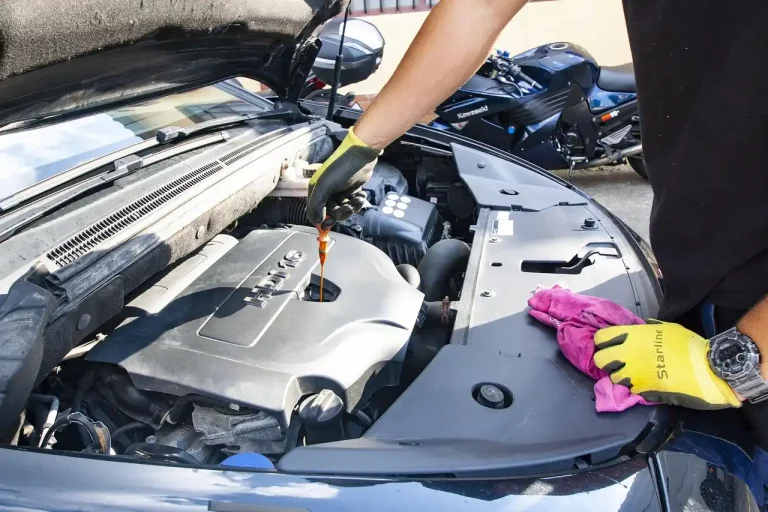
- If safe and the vehicle is level, check transmission fluid condition and smell.
- Look for a fresh leak under the SUV.
- Read OBD-II codes before any repair guesswork.
- Stop driving if the SUV loses power, slips badly, or will not move.
- Call for a tow if the fault is severe, heat-related, or accompanied by a burned smell.
Suppose a 3-row SUV starts to jerk after 20 minutes of city traffic, then shows limp mode and a burnt odor at the next stop. That combination points to heat stress or internal transmission damage. Continuing to drive can turn a repairable problem into a larger rebuild.
Keep driving or stop now?
If the SUV still shifts normally and the issue is mild, the safest move may be a short trip to a shop. If it slips, bangs into gear, loses drive, or shows a strong burnt smell, stop. That is not the time to “see if it clears up.”
What does limp mode mean?
Limp mode usually means the transmission or control system has detected a fault and limited operation to protect itself. The SUV may still move, but usually with fewer gears, reduced power, or harsh shift behavior. It is not a normal condition, and it should not be treated as harmless.
Why the SUV may still move
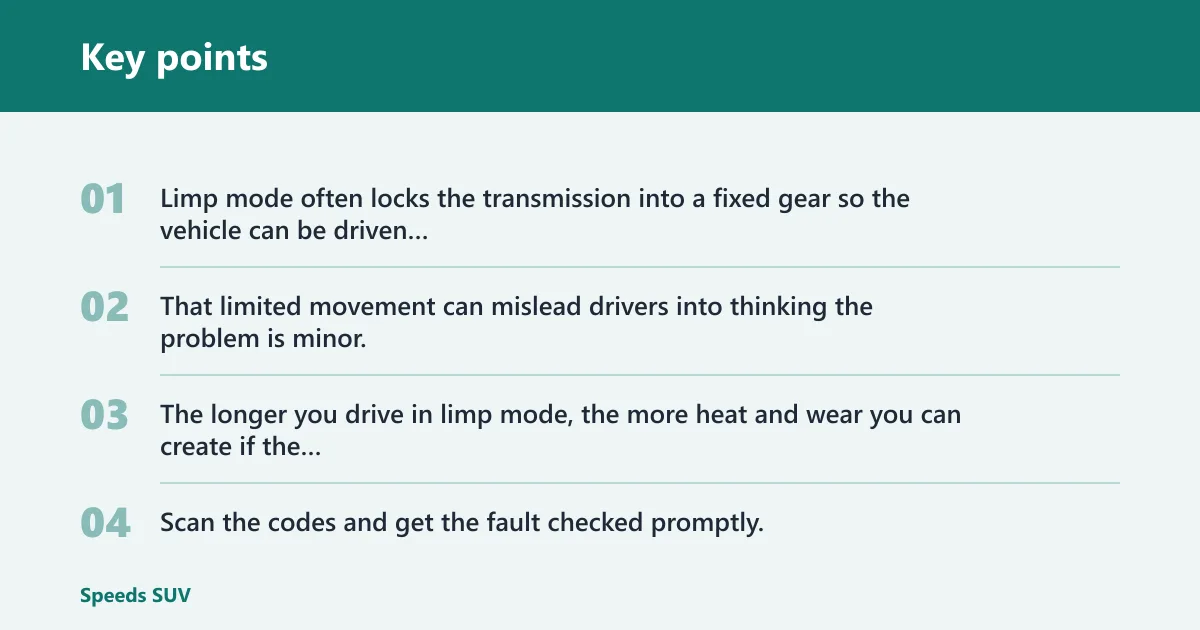
Limp mode often locks the transmission into a fixed gear so the vehicle can be driven off the road or to a shop. That limited movement can mislead drivers into thinking the problem is minor, but the underlying fault may still be serious.
Why you should still treat it as urgent
The longer you drive in limp mode, the more heat and wear you can create if the underlying issue is low pressure, a slipping clutch, or a failing solenoid circuit. Scan the codes and get the fault checked promptly.
Can low transmission fluid cause sudden failure?
Low transmission fluid can sometimes cause sudden slipping, delayed engagement, harsh shifts, or even a complete no-move event if pressure drops far enough. Fluid condition matters too: dark color, a burnt smell, or visible debris suggests heat or wear that needs more than a quick top-off.
Signs of low or burned fluid
Check the fluid condition, color, and smell. Healthy fluid is usually clearer and does not smell burned. Dark brown or black fluid with a sharp burnt odor points to overheating or clutch wear, not just age.
Why heat makes the damage worse
Heat breaks down fluid, hardens seals, and weakens clutch material. Towing, stop-and-go traffic, and cooling system issues make that worse. Once the transmission overheats, the damage can move fast, especially if the SUV keeps being driven under load.
How much does transmission repair cost?
Repair cost varies widely by damage and vehicle. A fluid service and diagnosis cost far less than a rebuild or replacement. If the fault is a solenoid, valve body, torque converter, clutch pack, or electronic control issue, the bill can still range widely based on parts, labor, and model-specific access.
Fluid service and minor repairs
If the problem is caught early, a fluid service, gasket, sensor, or solenoid repair may solve it. That is why checking fluid and reading codes first matters. A simple fix should not be skipped, but a fluid change alone will not rescue a burned or slipping transmission.
Repair, rebuild, or replacement
If the clutch packs are damaged, the valve body is worn, or internal hard parts have failed, the shop may recommend a rebuild or full replacement. Once the unit loses drive or fills the pan with debris, the repair path becomes much larger.
Frequently asked questions
Can a transmission go out without warning in an SUV?
A transmission can fail suddenly if a hard part breaks, a valve body sticks, fluid is lost, or electronic control puts the SUV into failsafe mode. Even so, many failures still give earlier clues such as slipping, delayed shifts, warning lights, or a burning smell.
What are the first signs of transmission failure in an SUV?
The earliest signs are usually slip, delayed engagement, harsh or jerky shifts, new noises, warning lights, and fluid that smells burned or looks dark. A shudder under load or a pause before the SUV moves can also point to trouble.
Can an SUV transmission fail suddenly while driving?
Yes. A sudden loss of drive can happen while moving if hydraulic pressure drops, the torque converter fails, a clutch pack gives up, or the control module forces limp mode. If the SUV starts slipping badly, pull over and stop driving.
How do you tell if it’s the transmission or something else?
Start with scan codes, then compare symptoms. Engine misfire usually brings rough running and power loss, while transmission trouble brings slip, delayed engagement, no reverse, or gear flare. Transfer case, differential, and axle faults can also cause no-move symptoms, so do not guess.
Should I keep driving if my SUV starts slipping or jerking?
No, not if the slipping is severe or the jerking is getting worse. Continued driving can overheat the fluid, damage clutches, and turn a smaller repair into a full rebuild. Pull over, check for warning lights and fluid issues, and arrange a diagnosis.
What should I do right away if my SUV loses drive?
Pull over safely, check the dash for warning lights, look for leaks, and avoid repeated throttle tests. If drive is gone in one or more ranges, or the SUV smells burned, call for a tow. Do not keep forcing it to move.