Can the Wrong Oil Cause Oil Consumption in an SUV?
Yes, the wrong oil can raise consumption in an SUV, but usually only when viscosity, specification, or oil condition falls outside the engine maker’s limits. Ignore that, and you can chase the wrong fix, burn through quarts, and miss a real leak or engine fault. This guide maps when oil choice can cause consumption, when it is unlikely to be the cause, and what to check next.
What counts as wrong oil?
Wrong oil means more than the wrong brand on the jug. It can be the wrong viscosity, the wrong oil type, or an additive package that does not match the engine’s required specification. The receipt or container matters because a cap sticker alone does not prove what actually went into the crankcase.
Viscosity grade versus manufacturer spec
Viscosity is the thickness rating on the label, such as the grade listed in the owner’s manual. It must match the manufacturer spec, because oil that is too thick can slow cold-start flow, while oil that is too thin may not protect well under heat or heavy load.
Oil type, additive package, and approval marks
Engine oil type matters too. Synthetic, conventional, and manufacturer-specific formulas can differ in additive content, and different oils use different additives to help prevent sludge and keep the engine clean. A label that looks close is not enough if the manual calls for a specific approval or standard.
Why the receipt or container matters before you react
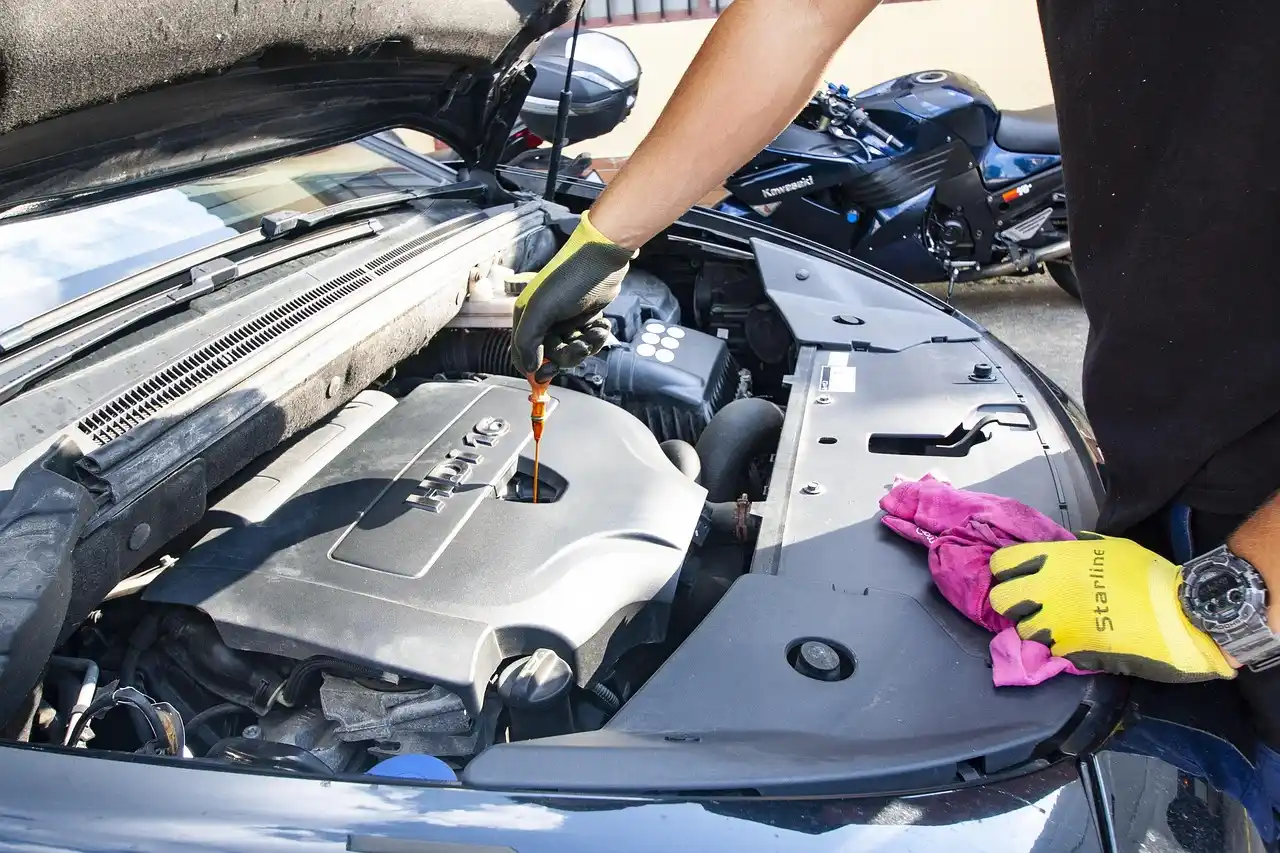
Before you drain anything, confirm what was actually installed. A shop invoice, leftover bottle, or labeled drain container can tell you whether the fill matched the manual. If the paperwork and container agree with the spec, the oil may not be the cause of rising consumption at all.
Can wrong oil cause oil consumption?
Yes, wrong oil can contribute to oil consumption in an SUV, but the pattern matters. Consumption may rise because the oil is too thin, because the engine is running hotter or under heavier load, or because the wrong oil is exposing an existing wear issue. It is less likely to be the only cause if the engine already leaks, burns oil, or has ring or PCV problems.
When the oil itself is the likely trigger
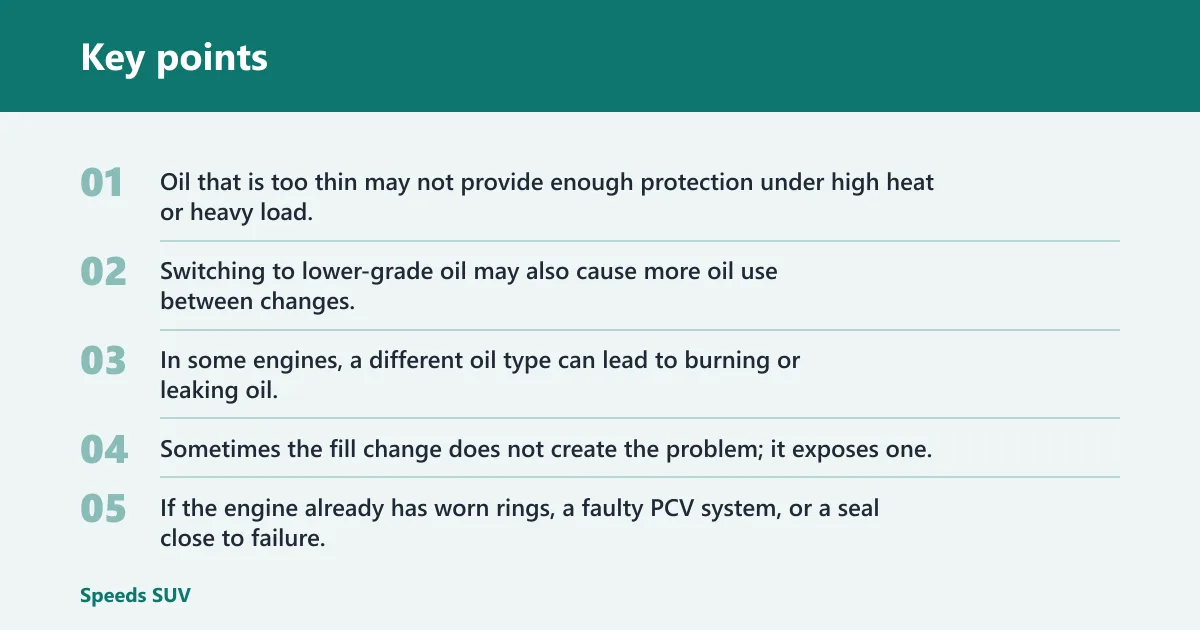
Oil that is too thin may not provide enough protection under high heat or heavy load, and that can increase friction and wear. Switching to lower-grade oil may also cause more oil use between changes. In some engines, a different oil type can lead to burning or leaking oil.
When wrong oil is revealing a pre-existing fault
Sometimes the fill change does not create the problem; it exposes one. If the engine already has worn rings, a faulty PCV system, or a seal close to failure, the new oil may make the symptom more obvious. That is why the next step is observation, not guessing.
SUV conditions that make the mismatch matter more
Turbocharged engines, towing, short trips, and hot-running engines all raise the stakes. Heat and load make viscosity and specification more important, so a grade that seems “close enough” can still behave badly in an SUV that works harder than a smaller commuter car.
Wrong oil checklist
Use this short check before you top off again. It separates a bad fill from a real engine problem and keeps you from overreacting to one low reading. The goal is to confirm the oil installed, then watch for a repeat loss over a short, measured distance.
| Check | What to look for | What it suggests |
|---|---|---|
| 1. Compare the fill | Match the receipt or container to the owner’s manual spec | Confirmed mismatch points to a fill error |
| 2. Smell the oil | Fuel smell on the dipstick or cap | Possible fuel dilution, which can distort the reading and signal a separate issue |
| 3. Recheck after mileage | Inspect the dipstick again after 200-300 miles | Repeat loss suggests real consumption, not a one-time fill issue |
| 4. Watch for smoke | Blue or gray exhaust smoke, especially after idling or deceleration | Possible burning oil |
| 5. Look under the SUV | Fresh drips, wet oil film, or new spots where you park | External leak instead of internal consumption |
| 6. Check fresh deposits | New sludge, varnish, or dirty residue around covers and passages | Possible oil-condition problem or neglected service |
| 7. Decide the next move | Mismatch plus symptoms, or repeat loss after 200-300 miles | Drain and refill with the correct oil, or book diagnostics if the loss continues |
If the oil was clearly wrong, drain and replace it right away. Do not wait for the next scheduled change. If the oil is correct but the level still drops after about 200-300 miles, the problem is more likely a leak, ring wear, or a PCV fault.
How viscosity affects SUVs

Viscosity controls flow. Too-thick oil can move slowly at startup, while too-thin oil can break down under heat and load. In an SUV, the wrong grade can matter more during towing, steep grades, high ambient heat, or repeated short trips that keep the engine from stabilizing.
Why too-thick oil can hurt cold starts
Using oil that is too thick may hurt cold-start flow in vehicles requiring low-viscosity oil. That can mean sluggish performance, higher fuel consumption, or poor throttle response until the oil warms. Cold starts are where this mistake shows up first, especially in winter or after an overnight soak.
Why too-thin oil can lose protection under heat and load
Oil that is too thin may not provide enough protection under high heat or heavy load. When the protective film thins out, metal-to-metal contact becomes more likely. That increases friction and can contribute to premature wear, valve noise, and long-term damage if the problem keeps going.
Why towing and short trips change the risk
Towing pushes oil temperatures up. Short trips do the opposite in a different way: the engine may never fully shed moisture and fuel contamination, which can stress the oil between changes. Both conditions make the correct viscosity and specification more important in an SUV than in light, easy use.
Picture a midsize turbo SUV used for weekend towing. If the fill is one grade too thin, the engine may run fine around town but start using oil faster on long grades and hot days. A separate leak can look similar, which is why the dipstick check after 200-300 miles matters.
What happens if the oil type is wrong?
Wrong oil type can matter even when the viscosity number looks close. Synthetic versus conventional oil, and manufacturer-specific requirements, can change how well the oil resists sludge, heat, and deposits. An SUV that calls for a specific approval may not tolerate a generic substitute for long.
Synthetic versus conventional
Synthetic oil is not a guaranteed fix for consumption, and conventional oil is not automatically a problem. The key is whether the engine maker allows that type. Some engines are sensitive to additive content and oxidation resistance, so the wrong oil type can show up as noise, deposits, or level loss.
Manufacturer-specific requirements and approval standards
Some engines need oil that meets a specific manufacturer approval, not just a broad viscosity grade. That matters for turbocharged engines and hot-running engines, where the oil must survive heat and maintain film strength. If the label does not match the manual, the fill is not fully correct.
How additive mismatch can affect sludge buildup
Different oils use different additives to help prevent sludge and keep the engine clean. A mismatch can leave more deposits behind, which can clog oil passages and lead to overheating or oil starvation. That is when a simple oil mistake starts looking like a lubrication problem.
Suppose a compact SUV is filled with the wrong oil type during service, then starts making a faint valve tick and showing darker deposits around the cap. That does not prove a failure, but it does justify a quick drain-and-refill with the correct oil instead of waiting months for the next change.
Could wrong oil cause leaks or wear?
Yes, the wrong oil can contribute to leaks, seal seepage, and wear, but it is not the only possible cause. Some engines can start burning or leaking oil if a different oil type is used, yet worn seals, ring problems, or overdue service can produce the same symptoms. The pattern matters.
How seal seepage can show up after a mismatch
Oil that is too thin may seep past weak seals more easily, while oil that is too thick can change pressure behavior in ways that expose a marginal gasket. If fresh wetness appears after the oil change, inspect the valve cover, drain plug, filter area, and the underside of the engine before assuming internal burning.
Sludge buildup, clogged passages, and oil starvation risk
Bad oil choice can clog oil passages and lead to overheating or oil starvation. Sludge buildup is not cosmetic. It can restrict flow, leave parts under-lubricated, and raise the chance of hot spots inside the engine. That is a fast path to bigger repair bills.
Long-term wear signs
Long-term wear can show up as valve noise, piston ring problems, metal-to-metal contact, and eventually early engine failure. Wrong oil can increase engine wear over time, especially if the vehicle is driven hard while the oil is outside spec. If the noise or consumption continues after the correct refill, book diagnostics.
Warranty and service timing
Warranty risk is real if the oil does not match the owner’s manual or service spec. Using the wrong oil might void manufacturer warranty coverage on an oil-related claim. If you know the wrong oil was used, correct it soon and keep the paperwork, because service records may matter later.
Why spec compliance matters for warranty claims
Warranty coverage usually depends on following the required oil grade and approval. If a claim involves sludge, wear, or lubrication failure, the oil used can become part of the review. A correct invoice and the right container label help show that the service matched the manual.
How soon to correct the oil fill
If you realize you used the wrong oil, change it as soon as possible. Do not wait until the next scheduled oil change. The longer the engine runs on the wrong fill, the more chance there is for heat, deposits, or wear to build up.
When to stop topping off and book diagnostics
If the level drops again after about 200-300 miles on the correct oil, or if smoke, leaks, or fuel smell continue, move from topping off to diagnosis. That is the point where PCV issues, ring wear, or an external leak become more likely than the oil choice itself.
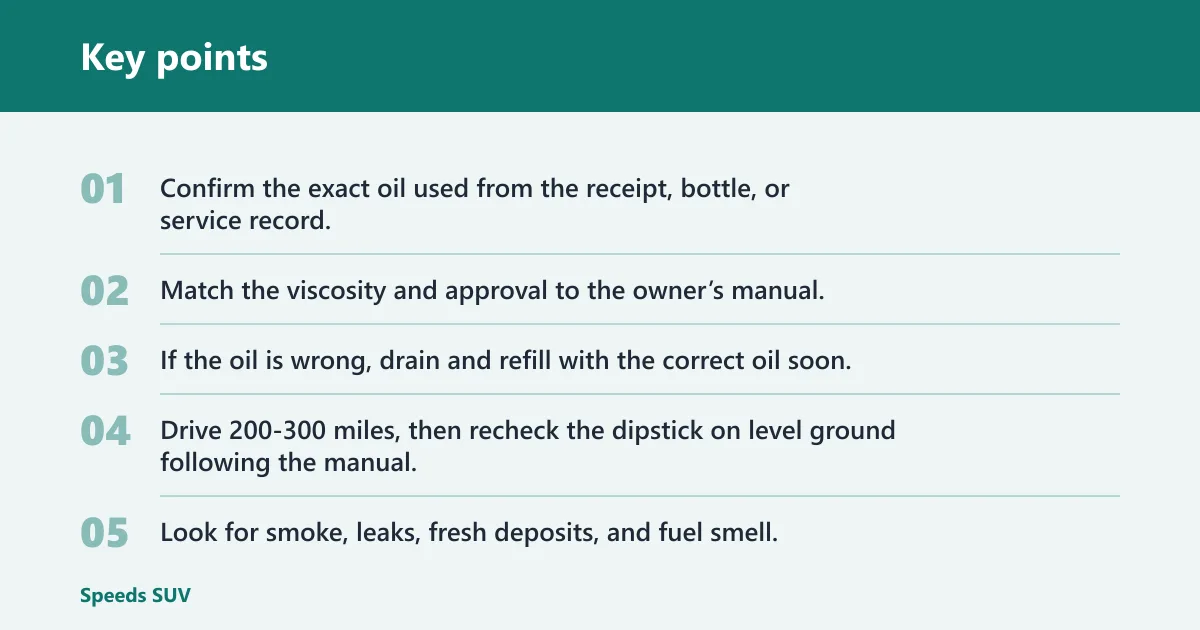
- Confirm the exact oil used from the receipt, bottle, or service record.
- Match the viscosity and approval to the owner’s manual.
- If the oil is wrong, drain and refill with the correct oil soon.
- Drive 200-300 miles, then recheck the dipstick on level ground following the manual.
- Look for smoke, leaks, fresh deposits, and fuel smell.
- If the level keeps falling, book diagnostics instead of repeatedly topping off.
Frequently asked questions
Can the wrong oil cause my SUV to burn or use oil?
Yes. The wrong oil can raise oil consumption if the viscosity, type, or additive package is outside the engine maker’s limits. It can also expose a weak seal, worn ring, or PCV problem that was already there. A repeat dipstick check after 200-300 miles helps separate a fill issue from true consumption.
What happens if I use the wrong type of oil in my SUV?
Wrong oil type can affect sludge control, heat resistance, and film strength. Some engines can start burning or leaking oil, while others may show no immediate issue. The risk is higher in turbocharged engines, towing use, and hot-running engines. Correct it soon if you know the fill is wrong.
Can thicker oil reduce oil consumption in an SUV?
Sometimes a thicker grade can reduce consumption in an engine that was using oil because the previous oil was too thin, but that is not a general fix. Too-thick oil can hurt cold-start flow and may cause sluggish performance or poor throttle response. Use the grade the manual calls for.
Will synthetic oil stop an SUV from using oil?
No. Synthetic oil can help with heat and deposits when the engine calls for it, but it will not stop consumption caused by worn rings, leaks, or a failed PCV system. If the oil level still drops on the right spec, the cause is elsewhere and needs diagnosis.
Can the wrong oil cause leaks as well as oil consumption?
Yes. Some engines can start leaking oil if a different oil type is used, and thinner oil can seep past weak seals more easily. But a leak is still a leak, not the same thing as internal burning. Fresh drips, wet gaskets, or oil around the filter point to an external source.
How soon should I change oil if I used the wrong type?
Change it as soon as possible. Do not wait for the next scheduled interval. If the fill is wrong, drain and refill with the correct oil promptly, then recheck the level after 200-300 miles. If the level drops again or smoke appears, the engine needs diagnostics.
Does wrong oil cause long-term engine wear in an SUV?
Yes. Wrong oil can lead to increased engine friction and premature wear, especially under heat and load. Over time that can mean valve noise, piston ring problems, sludge buildup, and oil starvation. The longer the engine runs on the wrong fill, the greater the risk.
Can using the wrong oil void my warranty?
It can affect coverage if the oil does not match the manufacturer spec or owner’s manual. That does not mean every claim will be denied, but it can give the manufacturer a reason to question the service history. Keep the receipt, container, and any correction records.