What Is Approach Angle on an SUV or Truck?
Approach angle is the steepest ramp your SUV or truck can climb without the front bumper hitting first; larger numbers mean a steeper ramp before the nose scrapes. Ignore it, and you can scrape, stall on an obstacle, or damage bumper, valance, or skid plates. This guide explains how approach angle is measured, and how bumper shape, overhang, lift, and tire size change real-world contact points.
What approach angle means
Approach angle is the maximum ramp angle a vehicle can climb from level ground without the front end touching first, measured in degrees. The number is based on the line between the front tire contact patch and the foremost point of the vehicle, so front-end shape can matter as much as ride height.
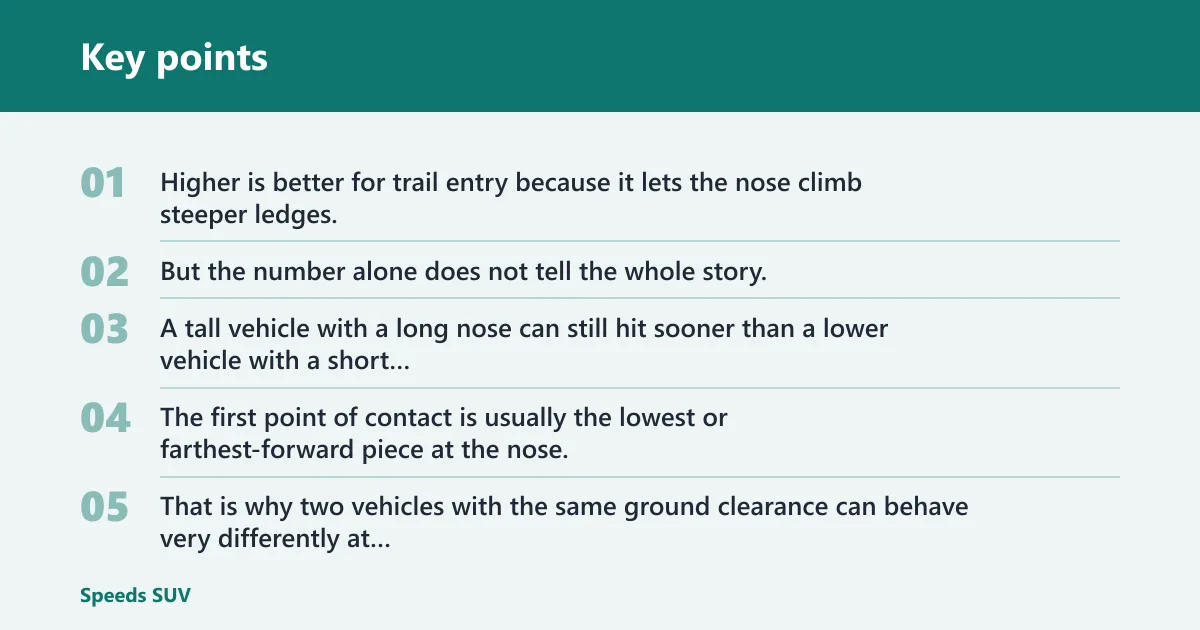
Higher is better for trail entry because it lets the nose climb steeper ledges, creek banks, and loading ramps before contact. But the number alone does not tell the whole story. A tall vehicle with a long nose can still hit sooner than a lower vehicle with a short front overhang.
Front edge, not just ride height
The first point of contact is usually the lowest or farthest-forward piece at the nose, such as a bumper corner, lower valance, skid plate edge, or winch fairlead. That is why two vehicles with the same ground clearance can behave very differently at the same obstacle.
Breakover angle and departure angle are separate numbers. Breakover measures the center-underbody hump, while departure measures the rear exit angle. Approach angle only covers the front entry side.
Front overhang and contact point
Front overhang is commonly defined as the distance from the front axle to the foremost point of the vehicle. Longer overhang usually lowers approach angle because the front end reaches the obstacle sooner. Body style, trim, and accessories all change that distance, even on the same model.
A pickup with a long nose, lower bumper corners, and a front license plate bracket can lose usable entry angle fast. A short-nose SUV often does better at the same ride height because less bodywork projects ahead of the tire line.
Why trim matters
Trim level changes the front geometry. Off-road trims may use a shorter bumper, higher lower edge, or factory skid protection. Luxury or appearance packages often add more protruding fascia and lower corners, which can reduce practical clearance even when the brochure lists the same approach angle as a base model.
How do you calculate approach angle on an SUV or truck?
You can estimate approach angle with simple geometry: measure the vertical height from the ground to the first front contact point, then compare it with the horizontal distance from the front tire contact patch to that point. The steeper the angle formed by that line, the better the approach angle.
Manufacturers often publish a catalog figure based on a specific configuration with standard tires and suspension height. Trail reality can differ because cargo load, suspension compression, tire rub, or a hanging skid plate can move the first contact point lower than the spec sheet suggests.
Why the spec can differ from the trail
A truck may quote a strong approach angle, yet hit the skid plate before the bumper on a steep ledge. Another vehicle may quote a slightly weaker number but clear better because its bumper is stubby and its winch sits high and tight. The quoted angle is useful, but it is not a guarantee.
- Identify the lowest front point that can touch first: bumper, valance, skid plate, or winch fairlead.
- Measure the vertical height from the ground to that point.
- Measure the horizontal distance from the front tire contact patch to that same point.
- Compare that shape to the obstacle you care about: curb, ramp, ledge, washout, or obstacle face.
- Account for load and compression, since front sag can lower the effective number.
Approach angle decision table
This table shows how common setups change real-world trail entry. The same quoted number can mean different things once bumper shape, overhang, and underbody parts are in play.
| Setup | Likely first contact | Real-world risk | Trail entry result |
|---|---|---|---|
| Stock SUV | Front bumper corner or lower valance | May scrape on steep driveways, ledges, or parking stops before the tire reaches the top | Usually acceptable for light trail use, limited on steep entries |
| Leveled truck | Skid plate edge, bumper corner, or front valance | Nose height may improve, but long overhang can still contact early | Looks taller; may improve entry only modestly if front protrusion stays the same |
| Lifted truck with steel bumper | Steel bumper edge, winch fairlead, or skid plate | Added weight can compress the front suspension; protruding bumper can cancel some lift benefit | Can improve entry if the bumper is stubby and tucked in; can get worse if the bumper hangs low |
| SUV with larger tires | Bumper corner or skid plate, depending on trim | Tire diameter may raise the nose slightly, but a low bumper can still touch first | Usually modest improvement, best when paired with a short front overhang |
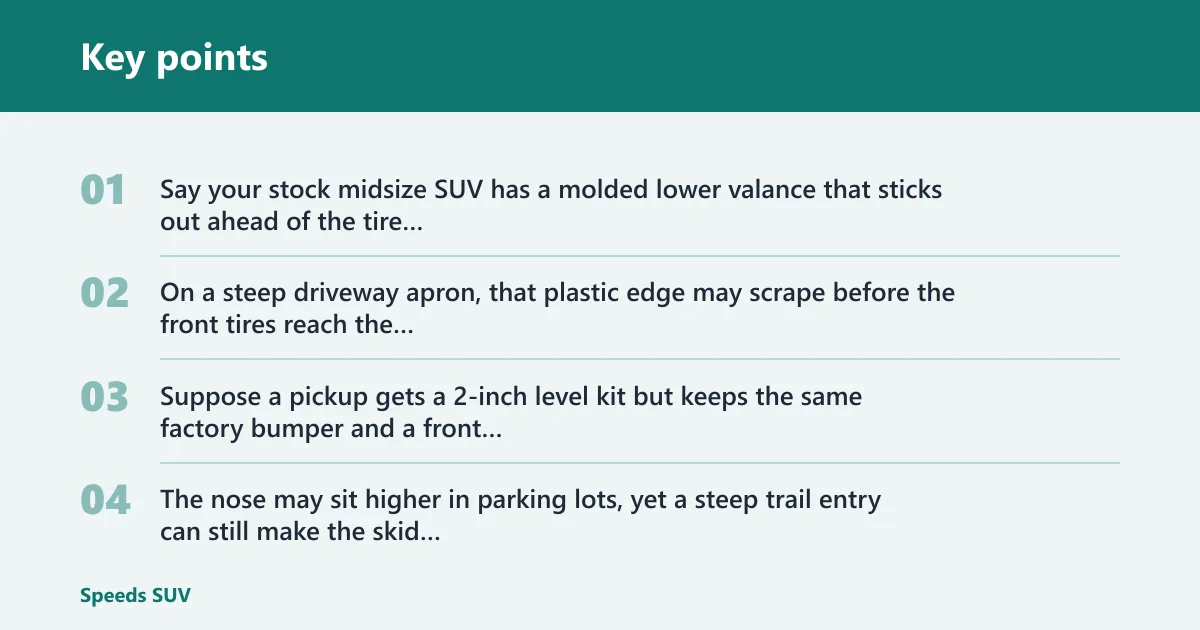
Say your stock midsize SUV has a molded lower valance that sticks out ahead of the tire line. On a steep driveway apron, that plastic edge may scrape before the front tires reach the slope, even though the body sits high enough that the undercarriage looks clear.
Suppose a pickup gets a 2-inch level kit but keeps the same factory bumper and a front skid plate that hangs low. The nose may sit higher in parking lots, yet a steep trail entry can still make the skid plate the first contact point.
What changes the number on an SUV or truck?

Several parts can change approach angle, but not all changes are equal. Tire diameter, suspension height, bumper shape, winch placement, and skid plate protrusion all affect where the front end meets the obstacle first. Some changes help on paper and in the dirt. Others only make the vehicle look taller.
Tire diameter
Larger tires can raise the front contact point and modestly improve approach angle. The gain depends on how much the tire actually raises the axle and nose, and whether the bumper or skid plate still hangs low. Bigger tires help most when the front end is already short and clean.
Suspension lift or leveling
A lift kit can improve approach angle if the front overhang stays unchanged. Raising the body or chassis gives more vertical room before contact. But a lift does not fix a bumper that protrudes too far forward, and it does not help if the skid plate or winch mount remains low.
Aftermarket front bumper and winch placement
Aftermarket front bumpers can help or hurt. A stubby steel bumper that sits close to the grille can improve clearance. A heavy bumper with a long nose or low corners can reduce approach angle even after a lift. Winch mounts add weight, which can compress the front suspension and lower the effective entry height.
Skid plate protrusion
Skid plates protect the underside at obstacle entry, but they can also become the first contact point. If a skid plate hangs low or extends forward, it can take the hit before the bumper does. That matters because the quoted approach angle may look good while the actual first impact point is several inches lower.
What is a good approach angle for off-road driving?
A good approach angle is one that matches the terrain you plan to drive, not a single number on a brochure. Steep rock ledges, deep ruts, and sharp trail breakovers demand more entry clearance than forest roads, mild washouts, or dirt tracks. Use the number as a filter, not a finish line.
Short-wheelbase vehicles often do better at trail entry because they tend to have less front overhang and fewer low front corners. Long-wheelbase trucks can still work well, but they often need more care at the nose because the front bumper may sit farther ahead of the tire line.
Daily use tradeoffs
Higher approach angle is useful, but it can come with tradeoffs. A taller front end may change parking-ramp behavior, make the nose feel higher, or alter how close you can pull to curbs. Some owners want trail entry clearance and still need the front end to behave well in tight parking lots.
One common mistake is chasing height while ignoring geometry. A vehicle can sit high and still scrape its front bumper on a curb cut if the bumper extends too far forward. A shorter, cleaner front end often matters more than extra ride height alone.
Choosing between SUV and truck setups
For SUVs, the biggest gains often come from a shorter front fascia, a modest tire increase, and a suspension package that keeps the front corners tucked up. For trucks, the nose, bumper, and skid plate matter as much as the lift. Short-wheelbase trucks and SUVs usually benefit more from the same modification than long, low-nose versions.
How does approach angle compare with ground clearance?
Ground clearance is commonly described as the vertical distance from the ground to the lowest chassis point. It matters, but it is not the same as approach angle. A vehicle can have good ground clearance and still scrape the front bumper if the nose projects too far forward or the lower edge sits low.
Approach angle is about the entry path; ground clearance is about the lowest static height. Both matter on the trail, but they answer different questions. If the front of the vehicle contacts first, approach angle is the metric that explains why.
Why do lifted trucks still have poor approach angles?
Lifted trucks can still scrape the nose or skid plate because lift height does not remove front overhang. If the bumper, winch, or skid plate sits low or far forward, the first contact point stays low. Added front weight can also compress the suspension and cut into the gain.
That is why two trucks with the same lift can behave differently. One with a stubby bumper and tucked winch may climb an entry cleanly. Another with a long steel bumper and hanging skid plate may touch early, even though both look tall from the side.
Frequently asked questions
What is angle of approach in vehicles?
It is the steepest ramp or obstacle face a vehicle can climb from level ground without the front end contacting first. Higher numbers mean the nose can rise more before scraping. The front bumper, valance, skid plate, and tire size all influence the result.
What is approach angle?
Approach angle is a front-end geometry measurement in degrees. It shows how steep an obstacle can be before the vehicle’s nose touches. The number is useful for comparing SUVs and trucks, but it should be read alongside overhang, bumper shape, and suspension setup.
Does a lift kit improve approach angle?
Often yes, but only if the front overhang and low front hardware do not limit entry. A lift raises the body or chassis, which can help, yet a protruding bumper, low skid plate, or heavy winch can still set the contact point.
Do bigger tires change approach angle?
They can, usually a little. Larger tires raise the axle and may lift the front contact point enough to help at trail entry. The change is modest if the bumper or skid plate still sits low, so tire size works best with clean front geometry.
Can a front bumper reduce approach angle?
Yes. A bumper that sticks out farther or hangs lower can reduce approach angle by moving the first contact point forward and down. Stubby aftermarket bumpers can do the opposite, but the exact result depends on shape, winch placement, and how far the bumper extends past the grille.