SUV Oil Consumption: Causes, Symptoms, Fixes
SUV oil consumption usually comes from one of three paths: an external leak, internal burning, or oil pulled through the PCV or turbo intake tract. If you are losing around more than 1 quart in 1,000 miles, seeing repeated low-dipstick readings, or noticing blue smoke, start diagnosis now. First verify the consumption rate, then inspect for leaks, then check the PCV and intake side, and only after that move to compression and leak-down testing. Wait too long and you raise the odds of low-oil damage, fouled plugs or catalysts, turbo failure, and expensive engine wear. This guide sorts the symptoms by cause, shows what to check first, and ranks fixes by urgency and by the chance they actually solve the problem.
What counts as normal oil consumption in an SUV?
Some oil use can fall within normal operation, but a common owner-use rule of thumb is that about 1 quart in 3,000 to 5,000 miles is often tolerable, while about 1 quart in 500 to 1,000 miles is excessive and needs investigation. Use the owner’s manual and oil-consumption section as the reference point, because engine design, mileage, load, ambient heat, and driving pattern all shift the baseline.
Use a practical threshold, not a vague one
Track engine oil consumption as oil added over distance or time. That tells you more than one low dipstick reading, because a single reading can be distorted by parking angle, refill error, or checking before oil has drained back.
A common working threshold is that adding a quart every 3,000 to 5,000 miles may still fit expected use on some SUVs, especially older engines or ones that tow, idle a lot, or spend long stretches at highway speed. Needing about a quart every 500 to 1,000 miles is different. That more often points to a leak, oil burning, a ventilation fault, or a turbo-related problem.
What changes the baseline
Turbocharged engines, higher-mileage engines with ring and seal wear, and some direct-injection designs often use more oil than a lightly loaded naturally aspirated engine. Long highway runs at high rpm, towing, mountain grades, hot weather, and extended idling can all push the rate upward.
Short-trip driving changes the picture too. It can build deposits in the piston-ring lands, especially around the oil-control ring, and a stuck oil ring cannot scrape excess oil off the cylinder wall the way it should.
Measure it the same way every time
- Park on level ground. A sloped driveway can move the sump reading enough to imitate oil loss or overfill. Use the same parking spot when possible.
- Shut the engine off. Wait a consistent 5 to 10 minutes so oil drains back to the pan. If the wait time changes, the reading changes too.
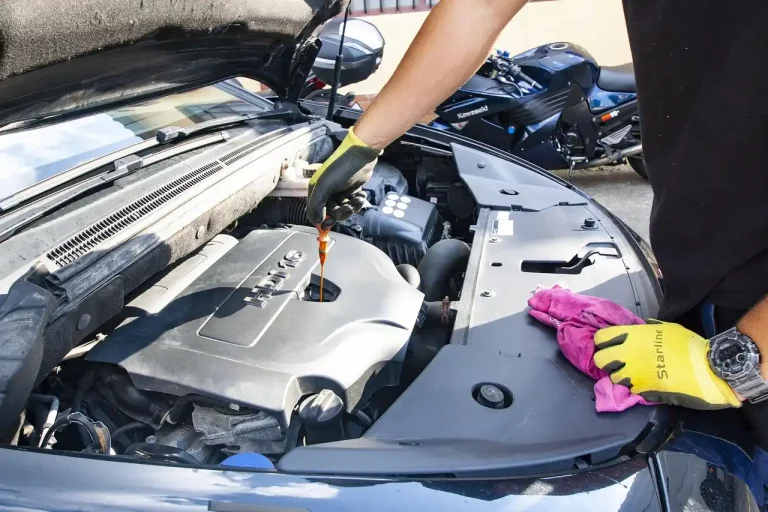
- Read the dipstick twice. Pull, wipe, reinsert fully, then read again. Record whether the level is at full, half, or near add, plus the odometer.
- Top to one baseline. If oil is added, fill to the same mark each time instead of “somewhere near full.” A consistent fill level is what makes the log useful.
- Track distance and oil added. Write down miles and quarts added over at least 1,000 miles. That turns suspicion into a rate you can compare with the manual and with results after repairs.
Why is your SUV using oil but not leaking?
An SUV can lose oil without leaving a puddle because the oil may be burning in the cylinders, getting pulled through the PCV system into the intake, passing through turbo seals on turbocharged models, or seeping onto hot engine parts where it burns off before it ever reaches the ground. No puddle does not mean there is no leak path.
Internal burning through rings or valve seals
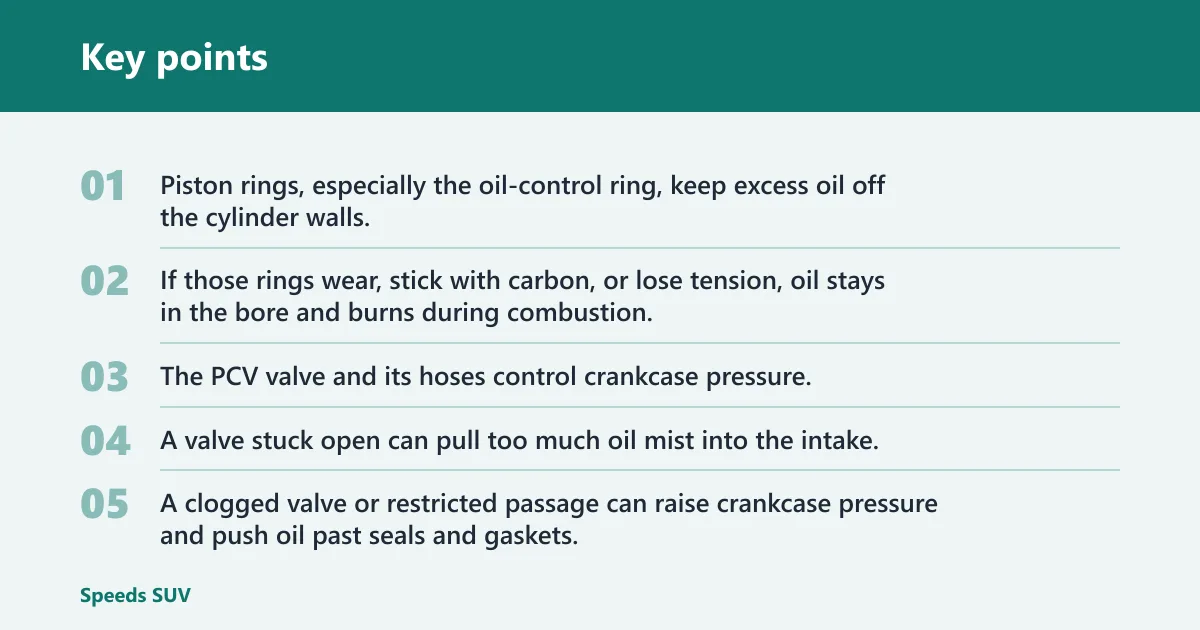
Piston rings, especially the oil-control ring, keep excess oil off the cylinder walls. If those rings wear, stick with carbon, or lose tension, oil stays in the bore and burns during combustion.
Valve stem seals are another internal route. When they harden or wear, oil can run down the valve guides, often after overnight parking, long idle periods, or high-vacuum deceleration.
PCV and oil separator faults
The PCV valve and its hoses control crankcase pressure. A valve stuck open can pull too much oil mist into the intake. A clogged valve or restricted passage can raise crankcase pressure and push oil past seals and gaskets.
Some SUVs use an oil separator built into the valve cover or breather assembly. If that separator fails, intake oil carryover can climb even when the rings are still mechanically sound.
Turbocharger oil path problems
Turbochargers use engine oil for lubrication. Worn turbo seals can let oil enter the compressor side and move into the intake, or the turbine side and burn in the exhaust stream.
A light oil film inside charge pipes does not always mean failure, especially on boosted direct-injection SUVs. Pooling oil, smoke tied to boost, or a sudden jump in consumption is different and deserves a turbo inspection.
Slow seepage that burns off
Not every external leak reaches the ground. Oil from a valve cover gasket, timing cover, oil filter housing, turbo oil return line, or oil cooler line may drip onto hot exhaust parts and burn off.
Say your SUV drops half a quart every 700 miles, smells hot after highway runs, and leaves no spots overnight. That pattern fits an external seep burning on the engine almost as well as internal burning, so an underhood inspection comes before blaming the rings.
What are the signs that your SUV is burning oil?
The strongest signs are blue exhaust smoke, repeated low-dipstick readings without a visible leak, oily spark plugs, misfire, and an exhaust smell that lingers after startup or hard acceleration. Smoke timing matters: startup often points to valve stem seals, acceleration points to rings or turbo issues, and deceleration points to valve-seal or guide leakage.
Smoke pattern matters more than smoke alone
Blue smoke at cold start after the SUV sits overnight often suggests valve stem seals. Oil seeps into the top end while parked, then burns for a few seconds on restart.
Blue smoke on hard acceleration points more toward piston rings or a turbocharger on boosted SUVs. Cylinder pressure rises, boost rises, and oil can enter the intake or combustion path under load.
Blue smoke on long downhill deceleration or after extended idle often leans toward valve stem seals. High intake vacuum can pull oil past worn seals and guides.
Low oil level without visible leaks
A steady dipstick drop is a symptom, not a diagnosis. If the level falls from full to halfway in a few hundred miles and the underbody stays dry, think internal burning, PCV carryover, or a small leak burning off on hot parts.
Picture a turbo SUV that uses a quart in 900 miles, mostly during highway passing and uphill pulls, with no puddles. That pattern calls for intake-tract and turbo inspection before a compression test.
Spark plugs, misfire, and exhaust smell
Oil-fouled spark plugs matter because they can narrow the fault path. One oily plug suggests a cylinder-specific issue such as a valve seal, guide, or ring problem in that cylinder. All plugs oily or ash-coated points more toward a system-wide problem such as ring wear, PCV carryover, or heavy overall oil burning.
Misfire under load, rough idle after startup, or a burnt-oil smell from the exhaust can follow. Ongoing oil burning also loads the catalytic converter with ash and can foul oxygen sensors.
Downstream damage
Catalytic converters do not tolerate burned oil well. Ash contamination can cut converter efficiency and eventually trigger warning lights or a hot, overheated smell.
If oil burning continues long enough, the repair bill spreads outward from the original fault to plugs, coils, sensors, and catalysts. That is why the consumption rate matters almost as much as the root cause.
How do you confirm oil consumption correctly?
Confirming oil consumption means setting a repeatable baseline, ruling out refill and checking errors, and then working in order: verify the rate, inspect for external leaks, check the PCV and intake side, and only then move to compression and leak-down if the earlier checks do not explain the loss. A level-ground dipstick check, a written mileage log, an underhood inspection, and targeted smoke-pattern observation tell you far more than one low reading or one smoky startup.
Verification steps
- Set a full mark. After an oil change or top-off, bring the oil exactly to the full mark using the manufacturer-specified SAE grade and any required approval. Start the log at that odometer reading.
- Check at fixed intervals. Recheck about every 300 to 500 miles, or about weekly if mileage is low. Fixed intervals show whether the loss is gradual, stable, or suddenly worse.
- Inspect the engine exterior. Look around the valve cover, oil filter housing, oil pan, drain plug, timing cover, front and rear main seal area, oil cooler lines, and turbo feed and return lines where equipped. Fresh wet oil is better evidence than guessing.
- Watch the exhaust pattern. Have another person observe startup, idle after 5 minutes, hard acceleration, and long deceleration. The moment the smoke appears is one of the best clues.
- Check the intake side. Remove accessible intake plumbing if appropriate for the vehicle and inspect for unusual oil pooling. A light film may be expected; puddling points toward PCV or turbo carryover.
- Inspect the spark plugs. Compare all cylinders if service access is reasonable. One oily plug and all oily plugs tell very different stories.
Oil loss matrix table
| Symptom pattern | Likely cause | Most likely if… | Recommended next test | Urgency |
|---|---|---|---|---|
| Blue smoke for a few seconds on cold start after overnight parking | Valve stem seals or guides; less often pooled turbo oil | the smoke clears quickly, returns after long sitting, and is not strongest under boost | Observe startup after full overnight sit, inspect plugs for cylinder-specific oil fouling, then consider leak-down test if plugs or smoke persist | Moderate; schedule diagnosis soon |
| Blue smoke under hard acceleration or boost | Piston rings, turbocharger seals, or heavy PCV oil carryover | consumption rises with load, passing, uphill pulls, or boost events | Inspect charge pipes/intercooler for oil pooling, check PCV system, then perform compression and leak-down testing | High; avoid hard driving until confirmed |
| Blue smoke on long deceleration or after idling | Valve stem seals and guide wear | the SUV smokes after extended idle or downhill coast, then clears when throttle is reapplied | Repeat decel test, inspect plugs, check intake vacuum-related smoke pattern, then leak-down if needed | Moderate |
| Oil puddles under vehicle or fresh wet oil on engine exterior | External leak from valve cover, oil pan, drain plug, filter housing, timing cover, main seal, cooler line, or turbo oil line | the dipstick drops and wet oil is visible around a gasket, housing, line, or sealing point | Clean engine, add UV dye if needed, recheck source after short drive | Moderate to high depending on leak rate |
| Rapid dipstick drop with no visible smoke | Small burn-off leak, PCV fault, turbo oil path issue, or early ring problem | the underside stays mostly dry but the engine smells hot or intake plumbing shows oil | Verify dipstick method, inspect underbody and hot exhaust-side leak points, inspect PCV and intake tract | High if more than 1 quart per 1,000 miles |
| Oily spark plugs in one cylinder | Localized valve seal, guide, or ring problem in that cylinder | one cylinder misfires or one plug looks noticeably different from the rest | Compression test followed by leak-down test on that cylinder | High; misfire risk |
| Oily or ash-coated plugs across all cylinders | System-wide oil burning from rings, PCV system, or severe turbo carryover | all cylinders show similar deposits and the oil-loss pattern is consistent across driving conditions | PCV inspection, intake inspection, compression test, then leak-down test | High |
Why tracking oil use matters between service intervals
Even a small amount of oil loss can matter if it happens faster than your SUV’s manufacturer considers normal. This article explains how to judge oil use against the owner’s manual, what driving conditions can make consumption rise, and how to tell the difference between expected use and a problem that needs attention. It also shows why a low level can lead to faster wear, warning lights, and in severe cases engine damage.
If you want the practical benchmarks and the checks to make at home, see normal oil consumption.
Which parts usually cause SUV oil consumption?
The usual causes are the PCV system, piston rings, valve stem seals, turbocharger seals on boosted engines, and several external leak points. Separating them matters because a stuck PCV valve can be a low-cost repair, while ring wear or turbo failure moves into a very different repair class.
PCV valve and crankcase ventilation system
A stuck-open PCV valve can pull too much oil mist into the intake. A stuck-closed valve, clogged hose, or failed separator can raise crankcase pressure and force oil out through gaskets and seals.
On some SUVs, the separator is part of the valve cover assembly. Replacing only the valve when the separator diaphragm has failed will not fix the problem.
Piston rings and cylinder sealing
Piston rings do two jobs here: they seal combustion pressure and control oil on the cylinder wall. Oil-control rings matter most for consumption. When they wear or stick with deposits, oil remains in the bore and burns.
Direct-injection engines can build deposits more easily because fuel no longer washes the intake side, and short-trip driving can worsen carbon buildup around the rings. Compression testing helps, but leak-down testing gives a more precise read on where sealing is being lost.
Valve stem seals and guides
Valve stem seals keep oil from running down the valve stems into the ports and chambers. Their classic pattern is blue smoke at startup, after a long idle, or on deceleration.
They can cause heavy consumption even when compression numbers still look acceptable, because the rings may not be the source at all.
Turbocharger seals and oil lines
Turbo SUVs add two more paths: seal leakage inside the turbo and external leakage from oil feed or return lines. Internal seal leakage can look a lot like ring wear because the engine still burns oil and still makes blue smoke.
The clues depend on context. Smoke under boost, oil in charge plumbing, whining, shaft play, or a sudden jump in consumption after turbo noise all point toward the turbo system.
Can the wrong oil make your SUV consume more?
Yes. Using an oil that does not match the manufacturer’s specified SAE viscosity, such as 0W-20 or 5W-30, or the required approval can increase consumption, especially in hot operation or under high load. Oil choice rarely causes severe burning by itself, but the wrong grade can make an existing problem show up faster.
Match the specified grade and approval
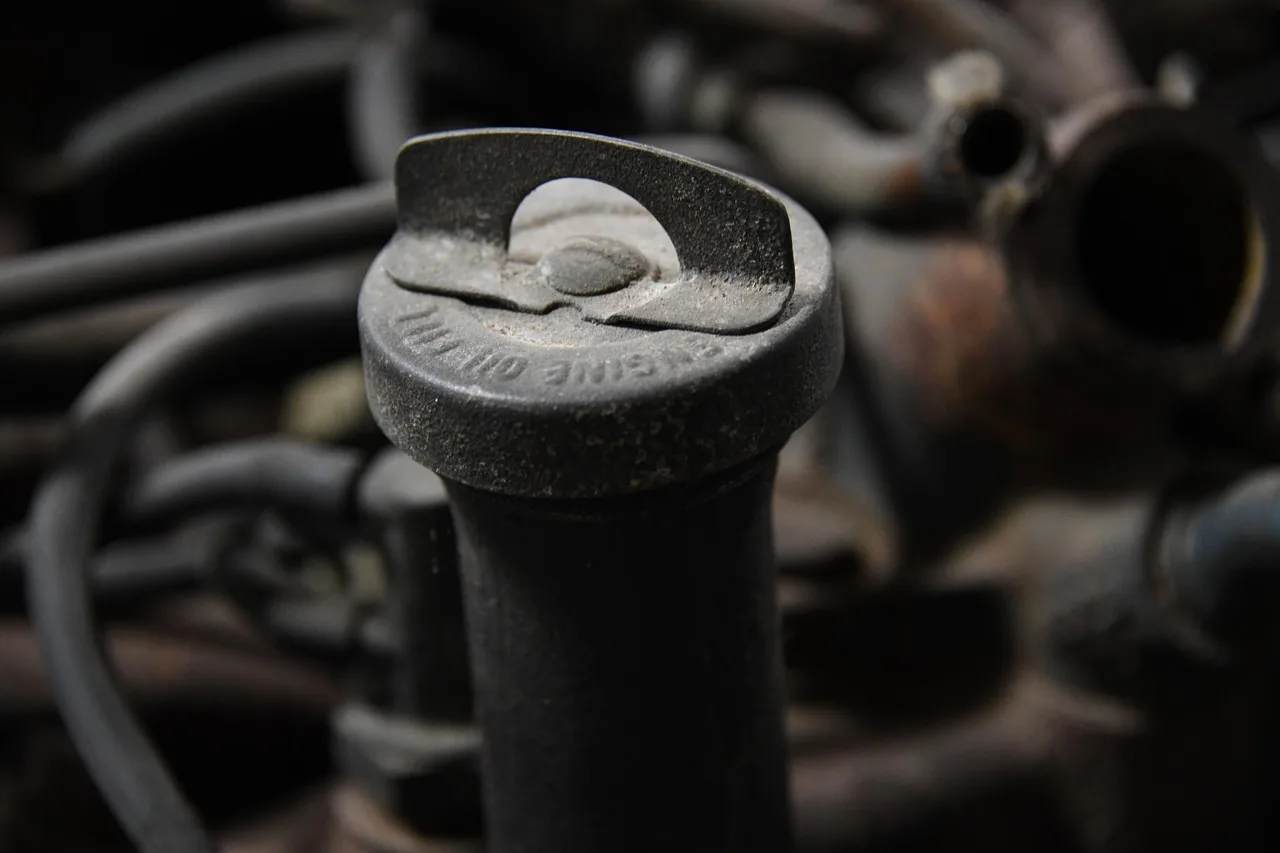
Start with the oil cap and owner’s manual, then match both viscosity and any required specification. A thinner-than-specified oil may slip past seals and ring clearances more easily in some engines, while an unapproved formula may not control deposits or volatility the way the engine was designed to handle.
When high-mileage oil may help
High-mileage oil can reduce mild seepage or minor consumption in older SUVs because it may condition seals and use an additive package aimed at wear and deposits. It can help when the problem is still small and mechanical wear is not advanced.
It will not repair worn rings, cracked separators, failed turbo seals, or hardened valve stem seals. It is a management step, not a cure.
When thicker oil is the wrong move
Moving thicker than specified can create cold-start flow problems, timing-system issues, or variable-valve-timing complaints. It may also mask symptoms long enough to delay a real diagnosis.
Suppose a 0W-20 engine is filled with 10W-40 to slow consumption and startup chain noise gets worse in cold weather. The oil did not fix the fault. It changed another operating condition and added risk.
What fixes actually stop excessive oil consumption?
The fixes that most often solve SUV oil consumption are correcting the oil grade, servicing the PCV system, repairing a confirmed external leak, fixing a failed turbo oil path, replacing valve stem seals when the smoke pattern fits, and addressing ring problems with deeper engine work when testing supports it. The right order is usually simple: confirm the rate first, inspect for leaks next, check the PCV and intake path after that, and use compression and leak-down to decide whether major internal work is justified. Some steps are diagnostic or temporary. Fewer are truly corrective.
Ranked fixes by likelihood, urgency, and repair type
- High likelihood, low cost, diagnostic/corrective: correct oil viscosity and approval, verify fill level, replace a faulty PCV valve, repair a split breather hose, or replace a failed integrated separator/valve-cover assembly.
- High likelihood when oil is visible, corrective: repair valve cover gasket, oil filter housing gasket, drain plug sealing washer, oil pan gasket, timing cover leak, oil cooler lines, or turbo oil feed/return line leaks.
- Moderate likelihood on turbo SUVs, corrective after diagnosis: turbocharger inspection, line repair, or turbo replacement if shaft play, oil pooling, or turbine/compressor-side leakage is confirmed.
- Moderate likelihood with startup/decel smoke, corrective: valve stem seal repair. This is a real fix when the smoke pattern fits and tests do not point to ring wear.
- Lower likelihood but high consequence, corrective: ring-related engine repair after compression and leak-down results support it. This is where major engine work, rebuild, or replacement enters the conversation.
- Temporary only: topping off oil, switching to high-mileage oil within specification, shorter oil-change intervals, and gentle driving. These can reduce risk while diagnosis continues, but they do not correct worn mechanical parts.
What usually should come first
Start with the parts and checks that fail often, cost less, and can imitate major engine wear. First verify the consumption rate from a consistent baseline. Next inspect for external leaks, including leaks that may burn off on hot parts before reaching the ground. Then check the oil grade, the PCV system, the separator, and the intake tract for carryover. After that, use symptom timing and test results to choose between turbo, valve-seal, or ring paths.
A common first-timer mistake is jumping straight to “bad rings” after one smoky startup and one low reading. A stuck PCV valve or a failed separator can create the same complaint with a much smaller repair bill.
Cost framing by repair class
Costs vary most by repair type and labor access. The broad cost bands below are more useful than treating oil consumption as one single-priced repair.
- Low cost band: oil correction, PCV service, breather-hose repair, and other maintenance-level fixes.
- Moderate cost band: external gasket, housing, line, and sealing repairs, especially when the leak source is confirmed early.
- Moderate to expensive cost band: turbo oil-line repairs at the lower end of turbo work, with turbo replacement much higher.
- Expensive cost band: valve stem seal repair when labor access is poor, and ring-related internal engine repair, rebuild, or replacement.
Maintenance-level fixes sit at the low end. External gasket and housing repairs usually fall into a moderate class, but labor climbs quickly on cramped transverse SUVs or engines with buried filter housings. Turbo-related work ranges from moderate line repair to major turbo replacement. Internal engine repairs for valve stem seals, ring work, or engine replacement sit at the expensive end because labor and parts scope increase sharply.
When should you stop driving and what tests should you ask for?
Stop driving immediately for a low-oil-pressure warning, active knocking, heavy continuous blue smoke, a rapid dipstick drop, a strong hot-converter odor, or a misfire that starts after oil fouling. If the SUV is using oil but still runs normally, ask first for leak inspection, PCV evaluation, and spark-plug reading, then compression and leak-down testing before approving major engine work.
Stop-driving thresholds
A low-oil-pressure light is different from a low-level reminder. Pressure loss means bearing damage can happen fast. The same applies to knocking, which can mean the engine is already being starved of oil.
Heavy smoke, catalyst-overheating smell, or a misfire from fouled plugs also raises the risk. Burned oil can overheat or contaminate the catalytic converter, and raw misfire events can damage it further.
Compression test versus leak-down test
A compression test is a useful first mechanical check. Low readings can support ring, valve, or head-gasket concerns, but the test does not always show the exact path.
A leak-down test is more precise because it puts air into each cylinder and helps identify where sealing is being lost: rings into the crankcase, valves into the intake or exhaust, or a head-gasket path into the cooling system. If major internal repair is on the table, leak-down testing is the stronger test to request.
What to inspect before approving major repair
- Verify the consumption rate. Ask for the oil-added-per-mile figure from a documented baseline. Major engine work should not be approved from guesswork.
- Rule out external leaks. Confirm inspection of valve cover, pan, filter housing, timing cover, main seal area, cooler lines, and turbo oil lines. An external leak can imitate internal loss.
- Check the ventilation system. Make sure the PCV valve, hoses, and any integrated oil separator were tested or inspected. Ventilation faults are common and much cheaper than engine teardown.
- Inspect plugs and intake tract. Ask whether one cylinder or all cylinders show oil fouling and whether the intake or intercooler contains abnormal oil pooling. That helps separate ring, valve-seal, and turbo paths.
- Request compression and leak-down. Compression gives context; leak-down gives direction. Together they are far more useful than replacing parts on a hunch.
Frequently asked questions
How much oil consumption is normal between oil changes?
The owner’s manual is the final source because acceptable use changes with engine design, mileage, load, and climate.
Is it safe to drive an SUV that is burning oil?
Only if the consumption is mild, the oil level stays safely above the add mark, and there is no low-pressure warning, misfire, heavy smoke, or knocking. Once the SUV is dropping oil quickly or smoking heavily, continued driving risks engine damage and catalytic-converter failure.
How much does it cost to fix oil consumption problems?
Costs vary by repair class, not one universal number. Oil-grade correction and PCV service are usually the low end. External gasket or housing repairs are often moderate. Turbo work ranges from moderate line repair to expensive replacement. Valve-seal, ring, rebuild, or replacement work sits at the expensive end because labor and parts scope are much larger.
Does high-mileage oil help reduce oil consumption?
Sometimes, but only at the mild end. High-mileage oil may reduce minor seepage and small consumption if it matches the specified viscosity and approval. It will not fix worn piston rings, failed turbo seals, a broken oil separator, or valve stem seals that are already leaking heavily.
What SUVs are known for oil consumption problems?
It is more accurate to focus on engines than SUV badges. Consumption complaints often cluster around specific turbocharged or direct-injection engines, ring-design issues, or PCV/separator failures documented in service bulletins. Check the exact engine code, model year, and factory service information before assuming a brand-wide pattern.