What Is a Bad Lifter on a Truck?
A bad lifter can be worn, stuck, or collapsed, and it may cause ticking, misfire, or loss of compression. If the noise gets louder with rpm or comes with a misfire, stop driving and diagnose it right away. Ignoring it can turn a minor valvetrain repair into camshaft damage, a burned valve, or a no-start. This guide explains how to recognize lifter noise, separate it from similar sounds, and decide whether your truck can be driven or needs immediate attention.
What is a bad lifter on a truck?
A bad lifter is a valve-train lifter that no longer keeps the correct contact and clearance relationship between the camshaft and the rest of the valvetrain. In a hydraulic setup, the lifter is generally expected to self-adjust with oil pressure. When it collapses or sticks, valve motion changes, noise starts, and cylinder filling can suffer.
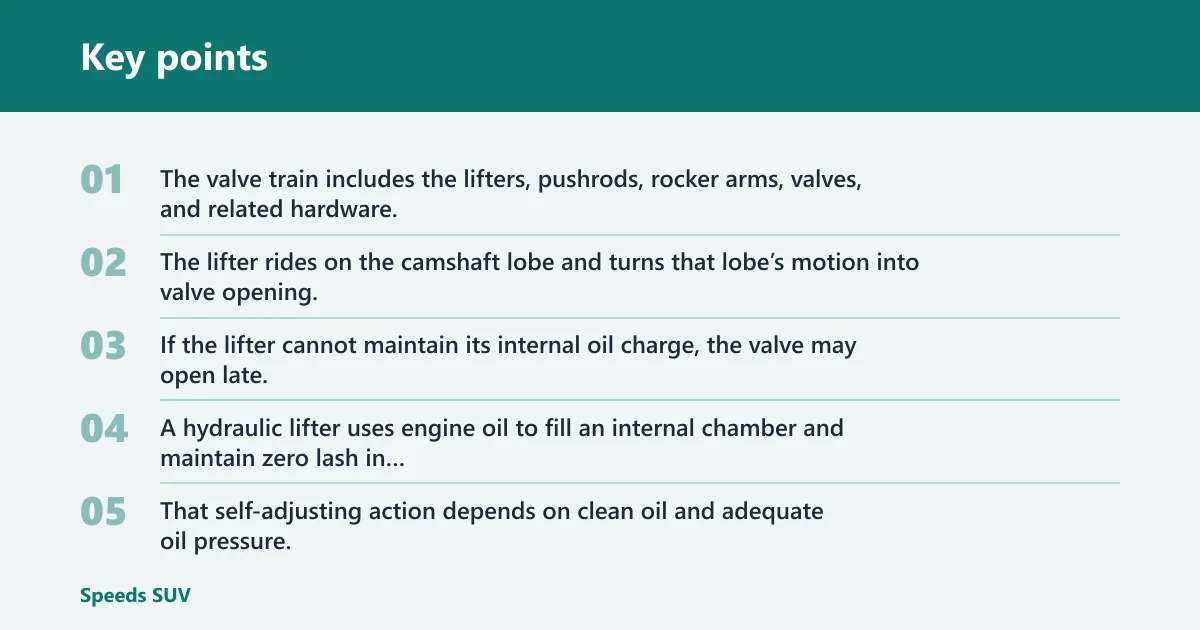
The valve train includes the lifters, pushrods, rocker arms, valves, and related hardware. The lifter rides on the camshaft lobe and turns that lobe’s motion into valve opening. If the lifter cannot maintain its internal oil charge, the valve may open late, open less than it should, or close with extra lash and noise.
How a hydraulic lifter works
A hydraulic lifter uses engine oil to fill an internal chamber and maintain zero lash in normal operation. That self-adjusting action depends on clean oil and adequate oil pressure. The cartridge-style adjustment insert sub-assembly used in some hydraulic lifter designs follows the same idea: oil pressure supports the lifter’s working height so the valve train stays quiet and correctly loaded.
When oil pressure drops, oil passages clog, or the internal check valve sticks, the lifter can collapse. A collapsed lifter shortens the effective length of the valvetrain, which adds clearance where there should be none. That extra clearance is what often becomes a tick or tap.
Why oil pressure matters
Oil pressure is central to hydraulic lifter operation. Low pressure can let a lifter bleed down or fail to refill, while dirty oil can starve the lifter, pushrod, and rocker arm of clean lubrication. A lifter fault is often a lubrication problem first, then a noise problem.
What does lifter tick sound like?
Lifter tick is usually a light, rhythmic ticking or tapping from the top of the engine. It often shows up at idle or startup and may be louder when the engine is cold. A healthy lifter should quiet down as oil pressure stabilizes; a bad one may stay noisy or return after warm-up.
The sound is usually faster than a bottom-end knock and lighter in tone. That matters because a deeper rod knock points to a different failure path and a different level of risk. Noise location matters too. A tick near the valve cover points higher in the engine than a knock from the oil pan area.
Cold noise versus hot noise
Cold-start ticking that fades after a short run can come from a lifter that has bled down overnight. Hot idle noise is more concerning when it stays steady after the engine reaches normal temperature. If the sound appears only under load, the cause may be elsewhere in the valvetrain or bottom end.
Ticking versus deeper knock
Use pitch, location, and load response. Lifter tick is usually sharper and lighter. Rod knock is deeper, duller, and often louder under load or during throttle blips. If the sound gets heavy when you accelerate, do not assume it is a lifter.
Bad lifter checklist
This checklist helps sort the most likely causes before teardown. Start with the conditions that reproduce the noise, then move to the simplest checks. One symptom alone does not confirm a bad lifter.
| Noise condition | Most likely causes | First 2 checks | Stop-driving threshold |
|---|---|---|---|
| Cold start only | Hydraulic lifter bleed-down, thick or dirty oil, minor valvetrain lash | Check oil level and oil condition; listen near the valve cover after startup | Stop if the tick grows louder, turns into a misfire, or does not fade as oil pressure builds |
| Hot idle only | Collapsed lifter, low oil pressure at hot idle, worn lifter bore or cam lobe wear | Check oil pressure with a gauge or scan data; inspect for valve-cover area noise | Stop if the noise stays steady at normal temperature or the engine idles rough |
| Under load | Rocker arm wear, pushrod issue, cam lobe wear, rod knock mistaken for valvetrain noise | Check for misfire codes; compare noise at idle versus a light throttle snap | Stop if the sound becomes deeper, louder with rpm, or comes with loss of power |
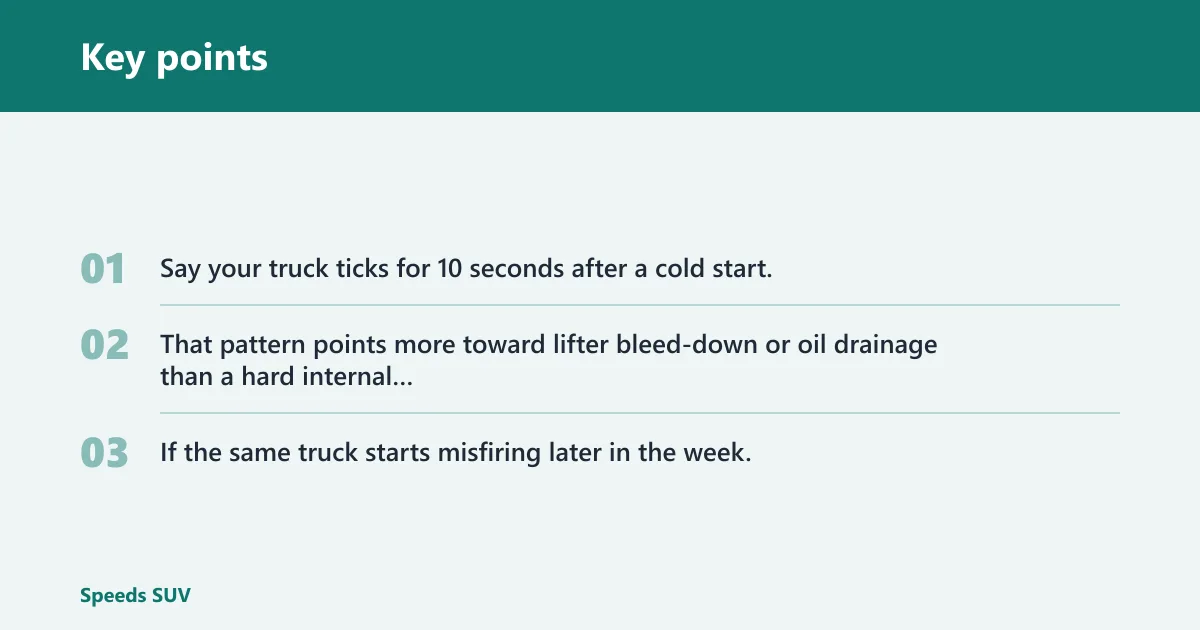
Say your truck ticks for 10 seconds after a cold start, then quiets down and stays quiet at idle. That pattern points more toward lifter bleed-down or oil drainage than a hard internal failure. If the same truck starts misfiring later in the week, the diagnosis changes and the engine needs closer inspection.
How do you tell lifter noise from other engine noise?
Good diagnosis starts by sorting similar sounds. Lifter tick, rod knock, injector noise, exhaust leaks, and timing-chain rattle can all make a truck sound unhealthy. The wrong guess can send attention to the wrong part of the engine.
Rod knock
Rod knock is a deeper bottom-end knock, often louder under load. It usually sounds heavier than a lifter tick and may follow throttle input more clearly. If the noise comes from below the engine and gets worse when you accelerate, treat it as a serious warning until proven otherwise.
Exhaust leak
An exhaust leak near the manifold can sound like a tick, especially cold. It often has a sharper puffing tone and may change as the metal heats and expands. Look for soot, cracked manifolds, or a ticking sound that seems to come from the exhaust side rather than the valve cover area.
Injector noise
Fuel injectors can make a normal clicking sound. That sound is usually even, light, and present across the top of the engine. If the noise matches injector rhythm and does not change with oil temperature, it may not be a lifter problem.
Timing-chain rattle
Timing-chain rattle often sounds broader and less percussive than a lifter tick. It may be most noticeable at startup or during deceleration. Chain noise usually comes from the front of the engine, which helps separate it from a valve-cover tick.
What damage can a bad lifter cause?
A bad lifter can damage more than the lifter itself. It can change valve motion, overload nearby parts, and wear the camshaft lobe it rides on. If the lifter collapses long enough, the valve train can run with extra clearance and repeated impact.
That stress can bend a pushrod, wear a rocker arm, or scar the camshaft. A poor valve event can also create a misfire, rough idle, and diagnostic trouble codes. In a serious case, repeated misfire can contribute to poor combustion, low compression, and driveability complaints that go beyond the noise.
Pushrod and rocker arm damage
The pushrod transmits motion from the lifter to the rocker arm. If the lifter fails, the pushrod can bend or discolor from heat and friction. The rocker arm can show excessive lash, scuffing, or a noisy pivot point, especially if the valve train has been hammering for a while.
Camshaft wear
The camshaft lobe and lifter face work as a matched pair. When the lifter stops rolling or riding correctly on the lobe, wear can accelerate quickly. A damaged cam lobe can mimic a bad lifter, and a bad lifter can create cam damage. That is one reason teardown sometimes becomes necessary.
Misfire and drivability issues
A lifter problem can cause a cylinder to run poorly, which may lead to rough idle, loss of power, and misfire codes. If the engine shakes, hesitates, or sets a check-engine light along with the tick, the issue has moved beyond a simple noise complaint.
Suppose the truck runs smoothly cold but starts missing after 15 minutes in traffic. If the tick and misfire arrive together, the problem may be a lifter that collapses once oil thins and hot idle pressure drops. That is a stronger stop-driving signal than a brief cold-start tick.
Can you drive a truck with a bad lifter?
Sometimes, but only with caution and only if the noise is light, stable, and limited to brief cold-start ticking with no misfire, no overheating, and no loss of power. If the sound grows with rpm, stays loud when hot, or comes with a misfire, the safer move is to stop driving and diagnose it.
Driving on a collapsed lifter can increase cam wear, bend a pushrod, or damage the rocker arm and related parts. The longer the engine keeps running with poor valve motion, the more the repair can spread beyond the original lifter. That is why continued driving is a risk, not a neutral choice.
When short-term driving may be possible
Short trips to a repair shop may be reasonable if the noise is only a faint cold-start tick, oil level is correct, and the engine runs smoothly. Even then, avoid heavy throttle and high rpm. Keep the drive short and watch for a change in sound or engine behavior.
When to stop driving right away
Stop driving if the tick turns into a louder tap, the engine develops a misfire, the check-engine light flashes, or the noise becomes deeper under load. Those signs point to a fault that may be progressing. A repeated misfire can also mean a cylinder is no longer contributing normally.
What to check before teardown
Teardown should not be the first step. Begin with oil level, oil condition, oil pressure, valve-cover inspection, and scan tool data. Those checks can point to a lifter problem or show that the noise comes from another part of the engine.
Oil level and oil condition
Check the dipstick first. Low oil level can starve the lifter, and dirty or sludged oil can keep the lifter from filling correctly. If the oil smells burnt, looks thick, or contains debris, that matters before any cover comes off.
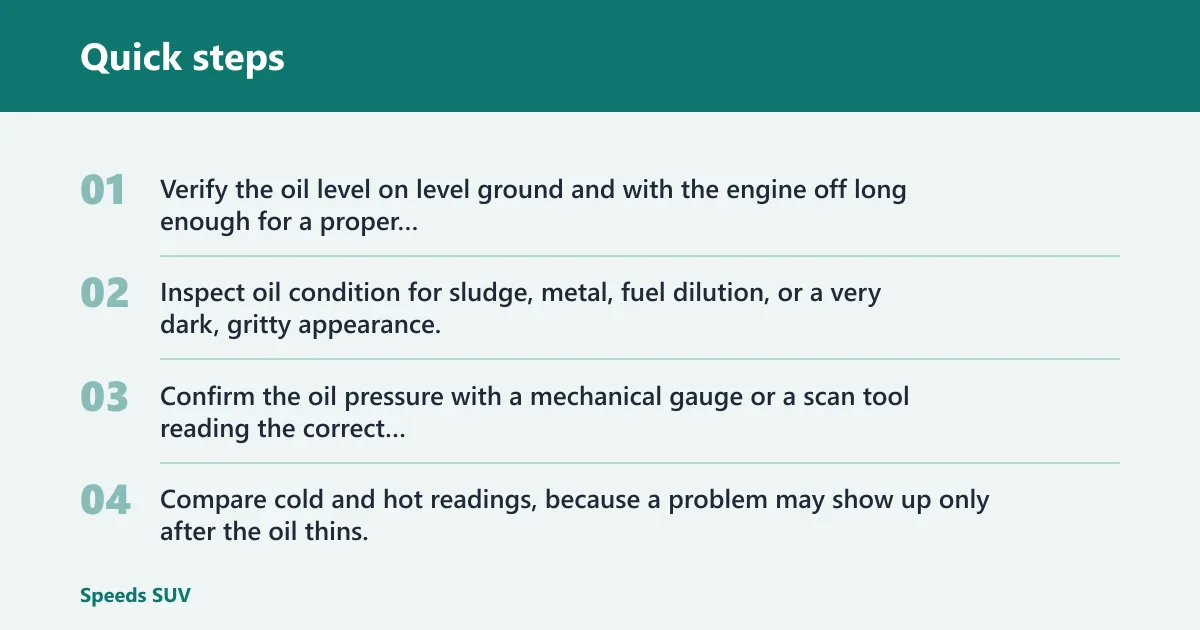
- Verify the oil level on level ground and with the engine off long enough for a proper reading.
- Inspect oil condition for sludge, metal, fuel dilution, or a very dark, gritty appearance.
Oil pressure check
Oil pressure helps separate a lifter problem from a broader lubrication issue. If the pressure is low at hot idle, the lifter may be losing support. A gauge test gives more useful information than guessing from the noise alone.
- Confirm the oil pressure with a mechanical gauge or a scan tool reading the correct sensor data.
- Compare cold and hot readings, because a problem may show up only after the oil thins.
Valve-cover inspection
A valve-cover inspection can reveal broken springs, obvious rocker wear, bent pushrods, or excessive lash without opening the engine fully. It also helps localize the noise to one bank or one cylinder. That is a better path than assuming every tick comes from the same part.
Scan for misfire codes
Scan tool data can confirm whether the engine is missing on one cylinder or setting related trouble codes. A misfire code near a noisy valvetrain does not prove a lifter failure, but it raises the odds that valve motion is affected. That is valuable before any teardown decision.
What is a lifter tick in a truck?
Lifter tick is a light rhythmic ticking from the valve train, usually most noticeable at idle or startup. It may be intermittent when cold and quieter once oil pressure stabilizes. If it stays light and does not bring power loss, it is less urgent than a deeper knock, but it still needs attention.
Do not assume all tick sounds are lifters. Exhaust leaks, injectors, and timing-chain noise can sound similar. The key is where the sound comes from, when it happens, and whether the engine also shows rough running or a misfire.
What is the difference between lifter tick and rod knock?
Lifter tick is usually a lighter, sharper top-end noise from the valve train. Rod knock is deeper, heavier, and often louder under load. If the engine is noisy only near the valve covers and the sound is fairly light, think lifter or another top-end source first. If it sounds like a hard bottom-end knock, do not treat it as a lifter by default.
Frequently asked questions
What does a bad lifter mean?
It means the hydraulic lifter is no longer doing its job of keeping the valve train correctly adjusted. The result can be noise, poor valve action, and in some cases a misfire. It is often a lubrication or wear issue, not just an annoying sound.
How do you know if your lifter is bad?
Look for a rhythmic top-end tick, especially at startup or hot idle, plus possible misfire codes or rough running. Then check oil level, oil condition, and oil pressure before assuming the lifter is the fault. If the noise persists or worsens, inspection has to go deeper.
Can a bad lifter cause damage?
Yes. A failed lifter can wear a camshaft lobe, bend a pushrod, damage a rocker arm, and create misfire-related drivability problems. If the lifter collapses and the engine keeps running, the damage can spread beyond the original failure point.