What Are the Signs of Truck Transmission Problems?
Truck transmission trouble often shows up as slipping, delayed engagement, harsh shifts, leaking red fluid, or a burning smell; if it won’t move cleanly into gear or loses drive, stop driving. Ignoring those signs can turn a repairable fault into a failed transmission, plus a towing bill and damage to clutches, seals, and the torque converter. This guide matches each symptom to the most likely cause and tells you when the truck is safe to drive and when it is not.
What does a bad truck transmission feel like?
A bad transmission often feels like hesitation when you move from park to drive, a delayed or rough shift, or a sudden jolt as the gear change finally happens. It can also feel like shuddering, jerking, or a loss of drive that does not match engine speed. Some of those clues point to fluid issues; others point to internal wear or sensor trouble.
Delayed engagement and rough shifts
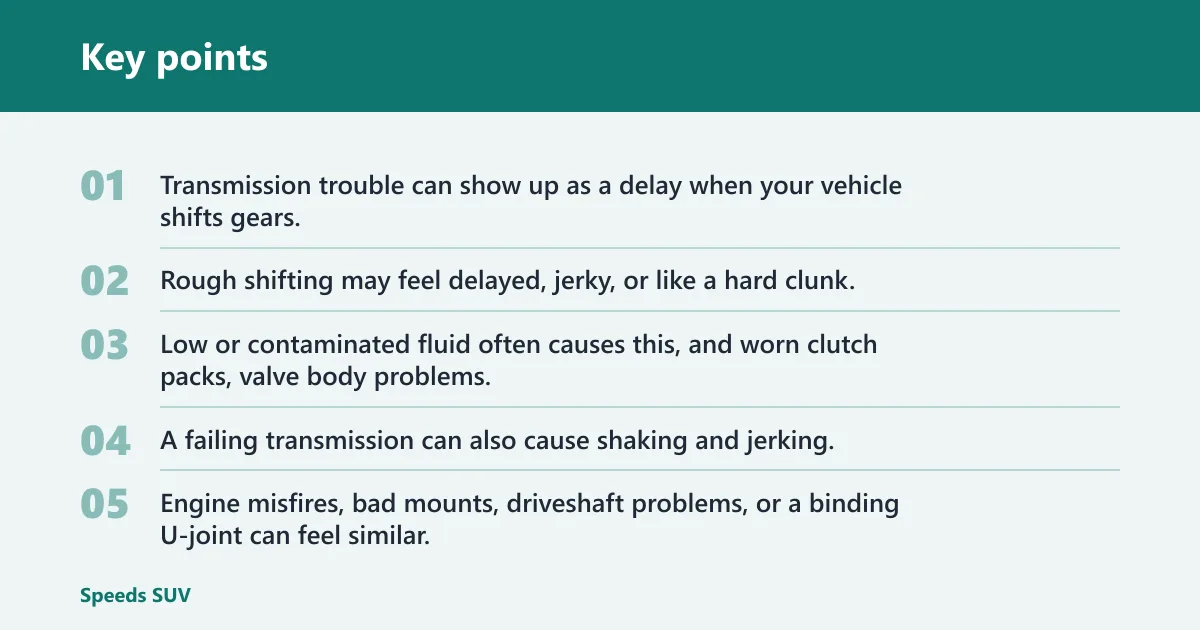
Transmission trouble can show up as a delay when your vehicle shifts gears, especially when you move the selector from park to drive or from one gear to the next. Rough shifting may feel delayed, jerky, or like a hard clunk. Low or contaminated fluid often causes this, and worn clutch packs, valve body problems, or solenoid faults can do it too.
What jerking can mean elsewhere
A failing transmission can also cause shaking and jerking, but jerking is not transmission-only. Engine misfires, bad mounts, driveshaft problems, or a binding U-joint can feel similar. If the truck jerks at the same speed every time, or only under throttle with no gear change, the cause may sit outside the transmission.
Delayed shifting and gear changes
Hesitation between gears, a hard jolt or clunk on shifts, or a delay moving from park to drive all point to a transmission that is not applying hydraulic pressure or friction elements on time. Low or contaminated fluid often causes this because it can thin out, overheat, and stop carrying pressure correctly. If the delay grows worse over a few days, the fault is usually progressing.
Why fluid gets blamed first
Transmission fluid should be red or reddish-brown, and it should not smell burnt. Low fluid often causes overheating, and dirty or contaminated fluid can block passages or slow valve movement. Leaks from seals, gaskets, cooler lines, or the pan can drop the level enough to trigger rough shifts before a warning light appears.
What to separate from engine trouble
If the engine revs normally but the truck does not respond with the expected gear change, that leans toward transmission trouble. If the engine stumbles, shakes, or loses power before the shift, the root cause may be ignition, fuel, or air delivery rather than the transmission. That distinction matters before you pay for a repair plan.
Does your truck slip gears under load?
Yes, and load makes the symptom easier to spot. Gear slipping can feel like the engine revs climb higher than usual before shifting, a sudden loss of power while driving, or unexpected gear changes on hills. Heavy-duty trucks can show slipping when the RPMs shoot up under load, especially during towing or hauling.
What slipping feels like on the road
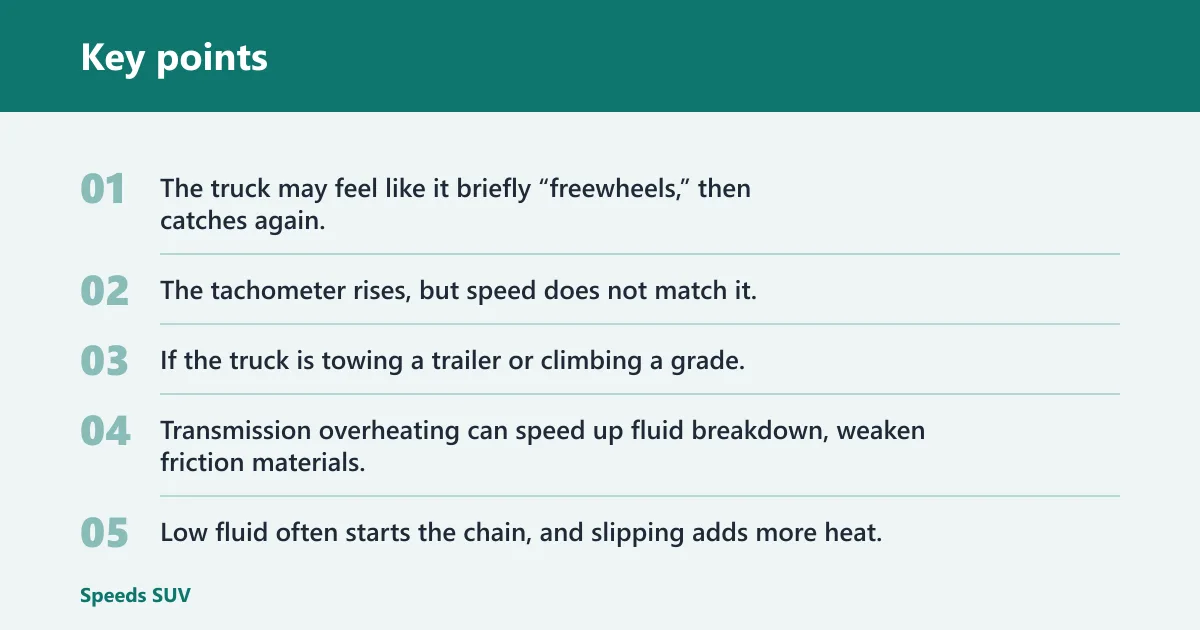
The truck may feel like it briefly “freewheels,” then catches again. The tachometer rises, but speed does not match it. That high-RPM symptom is a strong clue. If the truck is towing a trailer or climbing a grade, slip often appears sooner because the transmission is under more stress and heat builds faster.
How heat turns a small fault into a larger one
Transmission overheating can speed up fluid breakdown, weaken friction materials, and may turn a borderline slip into complete gear failure if it is ignored. Low fluid often starts the chain, and slipping adds more heat. That is how a truck can move from “acts funny” to “will not pull itself” in a short time.
Say your half-ton is empty around town, and it only flares on the 2-3 shift after a long uphill pull. That pattern points more strongly to load-related slip than to a constant engine problem, because the symptom appears when torque demand and heat are both higher.
Burning smell, leaks, and hot fluid
A burning transmission fluid smell usually means the fluid is overheating or breaking down. The odor often comes from additive breakdown, friction, and excess heat. If you also see red or reddish-brown fluid under the truck, treat that as evidence of a leak until proven otherwise. Prompt inspection matters because heat can damage clutches, seals, and internal seals quickly.
Common leak points
Transmission fluid leaks may appear as reddish or reddish-brown fluid under the truck. Common leak points are often seals, gaskets, cooler lines, and the pan. A pan leak may drip after parking, while a cooler line leak can spray or leave a wet trail near the front of the vehicle. Either one can lower the fluid level enough to create slipping or rough shifts.
When smell means stop
If the smell is strong enough to notice after a short drive, the transmission has likely run hot enough to matter. Heat speeds wear, and overheated fluid loses its ability to protect moving parts. If the truck also slips, delays into gear, or flashes a warning light, keep driving to a minimum and arrange inspection quickly.
Unusual transmission noises
Whining, humming, buzzing, clunking, or grinding from the drivetrain area can point to transmission problems, but noise alone is not proof. Fluid starvation, worn bearings, damaged gears, or a failing pump can make those sounds. Clunking and grinding can also point to transmission problems, and they are more concerning when they happen with shifting trouble or slipping.
When noise may be driveline related
If the sound changes with vehicle speed more than engine speed, the driveshaft, differential, wheel bearings, or U-joints may be involved. A clunk only when shifting from drive to reverse can still be transmission-related, but a rhythmic hum that rises with road speed may come from elsewhere. Track when the noise appears before guessing at the source.
What to listen for with load changes
Noise that gets louder while towing, climbing, or accelerating under load deserves extra attention. That is when weak bearings, low fluid, and internal wear tend to announce themselves. A quiet truck that suddenly starts buzzing on a grade has given a useful clue, even if the check engine light has not come on yet.
Can a truck transmission problem trigger the check engine light?
Yes. A check engine light can sometimes indicate transmission-related issues, including solenoid malfunctions, speed sensor failures, overheating, or slipping-related codes. The light does not tell you the exact part is bad. It tells you the control system has seen a fault pattern worth reading with a scan tool.
Why the light matters even if the truck still moves
Transmission problems can involve solenoid malfunctions and speed sensor failures, and both can change shift timing or gear selection. If the light appears with rough shifting or slip, the fault is less likely to be random. A warning light plus a drivability change should be treated as a real transmission concern, not a cosmetic one.
What to document before a scan
Write down whether the light came on during towing, at highway speed, on a hill, or during a cold start. Note whether the truck still shifted, slipped once, or went into a limited pattern. That context helps a shop separate a sensor fault from heat-related slip or low-fluid behavior.
Truck transmission symptom table
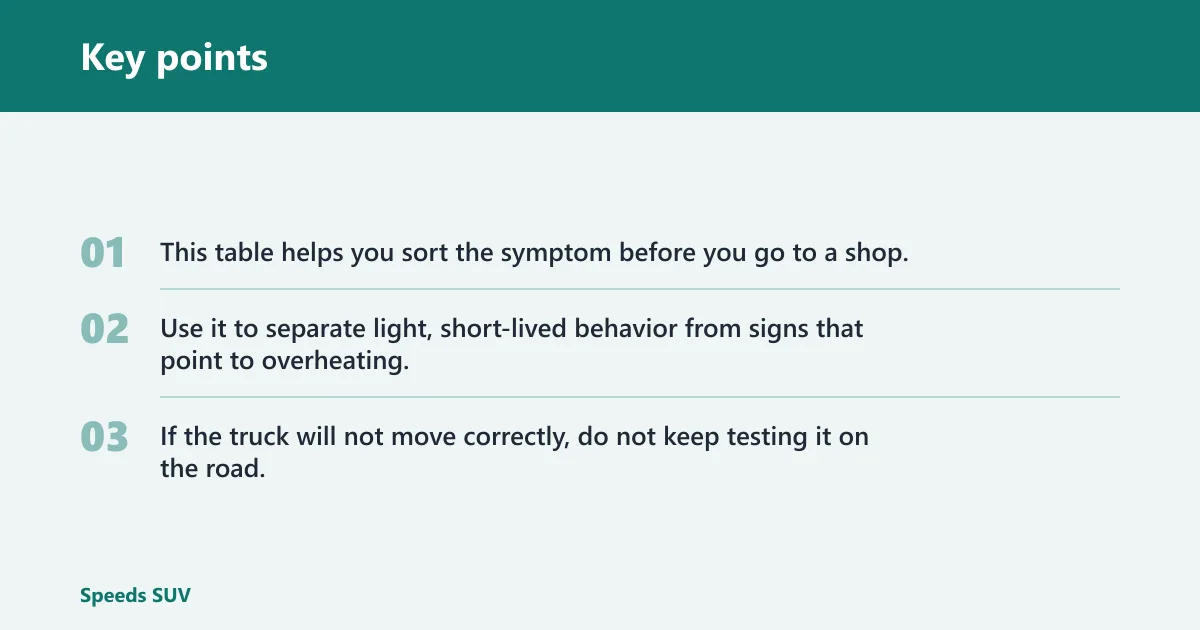
This table helps you sort the symptom before you go to a shop. Use it to separate light, short-lived behavior from signs that point to overheating, slip, or fluid loss. If the truck will not move correctly, do not keep testing it on the road.
| Symptom | What it usually feels like | Most likely cause | Urgency level | What to document before visiting a shop |
|---|---|---|---|---|
| Unloaded driving | Hesitation between gears, a hard jolt, or a clunk during normal city driving | Low or dirty fluid, solenoid fault, valve body issue, early internal wear | Medium | Speed, gear that misbehaved, whether the shift was delayed or harsh, and if the check engine light was on |
| Towing or hauling | RPM climbs without a matching speed increase, power drops on grades, or the truck hunts for gears | Slip under load, overheating, low fluid, worn clutches, sensor or control issue | High | Trailer weight, hill grade, outside temperature, speed, whether RPM shot up, and any burning smell |
| Cold-start symptoms | Delay moving from park to drive, rough first shift, or a brief clunk until fluid warms | Low fluid, thick or degraded fluid, restricted flow, early seal or pump wear | Medium | How long after startup the symptom appeared, ambient temperature, whether it cleared after warming up, and any leak spots under the truck |
| Leak evidence | Red or reddish-brown fluid under the truck, wet pan edges, or damp cooler lines | Seal, gasket, cooler line, or pan leak | High | Color of the fluid, where it dripped, how much was present, and whether the level looked low |
How do you know if you have transmission problems?
You know the problem is likely in the transmission when the symptom follows gear changes, load, or fluid evidence instead of engine speed alone. Delayed engagement, rough shifting, slipping, unusual noises, red fluid, or a burning smell all point in that direction. A light scan and a fluid check usually separate obvious faults from look-alikes.
Signs truck transmission problems checklist
- Note when the symptom happens: cold start, city driving, highway speed, towing, hauling, or hill climbing.
- Record what the truck did: delayed shift, hard clunk, slip, shudder, loss of power, or noise.
- Check for fluid under the truck and note its color, especially red or reddish-brown fluid.
- Write down whether the burning smell appeared, and whether it got stronger under load.
- Note whether the check engine light is on and whether the truck still moves through all gears.
- Stop driving if the truck will not engage, keeps slipping, or loses drive under normal throttle.
Picture a truck that shifts normally empty, then starts revving hard on a steep ramp with a trailer attached. That is a useful clue because load is the trigger, which points toward heat, fluid pressure, or clutch wear rather than a random road-surface issue.
What are the signs of a bad transmission?
The classic signs are slipping, rough or delayed shifting, leaks, noises, burning smell, and a warning light. In practical terms, that means the truck changes gear late, jerks into gear, revs without matching speed, leaves red fluid behind, or starts to smell hot after a short drive. The problem usually gets worse if ignored.
What counts as serious
A transmission fluid leak is not always a panic event, but it is always a problem to explain. If the leak is small and the truck still shifts normally, the urgency is lower. If the level is dropping, the fluid is burned, or the truck slips, the risk rises fast and internal damage can follow.
Frequently asked questions
What does a transmission problem feel like?
A transmission problem often feels like hesitation, a hard shift, a clunk when moving into gear, or a brief loss of power. Some trucks also shudder, jerk, or rev higher than usual before the gear change lands. If the feeling changes with load or gear selection, the transmission is a strong suspect.
Why is my truck hesitating when shifting?
Hesitation usually means the transmission is slow to apply pressure or complete the gear change. Low or dirty fluid is a common cause, but a faulty solenoid, worn clutch pack, or valve body issue can also slow the shift. If the delay is paired with a burning smell or slip, do not keep driving it hard.
Why does my truck slip gears under load?
Slip under load happens when the transmission cannot hold the gear it selected. Heavy-duty trucks can show slipping when the RPMs shoot up under load, especially while towing, hauling, or climbing grades. Heat makes the problem worse because hot fluid loses protection and worn friction parts lose grip faster.
Can a transmission problem trigger the check engine light?
Yes. A check engine light can indicate transmission-related issues, including solenoid malfunctions, speed sensor failures, overheating, or slipping-related codes. The light is a useful warning, but it does not identify the exact part on its own. A scan tool and symptom notes are still needed to narrow the cause.
Is a transmission fluid leak always a serious problem?
Not every leak means immediate shutdown, but every leak matters. Transmission fluid leaks may appear as reddish or reddish-brown fluid under the truck, and a low level can quickly cause overheating or slipping. If the truck is already shifting badly, smelling burnt, or leaving a visible trail, the leak is serious enough for prompt inspection.
What does burning transmission fluid smell like?
A burning transmission fluid smell usually points to overheated or broken-down fluid. That odor means friction and heat have likely exceeded the fluid’s normal range, which can weaken protection and speed up wear. If the smell shows up with rough shifting or slip, the truck should be checked before more driving.