How Do You Know If Your Lifter Is Bad?
A lifter is more likely bad when the tick is constant, stays with one cylinder, and comes with a misfire, rough idle, or low oil-pressure symptoms; a quick cold-start tick that fades in under 30 seconds is often normal. Miss that distinction and you can chase the wrong repair, waste money, or keep driving with valve-train damage in progress. This guide shows how to check sound pattern, idle behavior, scan data, and oil clues before you tear into the engine.
What a bad lifter sounds like
A bad hydraulic lifter usually makes a sharp ticking or clicking near the valve cover. It is often louder at idle and may shift as engine speed rises. A cold engine can make it easier to hear, because a lifter can bleed down overnight and need time to refill with oil.
Ticking versus tapping versus knock
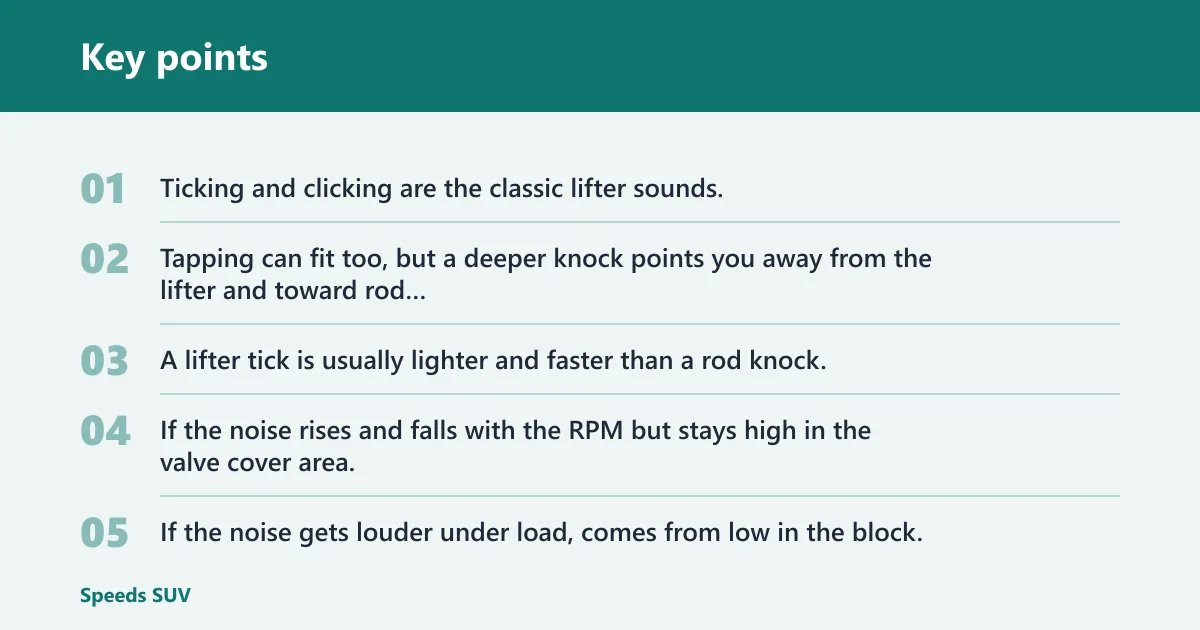
Ticking and clicking are the classic lifter sounds. Tapping can fit too, but a deeper knock points you away from the lifter and toward rod or bearing trouble. A lifter tick is usually lighter and faster than a rod knock, and it often follows valve-train speed more than engine load alone.
If the noise rises and falls with the RPM but stays high in the valve cover area, lifter trouble moves up the list. If the noise gets louder under load, comes from low in the block, or sounds dull and heavy, look harder at rod knock before you call it a lifter.
Why cold starts make it easier to hear
Hydraulic lifters use engine oil pressure to maintain valve clearance. When oil passages are restricted, the lifter can bleed down or collapse, and the first few seconds after start-up are when that weakness is easiest to hear. Once oil pressure comes up, the sound may fade or change.
That cold-start pattern matters. A brief tick on startup that disappears quickly is less concerning than a tick that stays present after the engine has warmed and oil pressure has stabilized. The longer it keeps ticking, the more likely the valve train is not staying adjusted.
When the sound points away from the lifter
Look for a sound that changes with exhaust flow, moves with engine load, or comes from a single spot near a manifold. That points away from a lifter and toward an exhaust leak. A lighter, high-frequency tick from the top of the engine can also be normal injector noise.
Say your 5.3L truck ticks for 10 seconds on a cold start, then quiets down and idles smoothly. That pattern is less concerning than a steady tick that remains after a warm restart and comes with a rough idle. The second pattern needs deeper diagnosis.
Bad lifter symptom checklist
Use this checklist to rank a bad lifter against a lookalike fault. A single tick is weak evidence. A tick plus idle shake, misfire data, or oil-pressure clues is much stronger. The more rows that match the left side of the table, the more likely the valve train is involved.
| Symptom | When it appears | What it suggests | Next test step |
|---|---|---|---|
| Sharp tick from valve cover area | Cold start, idle, sometimes with RPM increase | Hydraulic lifter tick is likely | Check oil level, then listen after warm-up |
| Tick fades within 30 seconds | Only at first start of the day | Temporary bleed-down is possible; not proof of failure | Watch repeat pattern for several cold starts |
| Tick stays with one cylinder location | Cold or warm | More consistent with a failing lifter or valve-train fault on one valve | Disable cylinders one at a time only if service data allows it |
| Rough idle with vibration | At idle, often worse cold | Uneven valve operation or misfire risk | Scan for misfire codes and live misfire counts |
| Hesitation under acceleration | Light throttle, passing, towing | Valve opening may be inconsistent | Check for pending codes and power loss under load |
| Check-engine light | After repeated rough-running events | Misfire evidence is building | Read codes before clearing anything |
| Oil is dirty, thin, or sludged | Visible on dipstick or in service history | Oil contamination may be restricting lifter passages | Correct oil level and inspect maintenance interval |
| Low oil-pressure warning or gauge reading | At hot idle or during braking and turns | Hydraulic lifters may not stay pumped up | Stop if pressure is clearly low; verify with mechanical gauge |
| Tick changes with load and sounds louder near manifold | Acceleration, uphill pull | Exhaust leak is more likely | Inspect manifold, gasket, and fasteners |
| Light, fast clicking from top end on a warm engine | Idle and cruise | Fuel injector noise is a common lookalike | Compare pitch and exact location before assuming lifter failure |
Is the noise really from the lifter?
Not every tick is a bad lifter. Exhaust leaks, injector noise, and rod knock can all sound close enough to fool you at first. The better test is pattern, location, and what the engine does at the same time. A true lifter problem usually affects valve operation, idle quality, or both.
Exhaust leak clues
An exhaust leak often sounds like a tick near the manifold, especially on a cold start. The sound may get louder under load and soften as the engine warms and parts expand. That pattern is different from a lifter tick that stays tied to one valve-train location and one cylinder.
Open the hood and listen near each bank. If the sound is strongest around a manifold flange, gasket, or cracked pipe joint, the leak becomes a stronger candidate than the lifter. A puffing sound at the exhaust side is another clue.
Fuel injector noise clues
Fuel injector noise is another common lookalike. It is usually a lighter, faster click than valve-train knock and often sounds normal when you place it near the fuel rail or injector body. A lifter tick tends to sound heavier and more mechanical, especially if it rides with rough idle or misfire.
Suppose one cylinder on a V8 sounds louder than the rest but the engine runs smoothly and the tick is clean and even. That can be injector noise. If that same cylinder also shows a misfire count and the idle shakes, the diagnosis shifts back toward a valve-train problem.
Rod knock warning signs
Rod knock is the main noise you do not want to confuse with a lifter. It is usually deeper, duller, and more pronounced under load or throttle. A lifter issue sits higher in the engine and more often shows up as a sharp tick, while rod knock often grows into a heavy thud.
If the sound gets louder when you accelerate, drops when you lift off, and comes from the lower engine block, stop treating it like a simple lifter tick. That pattern is more consistent with bearing trouble and calls for immediate inspection.
What rough idle and misfire mean
Bad lifters can upset valve operation, and that can show up as rough idle, vibration, hesitation, misfire, and power loss. If the valve does not open or close correctly, the cylinder does not fill and empty the way it should. The engine then loses smoothness and may set fault codes.
Valve-train control and idle quality
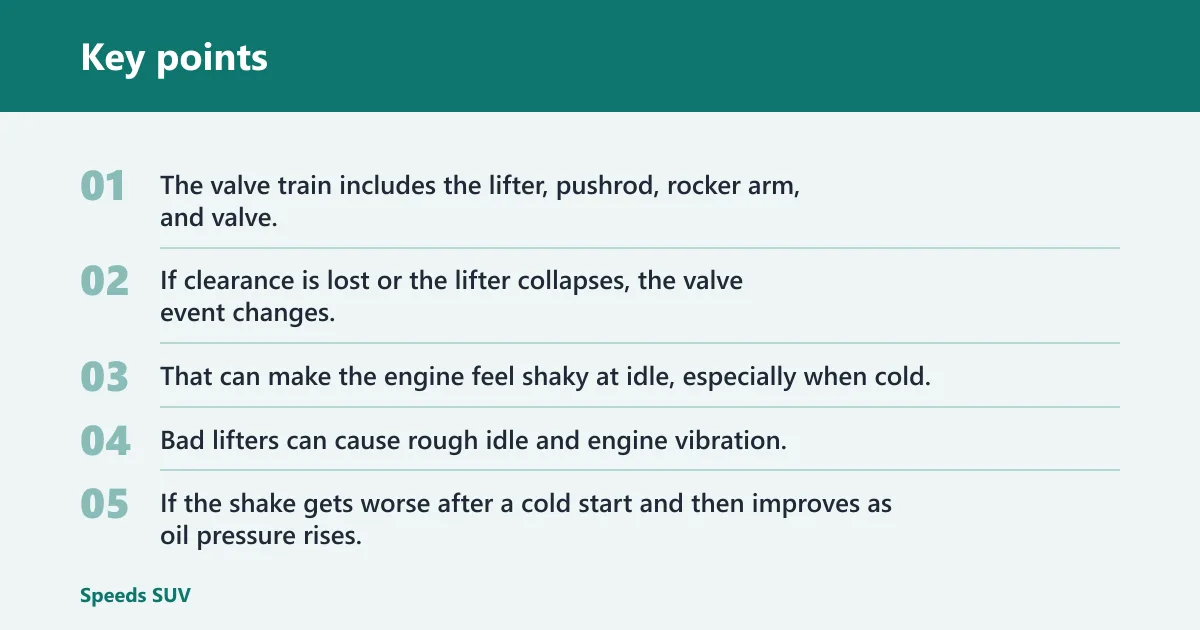
The valve train includes the lifter, pushrod, rocker arm, and valve. If clearance is lost or the lifter collapses, the valve event changes. That can make the engine feel shaky at idle, especially when cold, because one cylinder is not contributing cleanly.
Bad lifters can cause rough idle and engine vibration. If the shake gets worse after a cold start and then improves as oil pressure rises, that timing supports a hydraulic lifter issue more than a random noise source.
Hesitation under acceleration
Hesitation under acceleration can mean the affected valve is not opening fully or on time. That is a useful clue because it links the sound problem to a running problem. A tick with no drivability change is less convincing than a tick with a stumble when you tip into the throttle.
Check-engine codes to watch
Improper valve operation can lead to misfires. A misfire may trigger a warning light and fault codes, and it often shows up as a stumble, a dead feel on one cylinder, or a cylinder-specific counter that keeps climbing. If codes point to a single cylinder and the tick stays in that area, suspicion rises fast.
Fault codes do not prove a lifter by themselves. They do tell you the problem has moved beyond noise alone. That is the point where continued driving becomes a risk decision, not just a convenience decision.
How do you diagnose a bad hydraulic lifter?
Start with oil level and oil condition, then confirm when the noise happens, then check scan data and cylinder balance clues. That order matters because hydraulic lifters depend on oil pressure, and dirty oil or low pressure can create symptoms that look like a mechanical failure. Do not tear down the engine before you narrow the pattern.
Check oil level and oil condition first
Dirty or degraded engine oil is a leading cause of lifter problems. Low oil pressure can prevent hydraulic lifters from staying properly adjusted, and sludge can restrict lifter passages. If the oil is low, contaminated, or past its service interval, fix that first before calling a lifter bad.
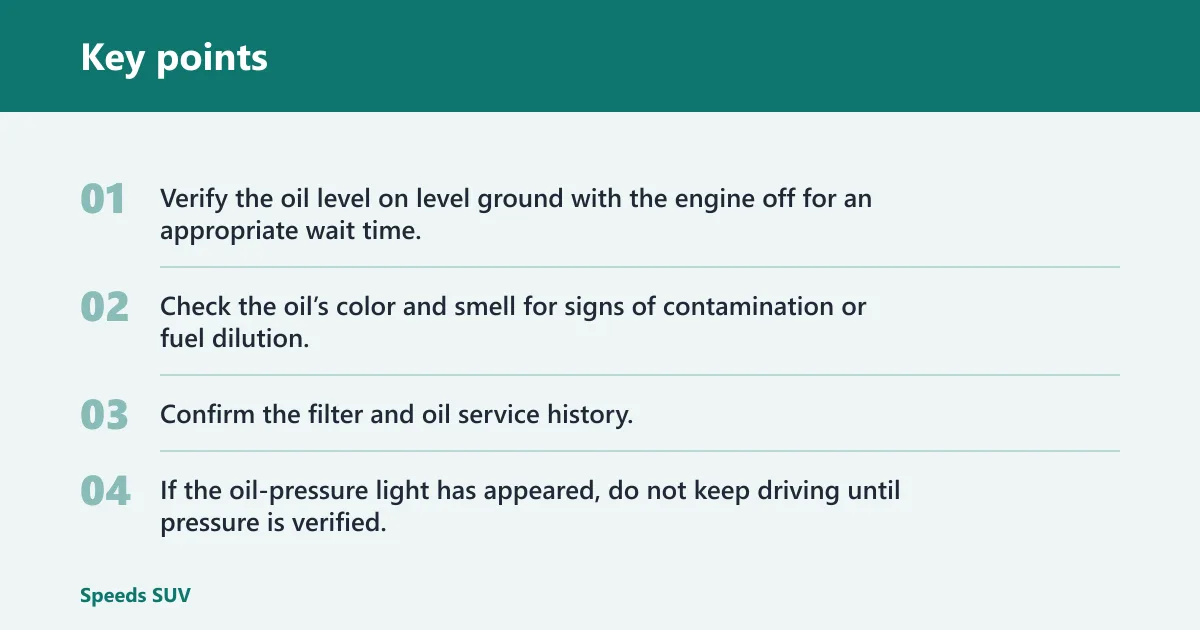
- Verify the oil level on level ground with the engine off for an appropriate wait time.
- Check the oil’s color and smell for signs of contamination or fuel dilution.
- Confirm the filter and oil service history.
- If the oil-pressure light has appeared, do not keep driving until pressure is verified.
Confirm cold-start behavior
A hydraulic lifter can bleed down overnight and tick on first start, then quiet down as oil pressure fills it. That behavior can be a warning sign or just a temporary condition depending on how long it lasts. The key is whether the tick repeats, lingers, or worsens with heat.
Use scan data and cylinder balance clues
Read pending and stored codes before clearing anything. A cylinder-specific misfire code or repeated misfire counter can point you toward the affected bank or cylinder. That information helps separate a valve-train issue from a broad fuel or exhaust problem.
If the truck supports live misfire data, compare cylinders at idle and during a light throttle snap. A lifter problem often leaves one cylinder behind while the others stay normal. That pattern is stronger evidence than a vague rough-running complaint alone.
Isolate the noise by location
Use a mechanic’s stethoscope or a long handle as a listening aid if needed. Move from the valve cover to the exhaust manifold and then toward the injector area. The goal is to decide whether the noise is centered in the valve train, at the exhaust, or around the fuel system.
A common first-timer mistake is to hear a tick near the top of the engine and assume the lifter is bad. If the sound is loudest at the manifold and changes with load, that assumption wastes time. Location is part of the diagnosis, not a detail to skip.
What happens if you keep driving
Continued driving can turn a lifter problem into a bigger engine repair. If the lifter keeps failing to maintain clearance, the camshaft lobe can start to wear from metal-to-metal contact. Once that happens, debris can move into the oil system and spread the damage.
When camshaft damage can start
A bad lifter that runs too long can stop the valve train from moving smoothly. The camshaft lobe then sees abnormal contact and wear. That progression is why a constant tick with misfire, rough idle, or oil-pressure trouble deserves faster action than a brief startup tick.
How debris can spread through the oil system
When a lobe or lifter starts breaking down, wear material does not stay in one place. It can circulate through the oil and affect other components. That is one reason dirty oil and restricted passages are such a bad combination for hydraulic lifters.
When to stop driving immediately
Stop driving if the truck has a low oil-pressure warning, a heavy knock, a severe misfire, or a flashing check-engine light. Those signs move the problem beyond monitoring. A ticking sound with no drivability change is one thing; a tick with power loss, vibration, and warning lights is another.
If you are deciding whether to keep driving, use this rule: brief startup tick with no codes and no idle change can often be watched, while a constant tick with one-cylinder misfire, rough idle, or pressure symptoms should be inspected sooner rather than later.
Frequently asked questions
How do you know if your lifter is bad?
A lifter is more likely bad when the tick is constant, stays near one cylinder, and comes with rough idle, misfire, hesitation, or low oil-pressure clues. A short cold-start tick that fades quickly is less concerning. The strongest case is sound plus drivability change plus oil-related evidence.
What does a bad lifter sound like?
It usually sounds like a sharp ticking or clicking from the valve cover area. The noise is often louder at idle, may change with engine speed, and can be more noticeable when the engine is cold. A deeper knock points more toward rod or bearing trouble.
How do you diagnose a bad lifter?
Check oil level and oil condition first, then listen for cold-start behavior, scan for codes, and compare misfire data by cylinder. If the noise is strongest near the valve train and the engine also idles rough, the lifter rises on the list. Exhaust leaks and injector noise should be ruled out too.
What does a bad lifter look like?
Externally, you usually do not see much until parts are removed. During teardown, a bad lifter may show wear on its face or internal collapse, and a damaged camshaft lobe can show matching scuffing. If metal debris is present in the oil, the failure may already be progressing.
What happens when a lifter goes bad?
The valve train can lose proper clearance, which affects valve opening and closing. That can lead to ticking, rough idle, misfire, hesitation, and power loss. If driving continues, the camshaft lobe can wear and debris can spread through the oil system, turning one fault into several.