Tow Package vs Trailer Package: What Is the Difference?
A tow package usually changes a vehicle’s towing readiness and may raise its tow rating; a trailer package usually adds the hitch, wiring, and connector hardware needed to pull a trailer. Choosing the wrong one can leave you short on cooling, braking, wiring, or payload margin. Manufacturer towing guides and owner manuals are where the differences are confirmed, not the sales name.
| Decision factor | Tow package | trailer package | Winner |
|---|---|---|---|
| Hitch hardware | Often includes a factory hitch receiver or prep for one, but contents vary by brand and trim. | Often includes hitch hardware only, or a limited towing bundle, depending on the seller or brand. | trailer package, if your only need is basic connection hardware |
| Wiring and plug support | Commonly includes trailer wiring and may add trailer-brake support and charge lines. | May include wiring, but some versions stop at basic light connectors. | Tow package |
| Cooling, axle, and brake prep | May include cooling upgrades, axle changes, and brake-controller prep. | Usually does not change those systems unless the brand specifically says it does. | Tow package |
| Tow rating impact | Can change the published tow rating on some vehicles, especially when the manufacturer certifies the package under towing-test criteria such as SAE J2807. | Usually does not change the rating on its own. | Tow package |
| Best use case | Best when you need the vehicle to tow more confidently and within factory specs. | Best when you mainly need hookup hardware for light trailer use. | Depends on the job |
How the labels vary by brand
The terms are not interchangeable on every vehicle. A tow package is often a factory-installed bundle that can include the receiver, wiring, cooling changes, axle changes, and brake-controller prep, while a trailer package may mean only the parts needed to connect and power a trailer. The exact option code or build sheet is what confirms the contents.
What the terms usually mean
Manufacturers and dealers do not use these labels the same way. On one model, a trailer package may be little more than a receiver-style trailer hitch and a wiring harness; on another, the same phrase can hide a broader towing bundle. That is why the build sheet, window sticker, and owner manual matter more than the sales description.
- Look for the listed components, not just the package name.
- Check whether the package includes wiring, brake prep, cooling, or axle changes.
- Use the manufacturer’s towing guide or owner manual to confirm what the package does on that exact trim.
Why manufacturers use them differently
Some brands reserve “tow package” for hardware that changes how the vehicle can tow, including cooling and brake prep. Others use “trailer package” for a lighter bundle aimed at simple trailer hookup. The label alone does not tell you whether the package changes only connection hardware or also the vehicle’s towing readiness.
What each package changes
A tow package can change both equipment and capability. A trailer package usually changes equipment only. That difference matters because towing readiness is more than a hitch on the rear bumper area; the vehicle also needs the right wiring, braking support, and capacity margin.
Hardware and wiring differences
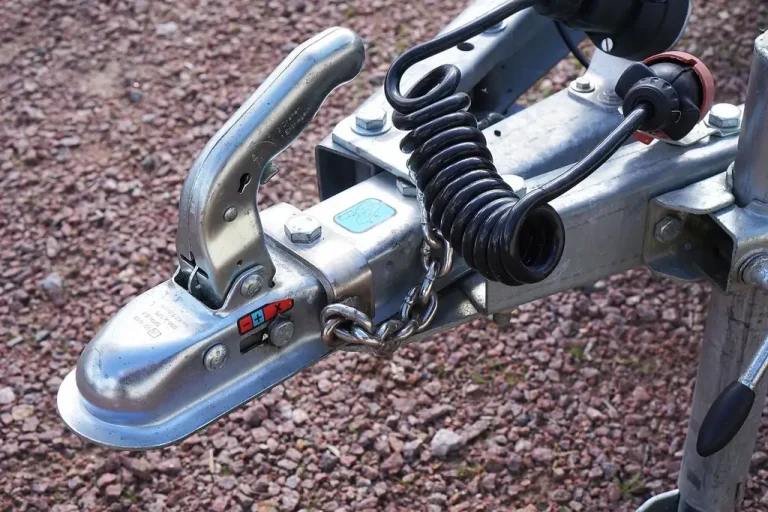
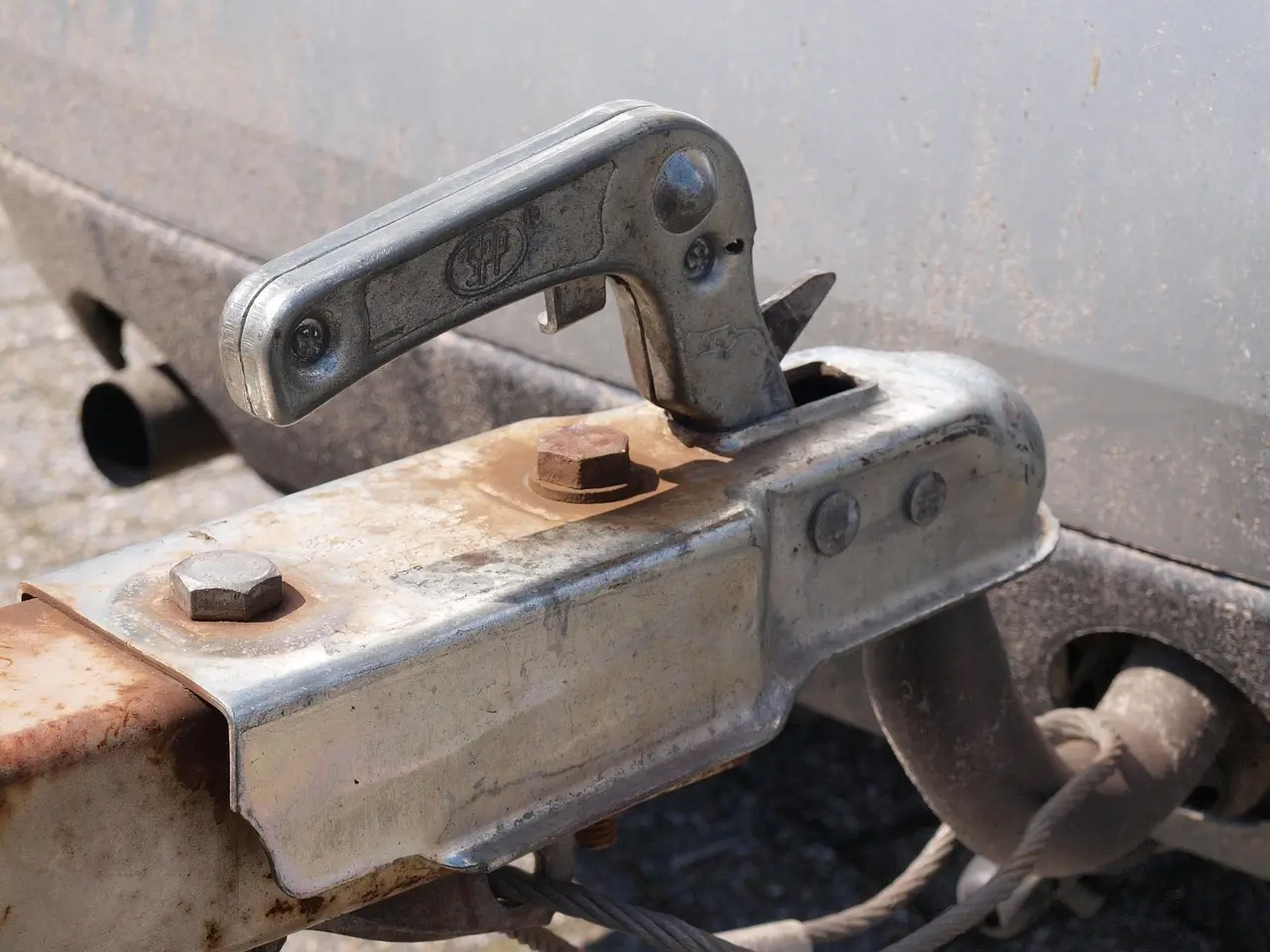
A receiver-style trailer hitch is the common baseline on many SUVs and pickups. It uses a square tube receiver for accessories such as ball mounts or cargo carriers. A tow package may include that receiver plus the wiring needed for trailer lights, while a trailer package may stop at the hitch and basic connector.
- Receiver hitch: the physical mount for a ball mount or other insert.
- Wiring: the connector that powers trailer lights and, on some vehicles, auxiliary functions.
- Brake support: needed when the trailer uses electric brakes.
Wiring is not optional if the trailer has lights. A basic 4-pin connector usually handles tail, turn, and stop lights. A 7-pin connector is more likely to add electric-brake control, reverse/aux power, and a charge line, depending on the vehicle and trailer setup. Reputable hitch and wiring references describe this split consistently.
When a package can affect tow rating
Some factory tow packages may change the published tow rating because they can add cooling, axle, or brake equipment that manufacturers may use when certifying the vehicle. That does not happen on every model. If the package only adds connection hardware, the rating usually stays the same in the manufacturer’s tow chart.
- Check the tow chart for the exact trim and drivetrain.
- Confirm whether the package changes the rating or only adds hardware.
- Do not assume the tow rating rises just because the vehicle has a hitch.
Do not stop at trailer weight. Safe towing depends on tow rating, tongue weight, payload, and GCWR. A trailer that is under the tow rating can still overload the SUV once passengers, cargo, tongue weight, and other load are counted together.
Say your SUV is rated to tow about 3,500 lbs and the trailer weighs about 3,200 lbs. If the tongue weight, passengers, and cargo push the vehicle past payload or GCWR, the setup is still overloaded. The rating on paper is not the whole story.
Is a tow package the same as a trailer package?
No, not by default. A tow package is more likely to include the systems that can change the vehicle’s towing readiness and, on some models, the rated capacity. A trailer package may be only the hitch and wiring needed to connect a trailer, or it may be a brand-specific bundle with more equipment.
When the answer is yes
They can mean the same thing only when the manufacturer or dealer uses the labels for the same option code. In that case, the contents, not the wording, decide what you are getting. Check the build sheet or window sticker for the actual equipment list.
When the answer is no
They are different when “trailer package” means hitch-only or limited towing hardware while “tow package” includes factory towing upgrades. This is the common source of confusion. The label can look close, but the vehicle may arrive with very different cooling, wiring, or brake prep.
Tow package comparison table
| Feature | Tow package | trailer package | Both/varies by brand |
|---|---|---|---|
| Hitch receiver | Often included as part of the factory bundle. | Often included, but some versions are hitch-only by design. | Yes, this varies by brand and trim. |
| Wiring harness | Commonly included, especially when the package is meant for true towing. | May be included, or may be limited to basic light wiring. | Yes, confirm the connector type and pin count. |
| Brake controller | May include factory brake-controller prep or integrated control support. | Usually not included unless the seller lists it. | Yes, model-dependent. |
| Cooling upgrade | May include extra cooling for engine, transmission, or drivetrain loads. | Usually not included. | Yes, brand-specific. |
| Axle ratio | May change on some vehicles as part of the tow-capable configuration. | Usually unchanged. | Yes, confirm in the build sheet. |
| Tow rating impact | Can raise the published rating on some models. | Usually no change by itself. | Yes, check the exact option code. |
Hitch receiver
A tow package is the more likely option to include a receiver-style trailer hitch, but that is not guaranteed. A trailer package may also include one, especially when the brand uses the term for a light towing bundle. The receiver is useful, but it does not by itself prove the vehicle is fully tow-ready.
- Check the receiver label for the hitch class and weight limits.
- Confirm that the hitch rating is matched to the vehicle’s published tow limit.
- Do not treat the hitch alone as proof of a complete tow package.
Wiring harness
Wiring is where many buyers get tripped up. The trailer package may include a simple connector for trailer lights, while the tow package may add the wiring that supports electric brakes and auxiliary functions. If the trailer has brakes, connector type matters as much as the hitch itself.
- 4-pin: lighting only on many setups.
- 7-pin: more likely to support brakes and auxiliary power.
- Match the connector to the trailer’s braking and lighting needs.
Brake controller
Factory tow packages are the more likely place to find brake-controller prep. That matters because many trailers need more than a light plug. If your trailer uses electric brakes, verify whether the vehicle has the controller, prep wiring, or only a basic connector.
- Look for a brake-controller menu, dial, or switch in the cabin.
- Check the build sheet for brake-controller prep.
- Use the owner manual to confirm what the connector and controller support.
Cooling upgrade
Cooling upgrades are one of the clearest signs that a package changes towing ability, not just attachment hardware. Transmission, engine, or oil cooling changes can help the vehicle handle sustained load. A trailer package usually does not include those changes unless the manufacturer says so.
- Look for auxiliary coolers, larger cooling packages, or tow-specific cooling items.
- Confirm whether the package changes the vehicle’s towing calibration or only the hardware.
Axle ratio
Axle ratio can affect how the vehicle pulls and what tow rating the manufacturer publishes. Some tow packages include a different ratio as part of the towing configuration. That is one reason two apparently similar SUVs can carry different ratings.
- Use the axle code on the build sheet or door label.
- Compare that code to the manufacturer’s tow chart.
Tow rating impact
If the package changes the rating, the manufacturer will usually say so in the tow chart or option guide. If the package only adds the hitch and wiring, the rating may stay unchanged. The name on the sales sheet is not enough, and SAE J2807 context only matters when the brand actually uses that standard for the published rating.
- Check the published tow rating for the exact vehicle configuration.
- Confirm whether the package is rating-changing or hardware-only.
- Do not rely on package naming alone.
What hitch do you need?
For most SUV and light pickup owners, a receiver-style trailer hitch and ball mount are the starting point. Gooseneck, fifth-wheel, and pintle hitches are different categories of tow hitch, and they are used for very different trailers and load demands. Pick the hitch type first, then check the vehicle’s rating and hardware.
Receiver-style hitch and ball mount
A common setup on light-duty vehicles is a receiver-style trailer hitch, often sold as a Class III trailer hitch when it uses a 2-inch receiver. It accepts a ball mount, cargo carrier, or other towing accessory. Many owners mean this setup when they say “tow hitch,” even though the term is broader.
- Best for many SUVs, crossovers, and light pickups.
- Uses a square receiver for inserts and ball mounts.
- Must still match the vehicle’s tow rating and tongue-weight limit.
Light-duty vehicles are said to prefer Class I–III trailer hitches, but many pickups and body-on-frame SUVs also use Class IV or Class V receivers. The label alone does not tell you enough. Capacity depends on the vehicle and the hitch combination.
Gooseneck, fifth-wheel, and pintle hitches
Gooseneck hitches, fifth-wheel hitches, and pintle hitches all fall under the broader tow-hitch category. They are not the same as a standard receiver-style trailer hitch. Heavy towing is commonly associated with fifth-wheel or gooseneck tow hitches, especially in RV and large trailer use.
Those setups need the correct vehicle and trailer design. A receiver-style hitch cannot simply replace a fifth-wheel or gooseneck setup, and a pintle hitch is used for specific heavy-duty applications. Terminology matters because the wrong hardware can mean the wrong trailer connection.
How to check your vehicle
The safest answer is in the owner’s manual, tow chart, build sheet, window sticker, and hitch labeling. Those sources tell you what your vehicle actually has, not what a listing or salesperson called it. Always verify capacity before you hook up a trailer.
Check the owner’s manual. Find the towing section and note the tow rating, tongue-weight limit, payload guidance, and any GCWR information. The manual is the first place to confirm whether a package changes towing capability or only adds hardware.
Match the option code. Compare the build sheet or window sticker to the equipment list. Look for the hitch receiver, wiring, brake-controller prep, cooling changes, and axle ratio, because those details separate a true tow package from a lighter trailer package.
Inspect the hitch and connector. Check the hitch label, receiver size, and wiring plug on the vehicle. A 7-pin connector often signals brake and auxiliary support, while a basic light connector may not. Follow the vehicle manual, never work under a vehicle held only by a jack, never exceed the vehicle’s rated roof/hitch/tow limit, keep items out of airbag zones and the driver’s view, and check local laws.
Confirm the trailer match. Compare the trailer’s weight, tongue weight, and braking setup with the vehicle’s limits. If the trailer has electric brakes, make sure the connector and controller support them. If not, the setup is not ready even if the hitch fits.
- Build sheet or window sticker: confirms the actual option content.
- Receiver label: shows hitch class and rating information.
- Connector type: 4-pin or 7-pin tells you what the vehicle is set up to support.
- Brake-controller menu or switch: shows whether the vehicle has integrated control or prep.
- Axle code: helps verify whether the towing configuration changed.
- Cooling hardware: helps show whether the package is a true tow package or just hookup hardware.
A common first-timer mistake is assuming a 2-inch receiver means the vehicle is fully equipped for towing. It may only mean the vehicle has a receiver-style hitch. The rest of the system still has to match the trailer and the vehicle’s published limits.
Verdict
Choose Tow package if you want the better choice for real towing: higher-capability factory equipment, possible tow-rating gains, and the best chance of getting cooling, brake, and wiring support in one bundle. Choose trailer package if you only need basic hitch and connector hardware for light trailer hookup and the manufacturer confirms that is all you need.
For SUVs and pickups, the right move is simple: confirm the exact package contents, then confirm the published tow rating, tongue weight, payload, and GCWR before you buy. If the package name does not spell out those details, treat it as incomplete until the build sheet or manual proves otherwise.
Frequently asked questions
What is the difference between a tow package and a trailer package?
A tow package usually includes factory equipment that can change towing readiness and sometimes the tow rating. A trailer package usually means the hitch, wiring, and connector hardware needed to hook up a trailer. The exact contents vary by brand, so the option code or build sheet matters more than the label.
What does a factory tow package include?
It may include a receiver-style trailer hitch, wiring, brake-controller prep, cooling upgrades, axle changes, and sometimes a tow-rating change. No single list fits every brand. Check the manufacturer listing for your model, because the package contents can change by trim and drivetrain.
Does every tow package include a hitch and wiring?
Usually, but not always. Some factory tow packages include both the hitch receiver and the wiring, while others are mainly prep packages with selected towing hardware. A package name alone is not enough to prove the vehicle is ready for the trailer you plan to tow.
Do I need a tow package to tow a trailer?
Not necessarily. You need the right hitch, the right wiring, and enough capacity in the tow vehicle. Some trailers can be towed with a basic receiver and proper lighting connection. Heavier towing, electric brakes, or higher load demands often make a tow package the better fit.
How do I know which towing setup my vehicle has?
Check the owner’s manual, tow chart, build sheet, window sticker, and the hitch itself. Confirm the receiver size, wiring connector, brake-controller support, and any cooling or axle changes. Then compare those details with the trailer’s weight, tongue weight, payload, and GCWR before you tow.