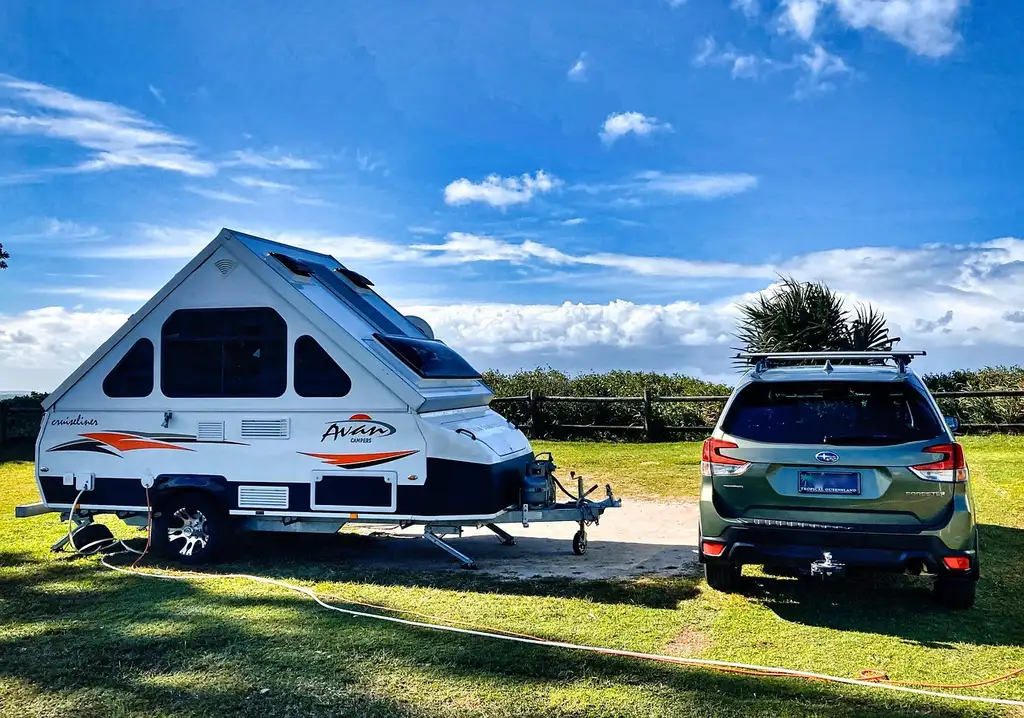
Tow Package: What It Is and What It Includes
A tow package is a factory or dealer-installed group of towing parts and ratings, usually a hitch receiver, wiring, cooling upgrades, and software, that lets a truck or SUV tow up to a stated limit safely and legally. Get this wrong and you can exceed payload, overheat the drivetrain, lose trailer-brake function, or buy a vehicle that cannot tow your trailer as equipped. This guide explains what a tow package usually includes, what it often does not, and how to verify a specific vehicle before you hitch up.
The key distinction is simple: a receiver bolted to the back of a vehicle is not the same as a tow package. Real towing ability depends on the exact VIN, engine, axle ratio, drivetrain, cooling hardware, wiring, and published ratings for that vehicle.
What is a tow package?
A tow package is a vehicle-specific combination of towing hardware, wiring, cooling parts, software calibration, and factory ratings built for one exact configuration. It is more than a hitch. On many SUVs and pickups, the package can also change thermal limits, brake-controller readiness, axle ratio, and the official tow rating.
Tow package vs a hitch-only setup
A hitch-only setup may give you a receiver opening and a place to attach a ball mount, but it does not prove the vehicle has the wiring, trailer-brake provisions, cooling capacity, or rear-axle setup needed for heavier trailers.
Receiver ratings matter too. A receiver label typically lists gross trailer weight and tongue weight limits, sometimes with separate numbers for weight-carrying and weight-distributing use. Those receiver numbers still do not override the vehicle’s lower published limits.
Factory, dealer-installed, and aftermarket differences
Factory tow packages usually tie hardware to the vehicle’s certified tow rating. That can mean a receiver integrated into the frame, a 7-pin trailer connector, a transmission cooler, larger radiator or fan settings, a different axle ratio, and software calibration for trailer functions.
Dealer-installed equipment sits in the middle. Sometimes it matches the original factory accessory catalog and keeps OEM integration, but sometimes it adds only a hitch and wiring adapter. You have to verify exactly what was installed.
Aftermarket parts can work well for specific needs, but they do not automatically duplicate an OEM tow package. A bolt-on receiver does not create a higher tow rating, add electric-brake output, or add a transmission cooler the vehicle never had.
Why package content changes by vehicle configuration
The same model line can carry different towing hardware depending on engine, wheelbase, drivetrain, trim, and axle ratio. A midsize crossover with a turbo four and front-wheel drive may get a 4-pin trailer plug setup and modest rating, while the same nameplate with all-wheel drive and factory towing prep may add a 7-pin socket and higher cooling capacity.
That is why package names cannot be read by themselves. The exact configuration, and the factory equipment tied to that VIN, sets the real rating.
What does a tow package usually include?
A tow package usually includes a receiver, trailer wiring, and some form of towing-related thermal management, but the exact mix depends on the vehicle. Heavier-duty versions may add brake-controller pre-wire, 7-pin wiring, a lower axle ratio number such as 3.73 instead of 3.31, upgraded springs or shocks, and tow-specific software.
Receiver, mount points, and tow ratings
Most factory packages include a receiver sized for the vehicle’s intended trailer range, often 2 inches on half-ton trucks and body-on-frame SUVs, and sometimes 1.25 inches or 2 inches on crossovers and midsize SUVs. The receiver class and sticker matter because they state the hardware limit.
- Gross trailer weight rating: the maximum trailer weight that receiver hardware is rated to carry.
- Tongue weight rating: the maximum downward force allowed on the hitch.
- Weight-carrying limit: the rating when the trailer is attached directly to the ball mount.
- Weight-distributing limit: the higher limit, where allowed, when a weight-distribution hitch is used.
OEM integration also matters. Some factory receivers are designed around the bumper structure, spare-tire location, rear parking sensors, and trailer wiring brackets. Aftermarket receivers can change ground clearance or interfere with hands-free liftgates and sensor coverage.
Trailer wiring: 4-pin, 7-pin, and power circuits
A basic tow setup often starts with a 4-pin flat connector. That supports trailer lighting circuits: tail or running lights, left turn or brake, right turn or brake, and ground. It is common for light utility trailers, small boat trailers, and many cargo trailers without trailer brakes.
A 7-pin connector adds more functions. The key ones are electric trailer brake output, 12-volt auxiliary power, reverse signal on many applications, and a heavier-duty ground path. Travel trailers and larger utility trailers with electric brakes usually need 7-pin wiring.
An adapter has limits. A 4-pin-to-7-pin adapter can physically connect a 7-pin trailer plug, but by itself it does not create brake-controller output or 12-volt charge power. If the vehicle lacks those circuits, the trailer’s electric brakes and battery charge line still will not work.
Cooling hardware and thermal tuning
Automatic-transmission protection is one of the biggest differences between a hitch-only vehicle and a true tow-package vehicle. Many manufacturers tie higher tow ratings to extra heat control, especially for long grades, hot weather, repeated launches, and stop-and-go towing.
That can include:
- an auxiliary transmission cooler
- a larger or higher-capacity radiator
- different fan operation or tow-rated fan hardware
- tow-focused engine and transmission calibration
- higher-output alternator or electrical support on some applications
An engine oil cooler is less universal, but it shows up on some engines where sustained load pushes oil temperature higher. Availability is often engine-specific. One trim may have it only with a certain engine or only with a max-tow package.
These changes matter more for repeated heavy towing than short local hauling. Pulling a small trailer across town once a month is a very different heat load from holding highway speed on a summer grade with a travel trailer.
Brake-controller prep, axle ratio, and suspension changes
Electric trailer brakes need a controller. Some trucks and large SUVs offer an integrated trailer brake controller in the dash, usually with gain adjustment and a manual override lever or button. Others only provide factory pre-wire, which makes an aftermarket controller easier to add.
Pre-wire matters before you buy a trailer. If the vehicle has no brake-control wiring and no straightforward brake-output path, adding a controller can be more involved and sometimes less clean than using the factory setup.
Axle ratio changes can also be part of towing packages. A numerically higher ratio, such as 3.73 compared with 3.31, can improve launch feel and grade performance with the same engine, though engine speed at highway cruise may rise.
Suspension content varies. Some vehicles get heavier rear springs, revised shocks, load-leveling hardware, or rear suspension tuning meant to support tongue weight. These parts help ride height and control, but they still do not increase payload beyond the vehicle’s published rating.
Which parts are required for your trailer?
The required parts depend on trailer weight, whether the trailer has brakes, and how much heat the tow vehicle must manage. A light trailer with only lamps can work with far less hardware than a travel trailer with electric brakes, battery charging, and sustained highway loads in hot weather.
Light trailers with no trailer brakes
For many small utility trailers, personal watercraft trailers, and light cargo trailers, the minimum setup is often a properly rated receiver, the correct ball mount and hitch ball, and a working 4-pin light connector.
The key checks are tongue weight, tire condition, and staying within the vehicle’s low-end tow rating.
Suppose your trailer weighs 1,500 pounds loaded and uses only running, brake, and turn lights. A 4-pin harness may be enough if the vehicle’s owner manual allows that trailer weight without trailer brakes and the tongue weight fits the receiver and payload limits.
Medium trailers with electric brakes
Once a trailer has electric brakes, 7-pin wiring and brake-controller readiness move from optional to functionally necessary. That means a brake output circuit, a controller with manual override, and enough receiver and tongue-weight rating for the loaded trailer.
Trailers in the 3,500- to 5,000-pound range often need 7-pin wiring and a brake controller, so this is where used-vehicle surprises can show up.
Travel trailers and sustained heavy towing
Travel trailers and repeated heavy towing add heat load. At that point, cooling hardware becomes more than an extra. Automatic-transmission cooler capacity, radiator performance, auxiliary fan operation, and sometimes engine oil cooling are directly tied to real towing durability.
Picture a midsize SUV pulling a 4,500-pound camper into a long summer grade. If that SUV has the receiver and 7-pin but lacks the cooling package tied to the factory tow option, transmission temperature can become the limiting factor long before the hitch rating does.
Payload, tongue weight, and rear-axle support
Tow rating gets attention, but payload often ends the discussion first. Tongue weight from the trailer counts against payload along with passengers, cargo, accessories, and bed load. Many conventional trailers are commonly said to place roughly 10 to 15 percent of loaded trailer weight on the hitch as tongue weight, so a 5,000-pound trailer often puts about 500 to 750 pounds on the vehicle.
A common first-timer mistake is comparing only trailer dry weight to the headline tow number. Loaded trailer weight, actual tongue weight, and the door-jamb payload sticker usually decide whether the setup fits.
Towing job decision matrix
| Trailer weight band | Brake type | Required package components | Common missing items on SUVs and pickups |
|---|---|---|---|
| Up to 2,000 pounds | No trailer brakes common | Receiver rated above trailer weight, correct ball mount and ball size, 4-pin light connector, published vehicle rating that allows the load | Receiver installed with no wiring, low tongue-weight receiver, no trailer-light fuse or module |
| 2,000 to 3,500 pounds | Mixed; some states or trailer makers require brakes in this range | Receiver with adequate tongue-weight rating, 4-pin or 7-pin depending on trailer, brake-ready plan if trailer has electric brakes, payload margin for tongue weight | 4-pin only when trailer needs brakes, adapter used with no brake output, soft rear suspension causing squat |
| 3,500 to 5,000 pounds | Electric trailer brakes common | 7-pin connector, brake controller or factory pre-wire, manual override, receiver and vehicle rating above loaded trailer weight, cooling package preferred for repeated towing | No brake-controller wiring, 7-pin socket absent, aftermarket hitch added without cooling package |
| 5,000 to 7,500 pounds | Electric trailer brakes expected | 7-pin with 12V auxiliary power, integrated or aftermarket brake controller, transmission cooler, tow-rated radiator or fan setup where specified, appropriate axle ratio, receiver with weight-distribution rating if required by manufacturer | Wrong axle ratio, no transmission cooler, receiver label lower than expected, payload exhausted by passengers and tongue weight |
| 7,500 pounds and up | Electric trailer brakes expected; heavier trailers may have additional trailer-side systems | Vehicle specifically rated for the load, heavy-duty or max-tow hardware where offered, 7-pin, brake controller, substantial cooling capacity, axle and suspension setup matched to published towing guide, weight-distribution hitch if required | Marketing package name mistaken for full tow hardware, tow technology features without heavy hardware, missing engine oil cooler on certain engines |
How is a tow package different from other towing package names?
Manufacturers use similar words for different things, so the package name alone is not enough. A trailer tow package often points to hardware and ratings, while a tow technology package may focus on cameras, blind-spot trailer coverage, or backup assist. Max tow and heavy-duty tow packages usually add another layer of hardware and rating changes.
Tow package vs trailer tow package
On many vehicles, tow package and trailer tow package usually refer to the hardware side: receiver, wiring, cooling, and related ratings. But the wording is brand-specific. One manufacturer may bundle the hitch and wiring under a standard tow package, while another uses trailer tow package for the same content.
The fix is simple: ignore the label and verify the parts list and rating sheet tied to the VIN.
Tow technology package vs hardware-focused packages
Tow technology package often means driver-assist content rather than heavier hardware. It may add surround-view cameras, trailer reverse guidance, blind-spot monitoring extended for a trailer, or trailer backup assist features.
Useful? Yes. A substitute for a real tow package? No. Those features do not create brake output, cooling upgrades, or a higher rated receiver.
Max tow and heavy-duty tow packages
Max tow package and heavy-duty tow package usually signal more than the base tow option. On pickups, that may mean a stronger receiver, 7-pin wiring, integrated brake controller, lower axle ratio, upgraded cooling, revised springs, or higher-capacity tires, depending on brand and model.
These names still are not universal. On one half-ton truck, max tow may change axle ratio and receiver rating. On another, the heavy-duty towing package may also require a specific engine or cab configuration to deliver the headline number.
How do you tell if a vehicle has a tow package?
A real answer comes from three places used together: the vehicle records, the installed hardware, and the manufacturer towing information for that exact configuration. A hitch alone does not confirm package content. For a used SUV or truck, verify the VIN, original sticker or build sheet, connector type, brake-controller readiness, and receiver label before assuming anything.
VIN, build sheet, and window sticker checks
- Decode the VIN. Use the manufacturer build information or dealer parts department when possible. The goal is to identify factory options, engine, drivetrain, axle ratio, and towing-related sales codes tied to that exact vehicle.
- Find the window sticker. Many used vehicles still have an original window sticker copy in the glove box, owner packet, or dealer listing. Look for wording such as trailer tow package, max tow package, integrated trailer brake controller, or heavy-duty cooling.
- Match the towing guide. Check the owner’s manual and the model-year towing guide for that engine, cab or body style, axle ratio, and drivetrain. This is where the official tow and tongue limits live.
Receiver labels, wiring sockets, and brake-controller clues
- Read the receiver label. Look for the receiver class, gross trailer weight, tongue weight, and any weight-distribution note. If the receiver has no readable label, treat it as unknown until identified.
- Inspect the trailer socket. A 4-pin usually supports lights only. A 7-pin suggests heavier towing intent, but still confirm that the brake and 12V circuits are actually present and fused.
- Check brake-controller readiness. Look for an integrated controller in the dash, a factory trailer-brake menu in the instrument cluster, or a documented pre-wire connector under the dash. Without that, electric-brake trailer setup may need extra parts and labor.
Owner’s manual and towing-guide confirmation
The owner’s manual fills in the details hardware cannot show. It may specify when a weight-distribution hitch is required, when trailer brakes are required, or whether a certain axle ratio is necessary to reach the higher tow rating.
Say your used half-ton pickup has a 2-inch receiver and 7-pin socket. If the towing guide shows two different limits based on axle ratio, and the VIN decodes to the taller gearing option, the truck may be rated well below the number a seller mentions from memory.
What can be missing on a used SUV or truck?
The most common problem is a vehicle that looks tow-ready but is missing one hard part that matters: 7-pin wiring, brake-controller prep, transmission cooling, or the axle ratio tied to the higher rating. Used-vehicle listings often compress this into vague terms like tow package installed, which can hide important gaps.
Receiver installed without full tow-package hardware
A previous owner may have added an aftermarket receiver for a bike rack or light trailer. That does not mean the vehicle gained the cooling, software, or official tow rating of the OEM package. On some crossovers, a hitch is common while factory towing prep is rare.
4-pin and 7-pin wiring mismatches
A 4-pin on the vehicle and a 7-pin on the trailer is a red flag for heavier towing. Lighting may work with an adapter, but electric brakes and 12-volt trailer battery charging generally will not appear by magic. Missing fuse blocks and trailer modules are also common on vehicles that were partially converted.
No brake-control readiness for electric-brake trailers
Electric-brake trailers need a controller signal and a manual override function. If the truck has no integrated controller and no factory pre-wire, a clean retrofit may still be possible, but it is not the same thing as being tow-package ready from the start.
Cooling and axle-ratio gaps that change real towing ability
Thermal limits often stay invisible until the first long pull. A truck can have the right receiver and the wrong cooler package. It can also share the same engine as a higher-rated version but miss the axle ratio or fan and radiator setup that support that rating.
When is a tow package enough, and when do you need more?
A tow package is enough only when the vehicle’s rated limits, the trailer’s brake type, and the planned heat load all line up. Beyond that, many setups need extra equipment such as a weight-distribution hitch, sway control, mirror extensions where legal and useful, or a trailer brake controller if the package provides only pre-wire.
Weight-distribution and sway-control equipment
Some vehicles and trailer weights call for a weight-distribution hitch to keep the front axle loaded correctly and the rear from sagging. Sway control may be separate or integrated into the hitch system. Follow the vehicle manual and trailer maker guidance, because some unibody SUVs limit or prohibit weight-distribution use.
Mirrors, tires, and payload limits
Towing hardware cannot fix overloaded tires or a payload sticker that is already maxed out. Check tire load ratings, inflation pressures specified for towing, and whether the trailer is wider than the vehicle’s standard mirror view allows.
Payload remains the hard stop. Passengers, cargo, bed accessories, and trailer tongue weight all count.
Brake controller, wiring, and trailer-side requirements
A tow package also does not guarantee the trailer itself is ready. The trailer needs working brakes if equipped, a charged breakaway battery where required, the right connector, and properly adjusted coupler and safety chains. Vehicle and trailer have to match as a system.
Frequently asked questions
What is in a tow package?
A tow package commonly includes a hitch receiver, trailer wiring, and towing-related cooling hardware. Depending on the vehicle, it may also include a 7-pin socket, brake-controller pre-wire or an integrated controller, a different axle ratio, upgraded springs or shocks, and software that supports trailer functions and the published tow rating.
What is included in a tow package?
What is included depends on the exact truck or SUV. Factory packages often combine receiver hardware, wiring, cooling, and ratings. Dealer-installed packages may include fewer parts. The safe assumption is that two vehicles with similar package names can still differ in wiring type, cooler count, axle ratio, and tow limit.
What does a tow package include?
At minimum, expect towing hardware and electrical support. For light-duty setups that may mean a receiver and 4-pin lights. For heavier towing it usually means a 7-pin connector, brake-controller readiness, and thermal upgrades such as a transmission cooler. The package name alone does not tell the whole story.
What is tow package on vehicle?
On a vehicle, a tow package is the manufacturer or dealer grouping of equipment and calibration that supports towing within the listed rating. It is tied to the specific VIN and configuration. A hitch by itself does not confirm the vehicle has the same capabilities as a true tow-package version.
Tow technology package vs trailer tow package
A tow technology package usually points to convenience and driver-assist features such as cameras or trailer guidance. A trailer tow package usually points to hardware and rating support such as the receiver, 7-pin wiring, cooling parts, and brake-controller prep. Some vehicles offer both, and they should not be treated as interchangeable.
Tow package vs trailer package
Tow package is the clearer term for the vehicle-side towing system. Trailer package can mean different things by brand and seller, and sometimes it is used loosely for appearance, cargo, or convenience bundles. When the wording gets vague, verify the receiver label, connector type, cooling hardware, axle ratio, and towing guide for that VIN.