Compact SUV vs Sedan: Which Is Better for Daily Driving?
Choose a compact SUV if you need regular cargo loading, easier entry, or winter traction. Choose a sedan if you want lower fuel use, lower tire and brake costs, and simpler parking. Pick the wrong body style and you can spend more every day on fuel, parking stress, loading effort, or repair wear. This guide compares daily commuting, errands, family use, cargo, and ownership costs.
This guide is part of our Compact SUVs: best picks, pros and cons series.
| Factor | Compact SUV | sedan | Winner |
|---|---|---|---|
| Daily commute fit | Better for mixed errands, frequent stops, and loading passengers or gear. | Better for mostly solo commuting, long highway runs, and low-stress parking. | sedan |
| Fuel economy | Commonly about 25 to 35 mpg combined, depending on engine and drivetrain. | Commonly about 30 to 40 mpg combined, depending on engine and drivetrain. | sedan |
| Cargo flexibility | Many models offer about 30 to 50 cubic feet of cargo space behind the second row. | Trunk space is often about 13 to 16 cubic feet. | Compact SUV |
| Winter and rough roads | Usually higher ground clearance and AWD availability by trim. | Lower ground clearance; AWD is available on some trims, but not all. | Compact SUV |
| Total ownership cost | Often higher fuel, tire, and insurance costs over 3 to 5 years. | Usually lower fuel and tire costs, with insurance often lower on similar trims. | sedan |
Compact SUV and sedan daily trade-offs
The trade-off is straightforward: a compact SUV gives you a higher seat, easier loading, and more cargo flexibility, while a sedan usually returns better fuel economy, lower ownership cost, and easier parking. For daily use, the right answer depends less on size and more on how often you carry people, gear, and weather-related needs.
Compact SUVs sit higher than sedans, and that higher seating position can help with entry, visibility, and child-seat loading. Sedans usually sit lower, which often means less drag, better mpg, and less body roll feel on the road.
Daily driving decision table
This table scores real daily-use situations rather than abstract size. Use it to match the body style to your commute, parking, cargo frequency, weather, and budget.
| Daily scenario | Compact SUV | sedan | Winner |
|---|---|---|---|
| City commute with tight parking | Higher driving position helps, but the taller body can be harder in tight spaces. | Usually easier to place in narrow lanes and compact parking spots. | sedan |
| Suburban commute with errands | Better if you often add groceries, sports bags, or a stroller after work. | Fine if cargo needs are light and occasional. | Compact SUV |
| Highway-heavy driving | Can be comfortable, but often uses more fuel at steady speeds. | Usually quieter, lower, and more efficient at steady cruise. | sedan |
| Winter snow and slush | Often available with AWD and more ground clearance. | Can work well with good tires, but sits lower. | Compact SUV |
| Frequent loading and unloading | Higher seat and larger rear opening help. | Trunk opening is lower and less flexible for bulky items. | Compact SUV |
| Fuel budget focus | Usually higher combined mpg penalty, especially with AWD. | Usually the cheaper fuel choice over 3 to 5 years. | sedan |
Which one is cheaper to own?
For many shoppers, a sedan can cost less to buy, fuel, insure, and keep running over about 3 to 5 years. Compact SUVs can cost more up front and often carry a fuel and tire penalty, especially when AWD is included. The gap is model-specific, but the sedan usually has the lower total ownership cost.
Fuel economy and EPA mpg
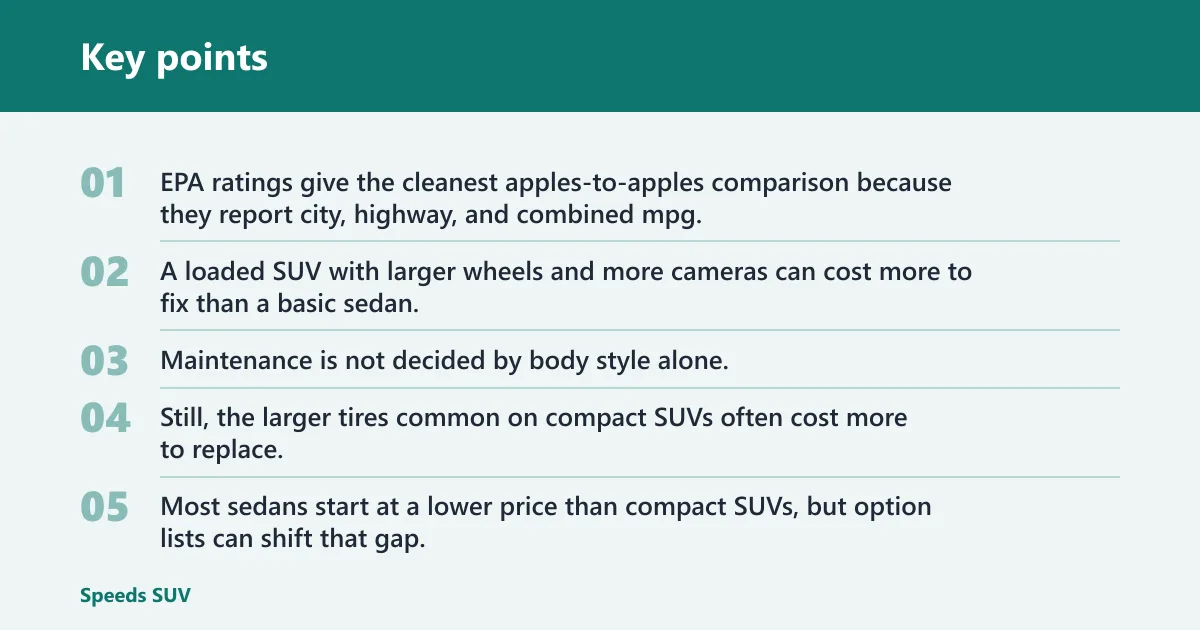
EPA ratings give the cleanest apples-to-apples comparison because they report city, highway, and combined mpg. Many sedans are reported to get about 30 to 40 mpg combined, while typical compact SUVs are reported to get about 25 to 35 mpg combined, depending on engine and drivetrain. AWD usually lowers mpg a bit.
That difference matters on a long commute. If you drive mostly stop-and-go city routes, the smaller mpg gap can still add up because city driving burns more fuel overall, and compact SUVs are often tuned for extra weight and ride height rather than peak efficiency.
Insurance and routine maintenance
Insurance often runs higher for compact SUVs than for similar sedans because repair costs, parts prices, and theft rates can differ by model. Trim matters too. A loaded SUV with larger wheels and more cameras can cost more to fix than a basic sedan.
Maintenance is not decided by body style alone. Tires, brakes, and fluid service depend more on the exact model, powertrain, and reliability record than on whether the vehicle is an SUV or a sedan. Still, the larger tires common on compact SUVs often cost more to replace.
Starting price and trim creep
Most sedans start at a lower price than compact SUVs, but option lists can shift that gap. A well-equipped sedan can still come in below a base compact SUV, while a loaded compact SUV can jump well above a similar sedan. Watch the final trim, not the badge.
Say your commute is 32 miles each way and you park in a public garage every day. A sedan with better mpg and a lower roofline may save money twice: less fuel burned and less hassle in tight spaces. That is the kind of daily cost that sticker price alone misses.
Which one fits groceries, kids, and luggage better?
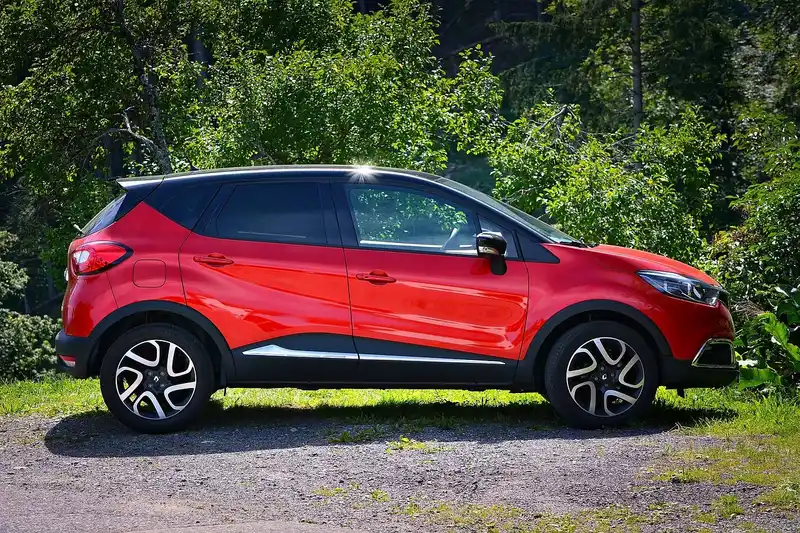
A compact SUV usually fits bulky daily cargo better because it has a rear cargo area instead of a traditional trunk, and many models offer about 30 to 50 cubic feet behind the second row. A sedan can still work for groceries and suitcases, but the trunk opening is narrower and less flexible.
Cargo volume in cubic feet
Cargo volume is measured in cubic feet, and that number matters more than the body style name. A sedan trunk often lands around 13 to 16 cubic feet, while a compact SUV commonly offers far more space behind the second row. Folding the rear seats can expand either one, but the SUV usually has the easier shape for bulky loads.
That shape matters for real items: a stroller, a folded wagon, a case of water, or airport luggage stacked upright. A sedan trunk can swallow several grocery bags and small bags, but taller cargo may hit the deck lid or lose usable height fast.
Trunk space versus rear cargo area
Because a sedan trunk is enclosed, it keeps bags out of sight and often out of the weather. The trade-off is opening size. A compact SUV’s rear cargo area usually gives you a higher load floor and a larger hatch opening, which helps with awkward items and rear-seat folding.
A common first-timer mistake is judging cargo by volume only. A 15-cubic-foot trunk and a 30-cubic-foot SUV cargo area do not feel the same when you try to load a tall stroller or a boxed monitor. Opening height matters as much as cubic feet.
Folding rear seats and bulky items
Folding rear seats can turn a compact SUV into a much more flexible hauler for weekend projects and child gear. A sedan with folding rear seats helps too, but the trunk opening still limits what you can slide through. If your cargo is wide or tall, the SUV wins.
Measure your biggest item. Check the height, width, and length of the stroller, cooler, suitcase, or box you carry most often. If it needs a tall opening or a flat floor, the compact SUV is usually the safer fit.
Check the load opening. Look at the hatch or trunk opening, not only the cubic-foot number. A small opening can make a larger trunk feel less usable than a larger cargo bay.
Test the folded-seat shape. Fold the rear seats and look at the floor angle, lip height, and seat-back split. A flatter cargo floor makes bulky loading much easier.
Which one is easier to park and drive in traffic?
A sedan is usually easier to park, easier to thread through tight traffic, and easier to place in low garages. The lower roofline and smaller overall height help in daily urban use, while a compact SUV can feel more upright and easier to see out of. In tight spaces, the sedan usually wins.
Size, maneuverability, and turning in tight spaces
Compact SUVs are still manageable in city traffic, but the taller body and higher hood can make them feel larger than a sedan of similar footprint. A sedan usually has a lower center of mass and a simpler feel when you are slipping into narrow curbside spots or multi-level garages.
Ride height and visibility
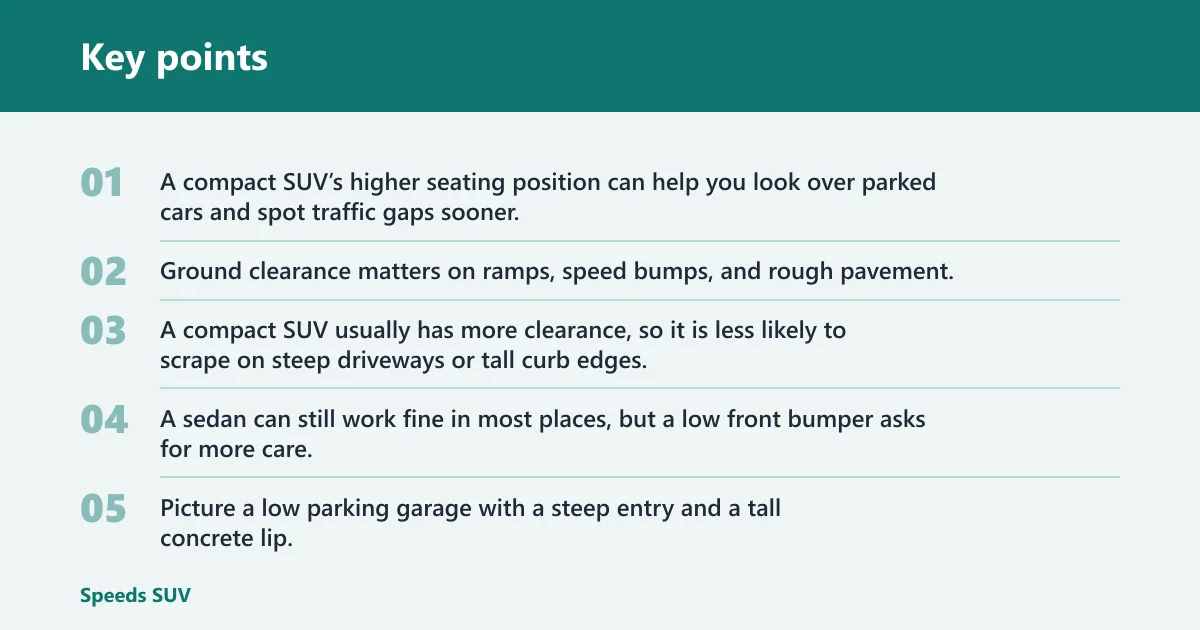
Ride height changes what you see. A compact SUV’s higher seating position can help you look over parked cars and spot traffic gaps sooner. A sedan sits lower, which can make the cabin feel less commanding, but the lower roof often helps with close-in parking judgment.
Low garages, curb rash, and speed bumps
Ground clearance matters on ramps, speed bumps, and rough pavement. A compact SUV usually has more clearance, so it is less likely to scrape on steep driveways or tall curb edges. A sedan can still work fine in most places, but a low front bumper asks for more care.
Picture a low parking garage with a steep entry and a tall concrete lip. A compact SUV with higher clearance may clear that transition more easily, while a sedan may require a slower angle and more attention to the front bumper. That is not about style. It is about approach angle and clearance.
How much difference do height and AWD make?
Higher ground clearance helps in snow, slush, speed bumps, and rough pavement, but it does not replace good tires. AWD can improve traction in winter starts and on slick roads, yet it usually adds price and can reduce fuel economy. For many drivers, winter tires matter more than AWD alone.
Ground clearance on rough pavement and snow
Compact SUVs commonly ride higher than sedans, which helps with snow ruts, driveway aprons, and curb strikes. That extra height can reduce scraping on broken pavement and make winter driving less stressful. It does not make the vehicle immune to traction loss, though.
AWD availability by trim
AWD is more common on compact SUVs, and it is often offered on several trims. Some sedans also offer AWD, but many still rely on front-wheel drive. AWD usually costs more at purchase and can trim mpg, so it should be chosen for actual climate and route needs, not just for peace of mind.
Winter traction versus fuel use and price
AWD can help with getting moving on snowy mornings and on wet, slick roads, but it does not shorten stopping distance by itself. That job still belongs to tires, brakes, and driver input. If your area gets occasional snow rather than deep winter, a sedan with good winter tires may be enough.
Check your worst month. Look at the coldest month, the steepest street, and the slushiest route you drive. If those conditions are common, AWD and extra clearance become more relevant.
Price the full winter setup. Compare AWD plus all-season tires with a sedan plus winter tires. In many markets, the tire choice makes a bigger difference than the body style alone.
Match clearance to your route. If you cross deep snowbanks, rough shoulders, or steep driveways, the taller vehicle has a real advantage. If not, the sedan may be the better daily fit.
Choose Compact SUV if… / Choose sedan if…
Choose a compact SUV if you regularly load child gear, carry tall or bulky items, face snowy streets, or want a higher seat with easier entry. Choose a sedan if you mostly commute on paved roads, want lower fuel use, park in tight spaces, and care most about keeping long-term costs down.
- Choose Compact SUV if you need a higher load opening for groceries, strollers, or luggage.
- Choose Compact SUV if your route includes winter slush, steep driveways, or rough pavement.
- Choose Compact SUV if you want the higher seating position and available AWD.
- Choose sedan if your daily drive is mostly city or highway commuting with light cargo.
- Choose sedan if you want the lower fuel bill, lower tire cost, and easier parking.
- Choose sedan if you can live with a trunk and do not need frequent folding-seat cargo space.
For a family that loads a stroller three times a week, the compact SUV often makes more sense. For a commuter who drives 50 highway miles a day and rarely carries more than a backpack and a laptop, the sedan is usually the sharper fit.
Frequently asked questions
Is a compact SUV or sedan better for daily driving?
For most daily drivers, the sedan is better if your routine is mostly commuting, parking, and fuel savings. The compact SUV is better if your day includes frequent loading, child gear, or winter traction needs. The best choice follows your route and cargo habits, not your dislike of one body style.
Which is easier to park and maneuver in city traffic?
The sedan is usually easier to park and maneuver in city traffic. Its lower height and often smaller footprint make curbside spaces, parking garages, and tight turns less stressful. A compact SUV is still manageable, but it asks for more attention in narrow spots.
Do compact SUVs get worse gas mileage than sedans?
Usually yes. EPA ratings commonly place compact SUVs around 25 to 35 mpg combined, while many sedans land around 30 to 40 mpg combined. Exact numbers vary by engine and drivetrain, and AWD usually lowers mpg further.
Which has more cargo space for groceries, strollers, and luggage?
The compact SUV usually has more usable cargo space, especially for tall or bulky items. Many models offer about 30 to 50 cubic feet behind the second row, while a sedan trunk often holds about 13 to 16 cubic feet. The SUV’s hatch and folding rear seats make awkward loads easier.
Are sedans safer than compact SUVs for daily commuting?
Not automatically. Safety depends on crash-test results, structure, tire quality, and available driver-assist equipment, not body style alone. Some compact SUVs score very well, and some sedans do too. Compare the exact model, trim, and safety ratings rather than assuming one shape is safer.
Which costs less to buy, insure, and maintain over time?
The sedan usually costs less over time. It is often cheaper to buy, often cheaper to insure, and usually cheaper on fuel and tires. Maintenance still depends more on the exact model and reliability record than on body style, but the sedan often has the lower ownership bill.
Is a compact SUV better in snow, rain, or rough roads?
Often yes, especially if it has AWD and more ground clearance. The higher ride height helps with snowbanks, slush, speed bumps, and rough pavement. Still, good tires matter more than the badge, and AWD does not replace careful driving or proper stopping distance.
Which is more comfortable for long commutes?
Comfort depends on seat design, ride tuning, and route type, but many drivers prefer the sedan for long highway commutes because it is lower, quieter, and often more efficient. A compact SUV can be more comfortable if you value easier entry and exit or need a taller seating position.
How much higher is a compact SUV than a sedan?
There is no single number because ride height varies by model, but a compact SUV is commonly several inches taller than a sedan. That extra height can help with visibility and clearance, though it may add wind resistance and make loading roof racks or parking in low garages more noticeable.
When does a sedan make more sense than a compact SUV?
A sedan makes more sense when your daily driving is mostly commuting, your cargo is light, your parking is tight, and your climate is mild. It also makes sense when you want to keep fuel, insurance, and tire costs down over 3 to 5 years without giving up normal everyday utility.