Truck Rust Problems: Causes, Repair, Prevention
Truck rust is often described in three stages: surface rust, scale rust, and structural rust, and the repair approach usually depends first on location; body-panel rust is often repairable, but frame rust with flaking, holes, or suspension-mount damage should be professionally inspected as soon as possible. Ignore that split and you can waste money on cosmetic fixes while corrosion keeps weakening brake lines, cab mounts, bed supports, or the frame itself. This guide shows how to identify the rust stage, what caused it, when it is still safe to drive, and which repair and prevention steps fit each case.
Common rust triggers on trucks
Truck rust starts when steel is exposed to oxygen and moisture, and it can speed up when road salt or chloride de-icers create a conductive film on the metal. Chips, failed seam sealer, trapped mud, and wet internal cavities let that process continue long after the outside looks dry.
Why trucks corrode faster than many cars
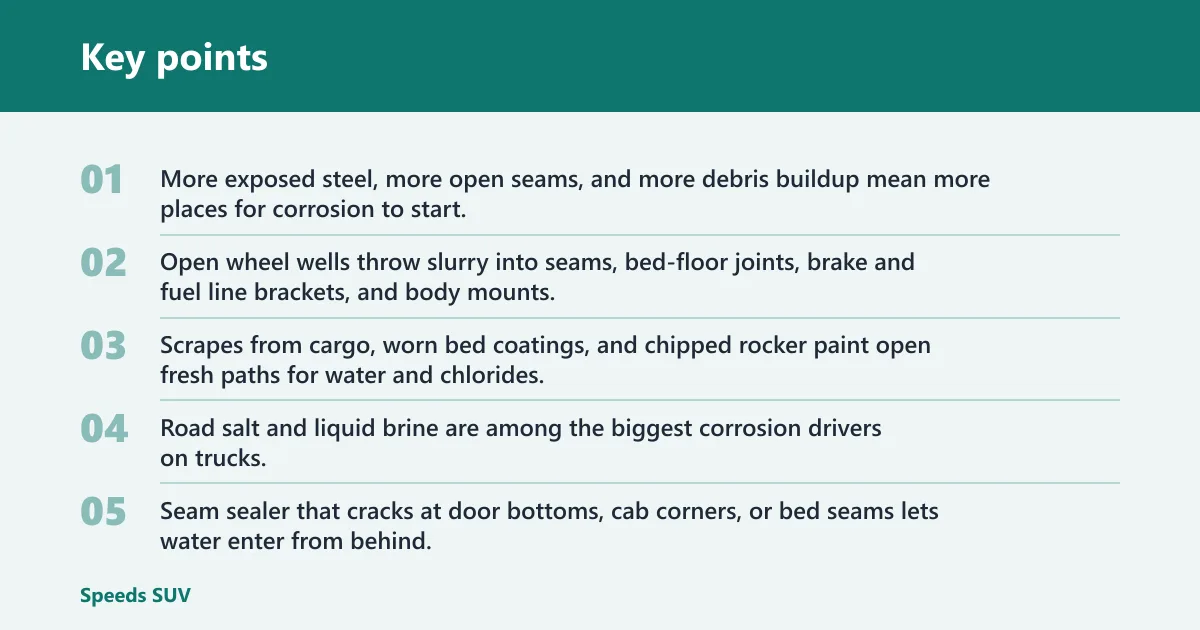
Trucks rust faster because their tires blast the body and frame with water, grit, and chloride spray, and the underbody sits in that stream every mile. More exposed steel, more open seams, and more debris buildup mean more places for corrosion to start.
Open wheel wells throw slurry into seams, bed-floor joints, brake and fuel line brackets, and body mounts. Payload use also matters. Scrapes from cargo, worn bed coatings, and chipped rocker paint open fresh paths for water and chlorides.
Road salt and liquid brine are among the biggest corrosion drivers on trucks. In winter regions, chloride de-icers keep metal wet at lower temperatures and turn grime into an active electrolyte instead of harmless dirt.
How rust starts at damaged coatings and hidden traps
Paint chips and scratches expose steel. Seam sealer that cracks at door bottoms, cab corners, or bed seams lets water enter from behind. Doors and tailgate rust when seam water and chipped paint allow moisture in.
Hidden areas matter more than flat painted panels. Internal frame cavities, pinch welds, wet fender liners, and packed mud behind wheel-arch lips can stay damp for days. A winter wash can even leave trapped moisture if drains are blocked or cavities never dry.
What rust progression looks like
Rust can progress from discoloration to flaking and crumbling metal. That progression marks the line between a cosmetic repair and a structural problem.
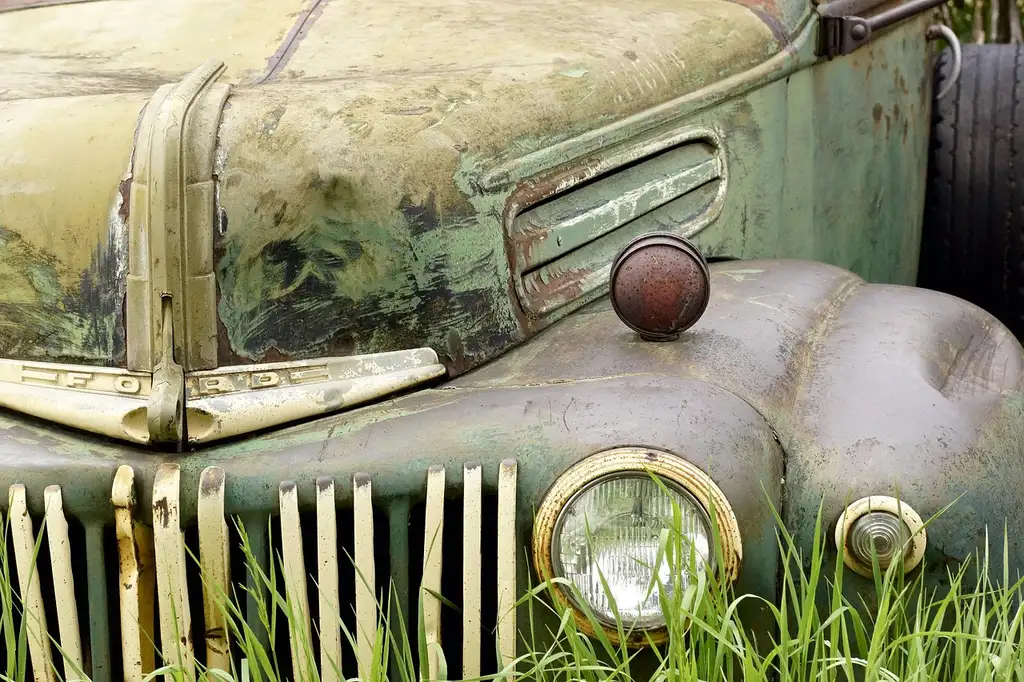
Surface rust usually starts as orange or brown staining, sometimes with light pitting. If left untreated, it can become scale rust with thicker flakes and failing paint. In worst cases, a truck can develop holes through the bodywork, and frame and suspension rust can become a safety hazard.
Where truck rust starts first
Frame rails, crossmembers, and mounts
High-risk corrosion zones include frame rails, cross members, wheel wells, and electrical connectors. Add spring hangers, control arm mounts, steering mounts, brake and fuel line brackets, and cab or bed supports to that inspection list.
These areas carry load or support systems that do. Surface staining on a frame is common; swelling, delamination, perforation, or cracking near a mount is a different category.
Rocker panels, cab corners, and bed sides
Body panels often rust where two sheets overlap. Rocker panels and cab corners trap dirt and moisture thrown from the front tires. Bed sides rust around wheel openings, lower seams, and where liners trap debris against the metal.
Rust holes are common here because the outer paint can still look presentable while the back side is already thin. Body filler alone over these holes is temporary and does not restore metal strength.
Wheel wells, seams, underbody, and cavities
Wheel wells get blasted with salty slush, sand, and wet mud, and that debris packs into liners, spot-welded lips, and lower joints where it can stay damp for days. Seams around fender lips, bedside joints, and lower door hems are frequent starting points because abrasion removes coating and trapped grit holds moisture against the steel.
The underbody takes constant impact from spray and road debris. Internal cavities are the part many owners miss. A frame rail can look acceptable outside while rust is growing from the inside where rinse water and salt sit in closed sections.
How do you tell surface rust from structural rust?
Surface rust is usually light discoloration or shallow pitting on solid metal, while structural rust shows heavier flaking, swelling, perforation, or damage at load-bearing points such as frame rails, crossmembers, and suspension mounts. The deciding factors are metal thickness, location, and whether the steel is still sound when inspected.
Surface rust: discoloration and light pitting
Surface rust is repairable when the metal is still intact. Look for staining, roughness, and small pits without lifted layers or soft spots. On painted body panels, it often begins at a stone chip or scratch.
This is the stage where sanding, rust converter, rust-inhibiting primer, and topcoat still make sense. Surface rust can be repaired, but deep rust may require replacement of the damaged metal.
Scale rust: flaking metal and coating failure
Scale rust follows untreated surface rust. Paint lifts, the metal surface grows uneven, and flakes or crust break off under a scraper or wire brush. The key point is that loose scale has to come off before any coating goes on.
Sand off rust using sandpaper, a wire brush, or a grinder. A rust converter can help with remaining bonded corrosion after prep, often using phosphoric- or tannic-acid chemistry, but it is not a shortcut around loose scale or hidden wet rust.
Rust holes and perforation
Perforation means the corrosion has already broken through. Pinholes, split seams, bubbling that opens when sanded, and sharp-edged voids all mean metal is gone.
Picture a blister on a lower bedside about the size of a quarter. If sanding opens it into a ragged hole, the repair has moved from coating work to cutting, welding, or a patch panel. Filler can shape the surface after metal repair, but filler alone is not a durable fix.
Structural rust warning signs
Structural rust is any corrosion that weakens load-bearing steel or critical attachments. On trucks, that includes frame rails, crossmembers, spring hangers, control arm mounts, steering mounts, cab mounts, and crash-load paths.
Red flags include layered flaking, bulging seams, cracks near rusted sections, crushed-looking frame edges, missing metal around a mount, or severe corrosion on brake or fuel lines. A cracked or badly corroded frame can trigger an out-of-service order.
Rust triage decision table
| Location | Rust stage | Safe DIY action | Shop-only action | Stop-driving red flags |
|---|---|---|---|---|
| Frame rails | Surface discoloration only | Clean, dry, remove light rust, apply converter if needed, then primer and suitable underbody protection | Internal cavity inspection; thickness loss assessment | Swelling, deep flaking, holes, cracks, rust near spring or control-arm mounts |
| Crossmembers | Surface to light scale | Remove loose rust completely before coating | Repair or replacement if metal is thinning or perforated | Separation at frame joints, perforation, sagging mounts, cracking |
| Rocker panel | Surface or scale on outer skin | Sand and refinish only if metal is still solid and rust is external | Cut out rust holes and weld patch panels; refinish and cavity-wax inside | Holes at cab mount area, sharp edges near seat-belt anchor zones, severe collapse |
| Cab corner | Bubble, scale, or perforation | Small external surface spots only | Patch panel or section replacement when rust comes from inside seam | Rust extending into cab support structure or mount area |
| Bed side | Surface, scale, or holes around arch | Surface prep and repaint for small solid spots | Patch panel, arch repair, liner removal, backside treatment | Sharp metal contacting tire, rust into bed supports |
| Wheel well | Surface to scale | Wash out packed mud, strip loose rust, seal exposed metal | Repair hidden backside rust and replace liners or clips trapping debris | Rust-through into cab or bed structure, tire rub on loose metal |
| Seams | Staining, bubbling, seam sealer failure | Minor external cleanup only if seam is still sound and dry | Open, clean, repair, reseal, and repaint if rust is inside the seam | Split seam, widening gap, rust trails from a structural join |
| Underbody | Surface to heavy scale | Clean and dry first; coat only after loose rust is removed | Lift inspection for lines, brackets, body mounts, and hidden cavities | Brake or fuel line heavy corrosion, mount failure, perforated supports |
When is truck rust unsafe to drive with?
Truck rust is unsafe when corrosion has reached load-bearing steel, suspension or steering mounts, brake or fuel lines, or any place where metal has thinned, split, or perforated. If rust changes how a mount, line, or structural member carries load, driving it is a risk, not a maintenance delay.
Frame and crossmember danger signs
Frame rails and crossmembers deserve the strictest standard. Stop driving and get the truck inspected if you find holes, severe scaling that peels in layers, bulging along seams, or cracking near welded joints and mounts.
Suppose a rear crossmember has thick flaking and the spare-tire area looks swollen. If a screwdriver lightly probes through a section or the metal separates in layers, that is beyond cosmetic corrosion. The truck needs shop assessment before more road use.
Suspension, steering, brake, and fuel-system risks
Corrosion around spring hangers, control arm mounts, steering gear mounts, sway-bar brackets, and body mounts can change alignment and load path strength. Brake and fuel lines matter too. Heavy scaling at clips and brackets can hide thinning line walls underneath.
Sharp rusted metal near the tire is another immediate issue. So is any bracket or mount that has moved, cracked paint around a rusted joint, or a line that appears wet because corrosion has opened it.
When to park it
Park the truck and arrange a professional assessment if any structural member is perforated, if a mount is compromised, or if braking, fuel, or steering parts show advanced corrosion. That same standard applies to cracked frame sections, severe delamination, and rust-through near load-bearing points.
Can you repair truck rust yourself or does it need welding?
DIY repair fits surface rust and some limited scale rust on solid metal, especially on outer body panels or accessible underbody areas. Welding or panel replacement is the durable answer once corrosion has perforated the steel, entered seams from behind, or weakened frame members and mounts.
DIY cases that make sense
Safe DIY work usually means visible, reachable rust where the metal is still solid. That includes small chips on doors, hood edges, bedside surfaces, and light underbody oxidation after loose material is removed.
The false economy starts when prep cannot reach the back side, when seams are split, or when scale keeps returning under coatings. Coating over damp, oily, or loose corrosion traps the problem instead of fixing it.
Cases that belong to a shop
Perforated rocker panels, cab corners, wheel arches, and bed sides usually need cut-out repair and welded patch panels. Seams with bubbling from inside often need the panel opened, cleaned, resealed, and refinished properly.
Structural rust always belongs in a corrosion or body repair shop with frame experience. That includes frame rails, crossmembers, spring hangers, steering mounts, and body mounts.
Why filler is temporary over holes
Body filler can smooth a finished welded repair. It does not replace steel. Over a rust hole, filler bridges air, absorbs vibration, and eventually cracks as corrosion continues around the edges.
For rocker panels and bed sides, welded metal repair restores durability better than filler. On a frame, improvised patching without proper assessment can create a safety issue.
How to repair truck rust by severity
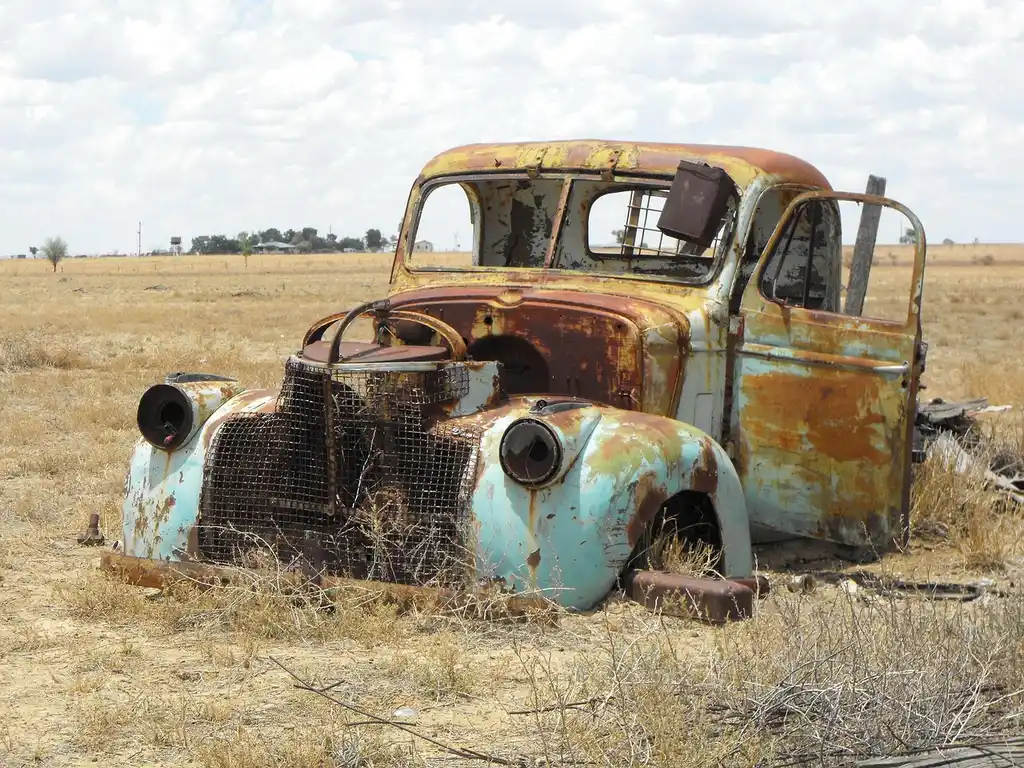
The right repair depends on what stage the rust has reached and whether the affected part carries load. Surface rust calls for thorough prep and sealing, scale rust needs heavier removal before coating, and holes or structural damage move into welding, patch panels, or part replacement.
Surface rust repair on painted panels
- Wash and dry fully. Remove salt, wax, and road film with soap and water, then let the panel dry completely. Coating over contamination or trapped moisture shortens the repair.
- Remove loose corrosion. Use sandpaper, a wire brush, or a grinder only as aggressive as the area requires. Feather the paint edge into clean surrounding finish so primer can bond without a hard ridge.
- Apply converter if needed. Use rust converter on remaining bonded oxidation after sanding, following cure time on the product label. This step helps stabilize residue in pits; it does not replace metal prep.
- Prime bare metal. Use a rust-inhibiting primer to seal the steel and create a moisture barrier. Cover all exposed metal, not just the visibly orange center.
- Topcoat and protect. Paint the repair, then protect the panel after cure with wax on the exterior. Waxing is recommended at least once or twice a year for protection.
Scale rust removal and underbody prep
- Expose the real extent. Scrape, wire-brush, or mechanically strip all loose scale until only solid metal and tightly bonded corrosion remain. This is the point many quick fixes skip.
- Inspect the thickness. Check for pinholes, seam lift, and areas that sound hollow or flex under light pressure. If the metal is thinning or perforates, stop the DIY repair plan there.
- Treat remaining rust. Apply converter only after scale removal and only to residue that cannot be stripped without cutting into sound metal. Let it cure before primer.
- Seal and coat correctly. Prime exposed steel, then choose underbody protection that fits the area and rust stage. Wax- or oil-based cavity products suit enclosed sections; lanolin or oil-film rustproofing suits frames that need creep into seams; hard undercoatings fit clean, dry, stable surfaces, not active wet rust.
Repairing rust holes in rocker panels, cab corners, and bed sides
- Cut back to sound metal. Remove the rusted section until clean, solid steel remains around the opening. Leaving thin edges guarantees the corrosion returns under the patch.
- Fit replacement metal. Use a formed patch panel or fabricated section matched to the panel shape. Rocker panels, cab corners, and wheel-arch sections are common patch-panel repairs.
- Weld and finish. Weld the patch, grind only as needed, then seal seams, prime, paint, and protect the back side with cavity wax. The hidden side matters as much as the visible face.
- Use filler sparingly. Apply body filler only for final contour over repaired metal, never as the repair itself. That keeps the job cosmetic where it belongs and structural where it must be.
Structural rust repair on frames and load-bearing areas
Structural rust needs professional assessment first, especially around frame rails, crossmembers, spring hangers, control arm mounts, steering mounts, and crash-load paths. Some cases need section replacement; some trucks are too far gone to repair economically or safely.
A common first-timer mistake is coating a flaky frame with a hard black undercoating because it looks solid from two feet away. If moisture stays under that shell, the frame keeps corroding out of sight while the finish still looks fresh.
How do you stop truck rust from spreading?
Stop rust from spreading by cleaning and drying the truck first, removing loose corrosion, sealing exposed steel, and then protecting both visible panels and hidden cavities with the right product for that stage. Undercoating helps only after inspection and prep; it cannot rescue active perforation or wet trapped rust.
Prep before any coating
Every protective step depends on clean, dry metal. Salt residue, oily film, wet mud packed in wheel wells, and blocked drains all defeat coatings by trapping moisture under them.
Priority areas are frame rails, crossmembers, wheel wells, rocker seams, cab corners, bed-floor joints, and internal cavities. Trucks that already show rust need these inspected on a fixed cadence, especially during and after winter.
What each protectant does
Rust converter helps neutralize remaining corrosion after sanding or scale removal. Rust-inhibiting primer seals bare metal. Seam sealer closes repaired joints so water cannot re-enter. Topcoat protects exposed painted areas from UV and moisture. Cavity wax coats enclosed sections and creeps into overlaps.
Undercoating or rustproofing protects the frame and underbody, but product choice depends on rust stage. Wax/oil cavity products and lanolin or oil-film treatments work well where creep into seams matters. Hard coatings belong on sound, dry, stable surfaces and can trap moisture if applied over active rust.
What should you do before winter to protect a truck?
Before winter, repair paint chips, clean drains and seams, treat vulnerable cavities, and start a wash schedule that includes the underbody, not just the bodywork. Salt-belt trucks need repeat inspections through the season because high-risk zones can change quickly once chlorides begin accumulating.
Pre-winter preparation sequence
- Repair chips early. Touch up exposed metal on hood edges, rocker panels, bedside arches, and door bottoms before salt arrives. Small paint breaks are cheap to stop and expensive to ignore.
- Clean drains and seams. Open drain paths in doors, rockers, and tailgate seams so rinse water can leave. Check for split seam sealer, especially where bubbling has started.
- Treat hidden cavities. Apply cavity wax or a similar creeping protectant inside doors, rocker cavities, cab corners, and frame sections where access exists. These areas rust from the inside out.
- Wash on schedule. Rinse the underbody and wheel wells through winter, especially after heavy salt exposure. The goal is removal, not a perfect shine.
- Inspect fixed zones. Recheck frame rails, crossmembers, wheel wells, and line brackets on a set interval during winter and again in spring. Consistency catches new damage before it becomes scale.
What already-rusty trucks need most
A truck with active rust needs priority work, not just generic washing. Start with exposed metal, failed seams, packed wheel-well debris, and frame areas where coatings are already gone. Then protect those sections in the right order: clean, dry, strip loose rust, seal, and only then undercoat or rustproof.
What does truck rust repair cost?
Truck rust repair cost depends mainly on stage and location. Small surface-rust treatment is often a materials job, while perforated panels and frame corrosion add cutting, welding, paintwork, and sometimes part replacement. That is why a cheap-looking spot on a rocker can become a far bigger bill than a larger stain on a flat door.
Cost by severity
Surface rust repair materials typically cost $50 to $400. That fits sanding supplies, converter, primer, paint, and related materials for limited cosmetic work.
Once the repair includes welded patch panels, paint blending, seam work, or frame repair, the number climbs fast. Severe frame or panel repair with welding can exceed $7,000.
Why location changes the bill
Access drives labor. A small hole in an easy outer bedside is simpler than the same hole at a double-wall rocker, inner wheel house, or seam that must be opened and sealed from both sides. Frame work can also require stripping nearby parts to inspect mounts and hidden corrosion properly.
When repair stops making sense
If structural areas are perforated in several places, if rust has spread through mounts and supports, or if proper repair approaches the truck’s value, replacement or retirement may be the better answer. Cosmetic panel rust is often manageable. Deep frame decay is where the economics and the safety case change.
Frequently asked questions
What parts of a truck rust first?
The usual first zones are the underbody, wheel wells, lower seams, rocker panels, cab corners, bed sides, frame rails, and crossmembers. Wheel wells hold salty mud behind liners and along arch lips, while seams and internal cavities stay wet longer than flat panels, so rust often starts there before it is obvious outside.
How do I stop rust from spreading on my truck?
Clean and dry the area first, remove loose rust completely, then treat remaining bonded corrosion with a converter if appropriate, seal bare steel with rust-inhibiting primer, and protect repaired sections with paint, seam sealer, cavity wax, or suitable underbody protection. Coating over wet scale usually makes things worse.
Is undercoating enough to prevent truck rust?
No. Undercoating works only after the truck is clean, dry, and inspected, and after loose rust is removed. Product choice matters too: wax or oil products suit cavities and seams, while hard coatings fit stable surfaces. Applied over active rust or trapped moisture, undercoating can hide ongoing damage.
How much does rust repair cost on a truck?
Materials for limited surface-rust repair typically cost $50 to $400, but perforated panels, welding, seam repair, and paintwork push totals much higher. Severe frame or panel repair with welding can exceed $7,000, especially when corrosion reaches hidden supports, mounts, or multiple adjoining sections.
How do I fix rust holes in truck body panels?
Durable repair means cutting out the rusted metal, welding in a patch panel or replacement section, then sealing, priming, painting, and protecting the back side with cavity wax. Body filler alone is temporary over holes and does not restore strength in rocker panels, cab corners, or bed sides.