What Is a Payload Rating on a Truck or SUV?
Payload rating is the maximum weight your truck or SUV can carry in people, cargo, hitch hardware, and trailer tongue weight. Stay at or below the label on the driver-side door jamb. Go over it, and the suspension, brakes, and tires can be overloaded before the vehicle feels full. This guide shows how to read the payload sticker, what counts against it, and how to subtract passengers, cargo, and towing gear correctly.
What payload rating means
Payload rating is the vehicle’s remaining weight budget for anything you put in or attach to it. It is the combined weight of occupants and cargo, and it changes with exact trim, drivetrain, cab or body style, axle ratio, and factory options. The number on the yellow Tire and Loading Information label is the one that matters for your exact vehicle.
Payload is not the same as towing capacity. Tow ratings describe how much trailer weight the vehicle may pull, while payload is the weight it may carry on its own chassis. In modern OEM publishing, tow ratings are often SAE J2807-tested, but that brochure number still assumes a lightly loaded vehicle.
The difference matters because weight inside the vehicle and on the hitch uses payload first. Tow rating can remain high on paper even after passengers and gear have used most of the available weight budget.
Payload rating vs. cargo weight
Payload rating is the limit. Cargo weight is only one part of what spends it. A toolbox, cooler, child seat, dog crate, recovery gear, and aftermarket accessories all add to the total. Even a light load can become a problem once passengers and tongue weight are included.
Payload rating vs. towing capacity
Towing capacity tells you the maximum trailer weight the truck or SUV is rated to pull. Payload tells you how much weight can sit in or on the vehicle itself. A trailer can be within tow rating and still push the vehicle over payload, GVWR, or rear GAWR.
Where to find the payload sticker
Look on the yellow Tire and Loading Information label on the driver-side door jamb. The site says that yellow door sticker line is the payload number, and the same label also lists tire size and cold tire pressures. The white certification label nearby gives GVWR and rear GAWR, which you also need for a proper check.
The payload number is not a universal model-wide figure. It varies by the exact vehicle you buy, which is why a trim, cab, wheelbase, drivetrain, or option change can move the number up or down. Always use the sticker on the actual vehicle, not a brochure or a comparable trim.
Open the driver door. Find the yellow Tire and Loading Information label on the door jamb. Read the payload line first, then note the tire size and cold inflation pressures so you know you are looking at the correct sticker.
Check the white certification label. Record GVWR and rear GAWR from the white label. Those numbers tell you the vehicle’s maximum total weight and rear axle limit, which you need before you start trailer math.
Compare the owner’s manual. Confirm that the sticker values match the manual’s loading guidance and towing notes. The manual can spell out hitch limits, passenger assumptions, and trailer setup details that the yellow label does not explain.
What counts against payload?
Passengers, pets, cargo, accessories, hitch hardware, and trailer tongue weight all count against payload. That is why the number can disappear quickly, especially in SUVs and half-ton trucks. What looks like a comfortable tow rating can shrink fast once the cabin is full and the hitch is installed.
Passengers and pets
Every person and pet in the vehicle uses payload. A published tow rating is often described for a truck with one 150 lb driver, so adding a second adult, children, or a large dog immediately changes the remaining room for cargo and trailer load.
Cargo and accessories
Roof boxes, bed cargo, tool chests, cooler loads, running boards, bumpers, winches, and bed caps all use payload if they are carried by the vehicle. Factory or aftermarket parts that add weight to the truck do not create new capacity. They reduce what is left.
Hitch hardware and tongue weight
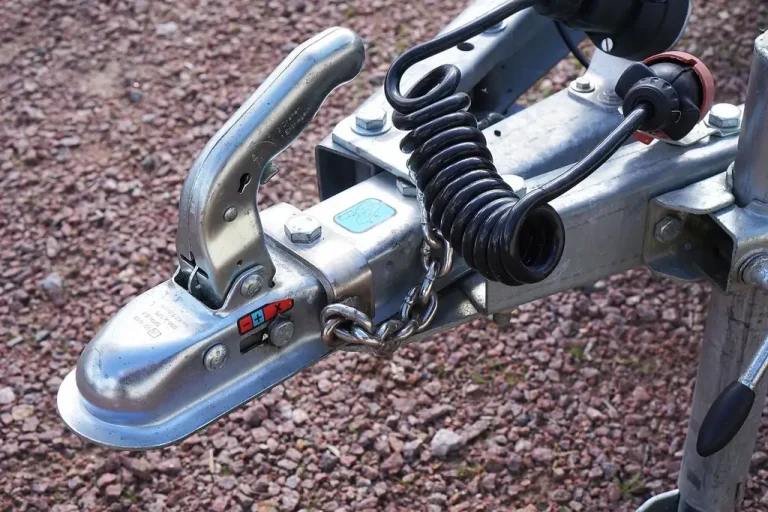
Hitch hardware counts too. A weight-distributing hitch does not add payload capacity, and its hardware still counts against payload. Many setups add about 70 to 100 lb of hitch hardware, and the calculator keeps that hardware weight in the budget.
Tongue weight matters even more. The article’s calculator treats conventional tongue weight as 15% and 5th-wheel tongue weight as 25%. A 6,000-pound travel trailer may put roughly 600 to 900 pounds on the hitch, and that load usually lands on payload rather than tow rating.
Say your SUV has a 1,050 lb payload sticker, two adults, two kids, a dog, and a 15% trailer tongue weight on a family camper. The trailer may be inside tow rating, but the hitch load and cabin weight can use most of the payload before the road trip gear even gets added.
How payload relates to GVWR, GCWR, and rear GAWR
Payload is only one limit. GVWR is the maximum allowed vehicle weight, so curb weight plus passengers, cargo, and hitch load must stay under it. GCWR is the vehicle-plus-trailer combined limit, and on some setups it becomes the binding limit before payload. Rear GAWR is the rear axle weight limit, which matters when cargo and tongue weight push weight to the back of the vehicle.
Curb weight is the vehicle’s weight before passengers and cargo. You need it for honest tow math because GCWR depends on what the vehicle weighs before you add people and gear. If the curb weight goes up with options, the remaining room for trailer weight can go down even if the brochure tow number looks unchanged.
The study of 58 pickup configurations from 7 US pickup lines found that at 550 lb in the cab, payload binds on 36% of the configurations, GCWR binds on 38%, and tow rating binds on 26%. That is the clearest reason brochure tow numbers do not tell the full story.
That pattern also explains why the yellow label matters more than a max tow badge. Payload, GCWR, and rear GAWR can become the real limit while the published tow rating still looks generous.
Why SUVs run out of payload sooner
SUVs often run out of payload quickly because cabin space does not create carrying capacity. Many body-on-frame SUVs can tow serious weight, often near a similarly equipped half-ton pickup, but the interior still has to carry people, pets, luggage, hitch hardware, and tongue weight. That load can exhaust the payload sticker before the trailer rating does.
Suppose a body-on-frame SUV is rated to tow a large trailer, but the family brings four passengers, a cooler, and camping gear. The trailer may still be under the tow number, yet the payload budget can fail first because the tongue weight and cabin load stack up in the same place.
That is why SUV buyers should check the payload sticker before they compare brochure tow ratings. Two SUVs with similar tow numbers can have very different payload numbers once options, wheelbase, and trim are taken into account.
Payload budget worksheet
Use the worksheet below as a one-page check before you hitch up or load the family. The math is simple: payload rating minus driver, passengers, cargo, hitch hardware, and estimated tongue weight leaves the remaining payload. If the remaining payload is zero or negative, the setup fails even if the tow rating looks fine.
| Vehicle example | Payload rating | Driver | Passengers | Cargo | Hitch hardware | Estimated tongue weight | Remaining payload | Pass/fail |
|---|---|---|---|---|---|---|---|---|
| Half-ton truck with travel trailer | 1,650 lb | 150 lb | 300 lb | 200 lb | 90 lb | 750 lb | 160 lb | Pass |
| Body-on-frame SUV with camper | 1,050 lb | 150 lb | 450 lb | 100 lb | 90 lb | 300 lb | -40 lb | Fail |
In the truck example, the trailer stays inside a normal conventional tongue-weight range, and the setup still passes because the payload number leaves some room. In the SUV example, the trailer is lighter, but the cabin load and hitch gear push the vehicle over its payload limit anyway.
How to check your exact vehicle
Read the yellow door-jamb label first, then verify GVWR and rear GAWR on the white certification label. After that, check the owner’s manual for towing limits, hitch notes, and any trim-specific restrictions. Use conservative trailer math, not brochure dry weights, because real cargo rarely weighs less than the estimate.
Write down the sticker number. Copy the payload figure from the yellow label exactly as printed. That number is the starting point for the rest of the math.
List every occupant and item. Include driver, passengers, pets, coolers, tools, bed cargo, and accessories. If it sits in or on the vehicle, count it.
Estimate trailer tongue weight. Use about 10 to 15 percent for a conventional trailer and about 25 percent for a 5th-wheel setup. Then add hitch hardware weight, because the hardware itself uses payload even when the hitch is set up correctly.
Check the axle limits. Compare the final load to GVWR and rear GAWR, not just payload. Rear axle load is often the first place tongue weight shows up, especially in SUVs and short-bed trucks.
Keep a margin. Leave room for water, food, firewood, or anything else that usually gets added late. Conservative math is safer than assuming every load will stay at brochure weight.
Frequently asked questions
What is a payload rating on a truck?
It is the maximum weight the truck can carry in occupants and cargo, plus anything that counts as carried weight such as hitch hardware and trailer tongue weight. On most trucks, the best place to find it is the yellow Tire and Loading Information label on the driver-side door jamb.
What is a payload rating on an SUV?
It is the SUV’s carry limit for people, luggage, pets, hitch hardware, and tongue weight. SUVs often use up payload faster than buyers expect because a large trailer can be within tow rating while the cabin load and hitch load use most of the available payload.
What is a vehicle’s payload?
A vehicle’s payload is the weight budget left for occupants and cargo after curb weight is accounted for. The exact number depends on the specific trim and equipment, so you should use the yellow door label on the exact vehicle instead of a generic model figure.
What is payload weight in a truck mean?
It means the amount of weight the truck can carry before it reaches its limit. That includes people, gear, pets, hitch hardware, and trailer tongue weight. If those items add up to more than the sticker number, the truck is overloaded even if the trailer is under tow rating.
How do I find my truck’s payload sticker?
Open the driver door and look at the yellow Tire and Loading Information label on the door jamb. The payload line is printed there, and the same area also lists tire size and cold tire pressures. Confirm the nearby white certification label for GVWR and rear GAWR.
What counts against payload besides cargo?
Passengers, pets, accessories, hitch hardware, and trailer tongue weight all count against payload. A weight-distributing hitch does not add capacity, and its own weight still counts. That is why a towing setup can run out of payload long before the published tow rating is reached.