Oil Consumption: When to Sell or Replace Your SUV
If an SUV needs more than about 1 quart every 1,000 miles, smokes blue, or needs a repair that exceeds about 30% to 50% of its value, selling or replacing it often makes more sense than fixing it. Ignore it and you can face engine damage, failed emissions tests, and a bigger hit to resale value. This guide compares repair cost, trade-in impact, and the signs that point to repair, sale, or replacement.
Oil consumption decision table
| Scenario | Estimated short-term top-off cost | Likely repair path | Resale impact | Recommended action |
|---|---|---|---|---|
| Minor consumption | $10 to $25 per 3,000 to 5,000 miles | Check for small leaks, PCV service, correct oil weight, monitor level | Low if documented and controlled | Keep |
| Moderate consumption | $20 to $50 per 1,000 to 2,000 miles | Diagnose rings, seals, PCV valve, and external leaks before repair approval | Moderate, especially if smoke or fouled plugs appear | Monitor |
| Severe consumption | $50 to $150+ per 1,000 miles | Compression test, leak-down test, then engine repair, rebuild, or replacement | High, because buyers price in engine risk | Repair or sell as-is |
| Failed compression or leak-down | $75 to $200+ per 1,000 miles, plus misfire and catalyst risk | Engine rebuild or replacement is common | Very high, often below the cost of repair | Sell as-is or replace |
| Active smoke | $50 to $150+ per 1,000 miles, plus possible emissions and catalyst damage | Immediate diagnosis for rings, valve seals, turbo seals, leaks, or PCV failure | High, since visible smoke changes buyer confidence fast | Replace or repair before listing |
What oil consumption means
Some oil use between changes is normal. Other cases point to a fault, and the gap between the two is measurable. If the dipstick drops faster than the service record or owner manual would predict, the SUV is using too much oil. The key is measurement, not guesswork.
Normal use between oil changes
Normal consumption varies by engine design, mileage, and driving pattern. A healthy SUV may use a small amount between 5,000-mile or 7,500-mile oil changes and still stay within the dipstick range. The problem starts when the owner must add oil often enough that the level is dropping noticeably before the next service interval.
Look for a pattern. If the dipstick drops from full to the add mark in 1,000 to 2,000 miles, that is a different case than a slow, stable drop over an entire oil change interval.
Tracking dipstick drop and top-offs
Set a baseline fill. Change or verify the oil, then record the level on level ground after the engine has sat long enough for drainback. Use the same dipstick method each time, because inconsistent checks can hide real loss.
Record mileage and top-offs. Note the odometer reading every time you add oil, and write down the amount added in quarts. A 0.5-quart top-off every 1,000 miles is far easier to compare than a vague “it uses oil.”
Watch for faster drop. If the level falls from full to low in a few hundred miles, or if the engine asks for oil before the next scheduled change, treat that as a diagnostic issue, not routine maintenance.
Say your SUV takes 6 quarts and drops from the full mark to the low mark after 900 miles, with one 1-quart top-off in that span. That rate points away from normal use and toward a problem worth testing before the engine wears further.
When is oil consumption too much?
Oil consumption becomes too much when the rate, smoke, or repair estimate starts to exceed what the SUV is worth on the market. A common rule of thumb is that more than about 1 quart per 1,000 miles is a serious warning sign, especially if the rate is rising or the engine is showing other symptoms.
Per 1,000 miles comparison
Use miles driven, not calendar time. A vehicle driven 500 miles a month can hide a problem that would show up quickly in a 1,000-mile interval. Compare the measured oil loss to the mileage, then decide whether the rate is stable, worsening, or severe enough to justify a diagnostic bill.
Between-oil-change comparison
If an SUV needs about one quart or more before the next oil change, the issue is no longer minor for many owners. Two or more top-offs between services usually mean the problem is worth a shop visit. Frequent refills also raise the chance of running low between checks.
Warning signs that the rate is no longer acceptable
- Blue exhaust smoke on startup, acceleration, or deceleration.
- Oil fouling on spark plugs.
- External oil leaks that leave spots or wet engine parts.
- Misfire codes, rough idle, or catalytic converter warning signs.
- Need for repeated top-offs at short mileage intervals.
What is causing the oil loss?
Most oil-burning SUVs point to one of four paths: worn piston rings, worn valve seals, a clogged PCV system, or an external leak. Internal wear is the costly path. A cheap part can still matter, because a failed PCV valve can push oil use higher and confuse the diagnosis.
Piston rings and cylinder wear
Worn piston rings and cylinder wear let oil move past the piston into the combustion chamber. That often shows up as steady oil loss, blue smoke, and compression that is lower than expected. If compression varies too much from cylinder to cylinder, internal wear becomes more likely.
Valve seals and spark plug fouling
Bad valve seals often leak oil into the combustion chamber after startup or after long idle periods. That can foul spark plugs and leave blue smoke for a short time, then clear. Spark plug fouling matters because it can cause rough running and misfires long before the engine fully fails.
PCV valve checks
The PCV system pulls crankcase vapors back into the engine. If the PCV valve is stuck or clogged, crankcase pressure can rise and push oil where it should not go. This is one of the first checks because the part is cheap compared with ring or rebuild work.
External leaks and smoke
External oil leaks do not burn oil inside the engine, but they still lower the level and can look like consumption. Blue smoke points more toward oil entering the combustion process. Either way, low oil can damage bearings, camshafts, and timing parts if the level is not kept up.
Picture an older three-row SUV with no visible drip on the driveway, but oily spark plugs and blue smoke after a downhill coast. That pattern fits internal oil burning better than a simple gasket leak, so a compression and leak-down check becomes the next rational move.
How to confirm the problem
An oil consumption test gives the decision real numbers. Before a major repair or resale choice, the owner should confirm how fast the oil is dropping, then use compression and leak-down testing to see whether the issue is internal wear or a cheaper fault like the PCV system.
Oil consumption test setup
Start with a full baseline. Fill to the correct mark on level ground and note the odometer reading. Use the same oil type and weight the engine calls for, because the wrong viscosity can skew the result.
Drive a fixed interval. Choose a clear mileage span, such as 500, 1,000, or 1,500 miles, then recheck the dipstick the same way each time. A dealer or independent shop can document the test if resale or warranty disputes are possible.
Measure and record loss. Write down how much oil was added, how many miles were driven, and whether smoke or drivability symptoms changed. That record helps separate a one-time leak from a true consumption problem.
Compression testing
Compression testing checks the pressure each cylinder can build. Large variance between cylinders, or readings that are consistently low, can point to worn rings, damaged valves, or cylinder wear. The exact “bad” number depends on the engine, so the pattern matters as much as the absolute reading.
Leak-down testing
Leak-down testing adds more detail by showing where pressure escapes. High leak-down percentage is a failure signal when it is paired with symptoms like smoke, rough idle, or heavy oil use. It can point to rings, valves, or head sealing issues that a simple oil change will not fix.
Dealer or independent-shop documentation
Written documentation matters for both repair and resale. A shop report that lists mileage, oil added, compression values, and leak-down results gives you a cleaner choice between repair, trade-in, or sale as-is. It also helps protect against a later dispute about what was disclosed.
Repair cost versus vehicle value
The decision turns on cost versus value. If the repair estimate is close to, or above, the SUV’s current market value, fixing the engine may not make financial sense. A common threshold is when the repair reaches about 30% to 50% of market value, especially on an older vehicle with other wear.
Top-off cost over time
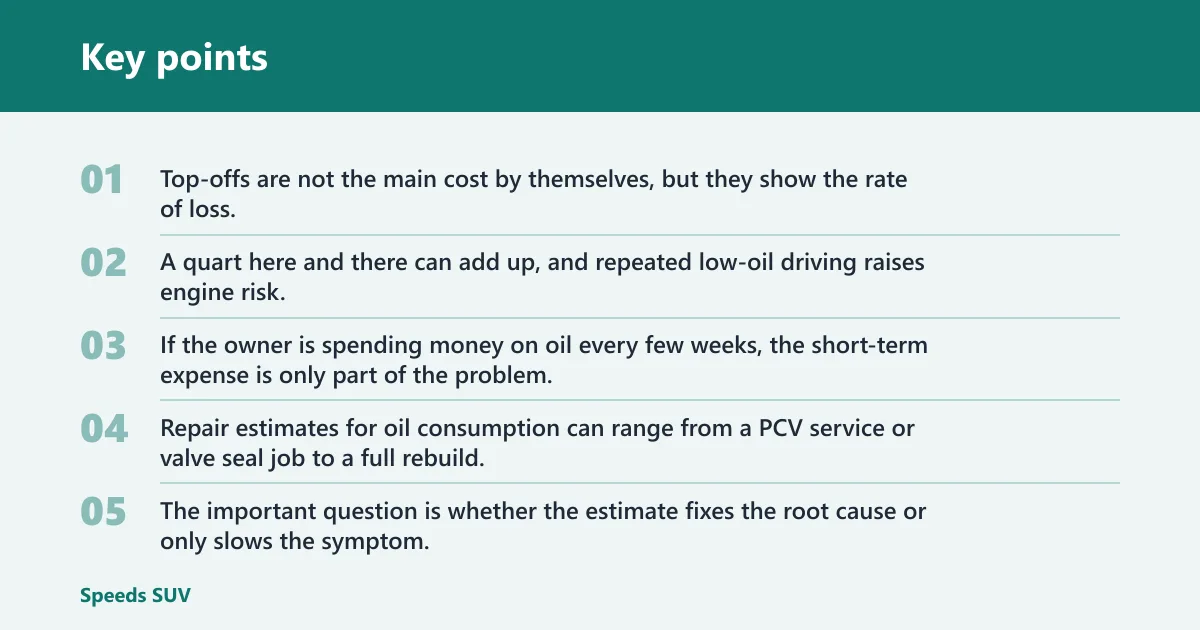
Top-offs are not the main cost by themselves, but they show the rate of loss. A quart here and there can add up, and repeated low-oil driving raises engine risk. If the owner is spending money on oil every few weeks, the short-term expense is only part of the problem.
Engine repair estimate
Repair estimates for oil consumption can range from a PCV service or valve seal job to a full rebuild. The important question is whether the estimate fixes the root cause or only slows the symptom. If the shop cannot tie the repair to confirmed wear, pause before authorizing major work.
Rebuild or replacement cost
Engine rebuild or replacement often moves the bill into the thousands. On an older SUV, that cost can exceed the vehicle’s market value quickly. At that point, the total loss threshold is not a formal insurance number, but a practical cutoff: the repair costs more than the SUV is worth after repair.
Market value and total loss threshold
Compare three figures side by side: current market value, repair estimate, and the likely resale value after repair. If the SUV is worth about $7,000 and the engine work will cost about $4,000 to $6,000, the repair may not leave enough value cushion to justify keeping it.
Sell, trade, repair, or replace?
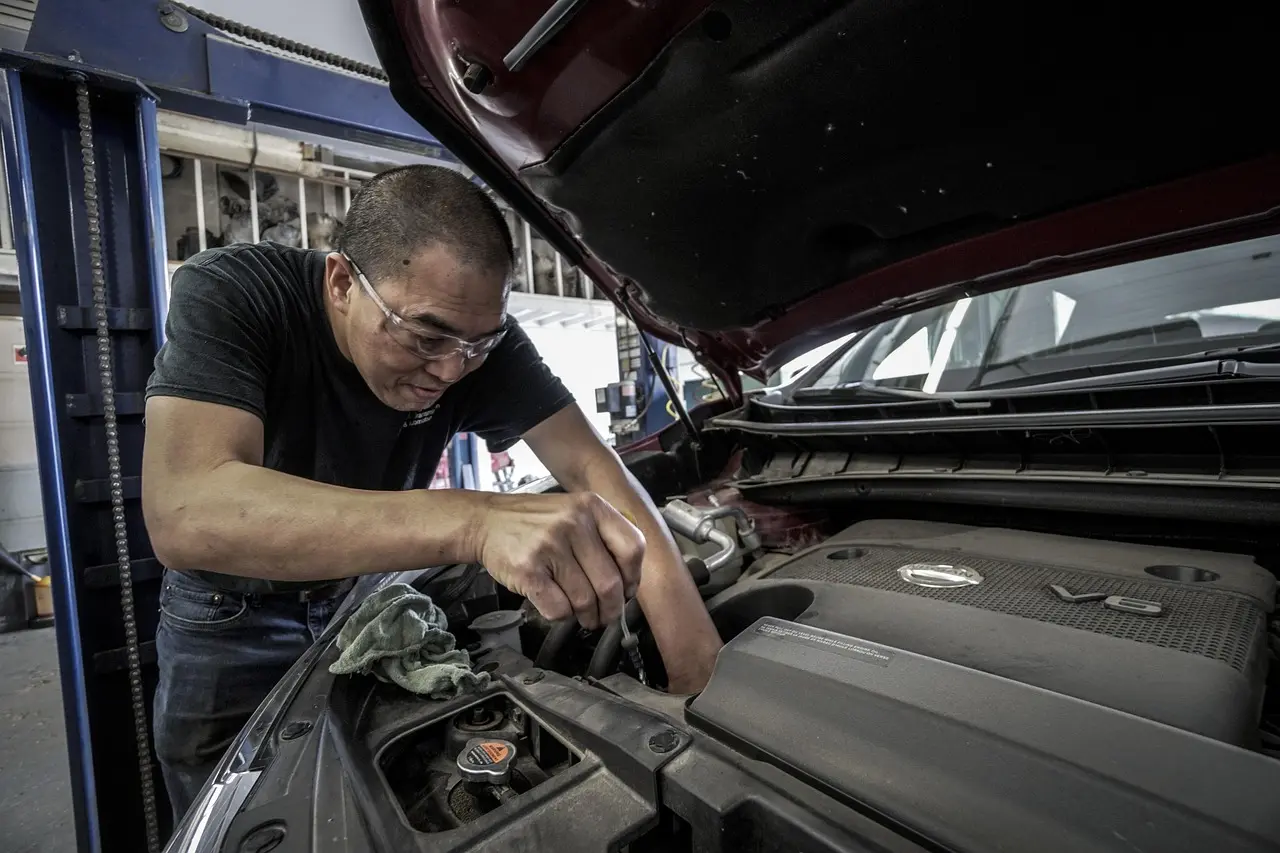
Choose the path that matches the test results and the money at stake. If the issue is mild and stable, keep and monitor. If the problem is confirmed but repairable at a sensible cost, repair before listing. If the engine shows major wear, sell as-is or replace the SUV instead of sinking money into a losing repair.
Keep and monitor
Keep the SUV only if consumption is minor, compression is acceptable, and no blue smoke or misfire is present. Check oil every 500 to 1,000 miles until the rate is predictable. This option fits vehicles that still have value and no signs of internal failure.
Repair before listing
Repair before listing when a relatively cheap fix can improve resale, such as a PCV valve, a visible leak, or a minor seal repair. If the fix is likely to remove smoke and clean up the service record, the resale gain can outweigh the repair bill. Use the same logic for trade-in if the dealer is likely to reduce the offer for smoke or oil use.
Sell as-is
Sell as-is when the engine diagnosis points to worn rings, heavy cylinder wear, or a rebuild that does not make sense financially. Private-party sale usually requires disclosure of the problem, especially if smoke, low compression, or frequent top-offs are known. The price will reflect that risk.
Trade in
Trading in can be simpler than a private sale because the dealer evaluates the SUV as part of a wholesale number. The trade offer will usually drop once oil consumption is documented, but the process avoids repeated repair spending. It is often the cleaner move when the owner wants out quickly.
Replace the SUV
Replace the SUV when the repair estimate is too close to value, the engine shows failure signs, or the oil use keeps rising even after minor fixes. If the vehicle also needs tires, brakes, or suspension work, the combined bill can tip the balance faster than the engine issue alone.
Frequently asked questions
When does oil consumption mean an SUV is not worth fixing?
It is often not worth fixing when the repair estimate reaches about 30% to 50% of the SUV’s market value, or when compression and leak-down tests show internal engine wear. Blue smoke, fouled plugs, and repeated top-offs make that cutoff arrive sooner.
How much oil consumption is too much before I should sell my SUV?
More than 1 quart per 1,000 miles is a serious warning sign for many SUVs, especially if the rate is getting worse. If the vehicle also smokes, misfires, or needs frequent refills between services, selling becomes more sensible than waiting for a larger failure.
What repair costs usually exceed the value of an older SUV?
Engine rebuild or replacement costs often exceed the value of an older SUV, especially when the vehicle is worth only a few thousand dollars. If the fix approaches or passes half the vehicle’s current market value, replacement or sale as-is usually deserves a hard look.
Is it better to keep driving an SUV that burns oil or replace it?
Keep driving only if the oil use is mild, the engine passes diagnosis, and you can monitor the level closely. Replace it when the SUV burns oil fast enough to threaten the engine, fails compression or leak-down testing, or needs expensive work that does not fit the resale value.
What symptoms mean oil consumption is turning into engine failure?
Blue exhaust smoke, low or uneven compression, high leak-down percentage, spark plug fouling, and misfire codes all point toward worse internal wear. If the oil light comes on or the level drops too low between checks, the risk has moved beyond a simple maintenance issue.
Can I sell an SUV with oil consumption without fixing it first?
Yes, but you should disclose the issue in a private-party sale and expect a lower price. Trade-in is usually simpler, though the dealer will price in the defect. Selling as-is makes sense when the engine repair cost is too high for the SUV’s value.
Does high-mileage oil actually buy time before I replace the SUV?
High-mileage oil can sometimes slow small leaks or soften hardened seals, which may buy limited time. It is not a fix for worn rings, cylinder wear, or major valve seal failure. Use it as short-term mitigation, not as a reason to delay a real diagnosis.
What should I check before deciding on an engine rebuild versus selling?
Check the oil consumption rate, compression readings, leak-down results, visible smoke, spark plugs, and the PCV system. Then compare the rebuild estimate with market value and likely resale after repair. If the numbers leave little or no value margin, selling or replacing is usually the cleaner move.